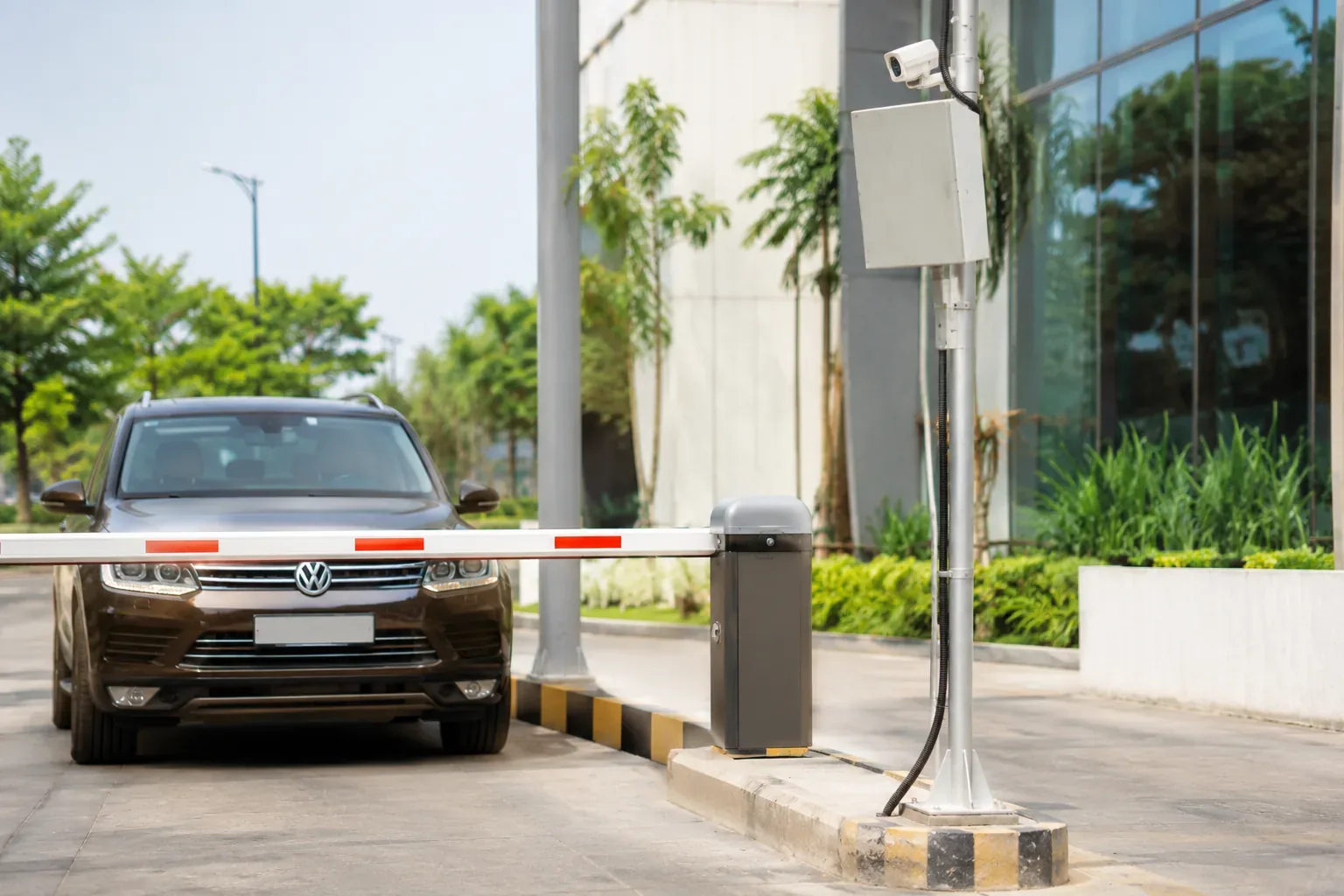
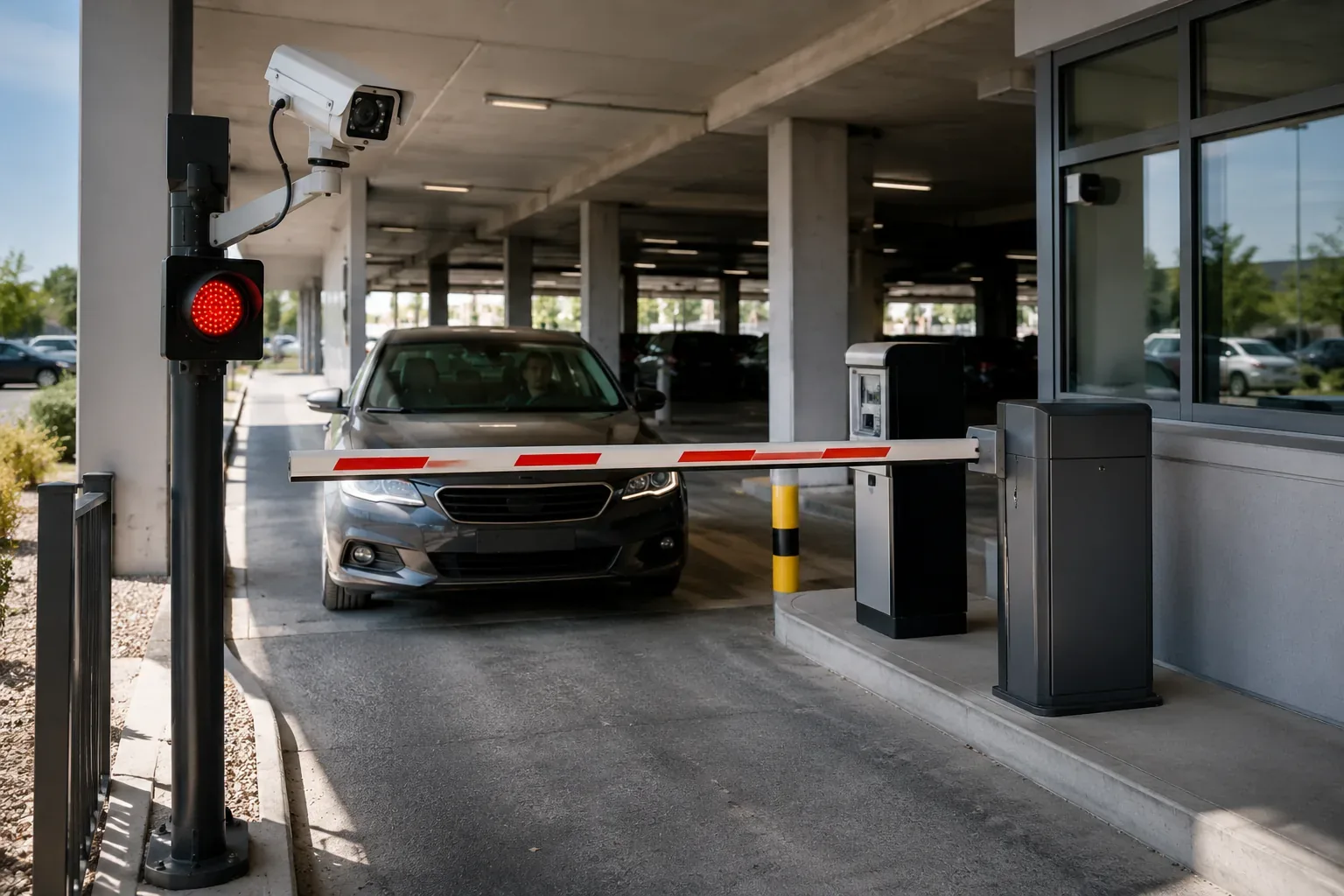
Boom barrier buyer's guide: automatic, RFID and ANPR options for Indian sites
Pick the barrier by how it decides who gets in. An automatic boom barrier opened by a guard with a remote or push button suits most factory gates. Add RFID when the same staff, resident or fleet vehicles pass every day. Choose ANPR, a camera that reads number plates, when you want no tags or have many different vehicles. For busy or paid car parks, plan the barrier as part of a parking system.
What a boom barrier is, and what it is not
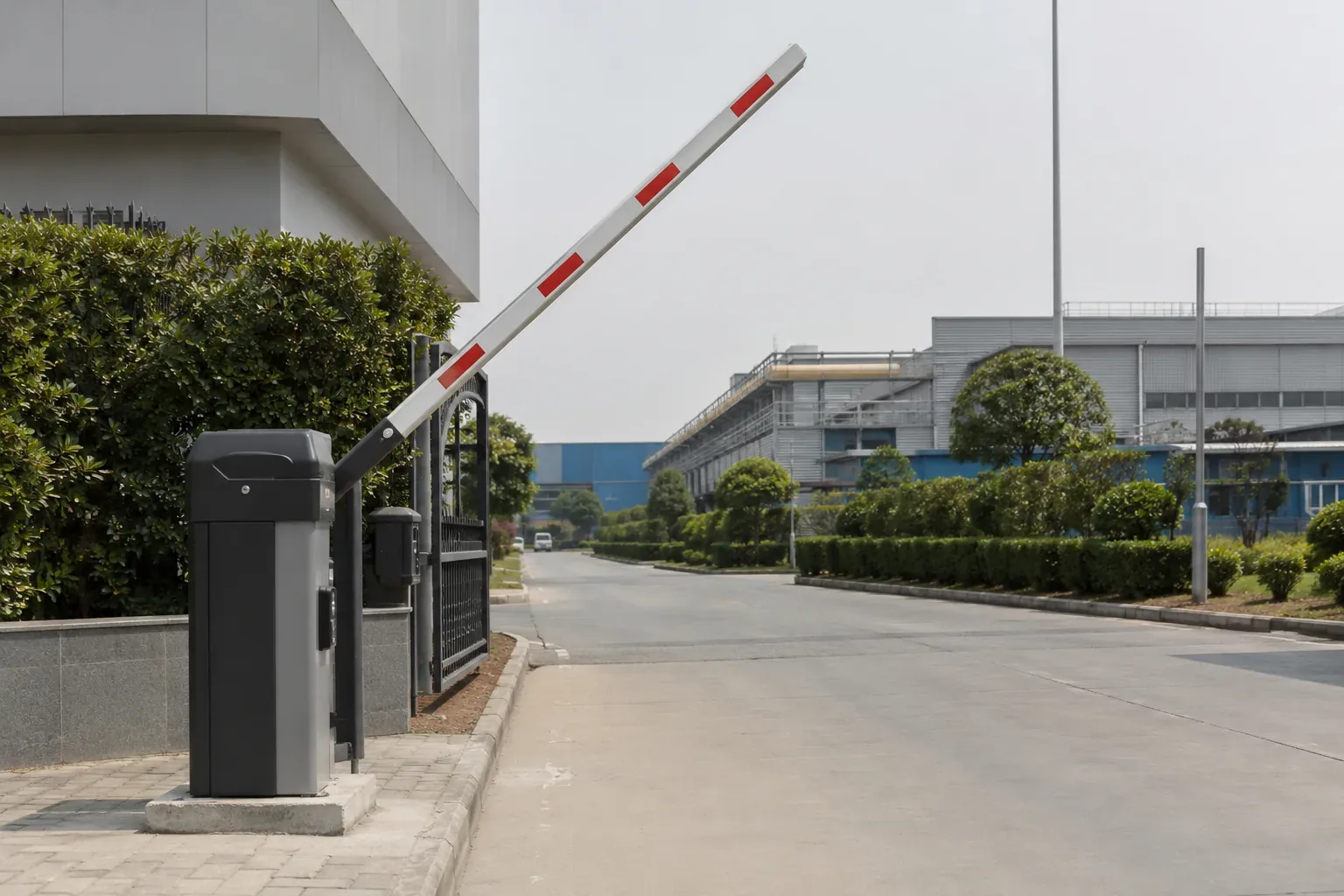
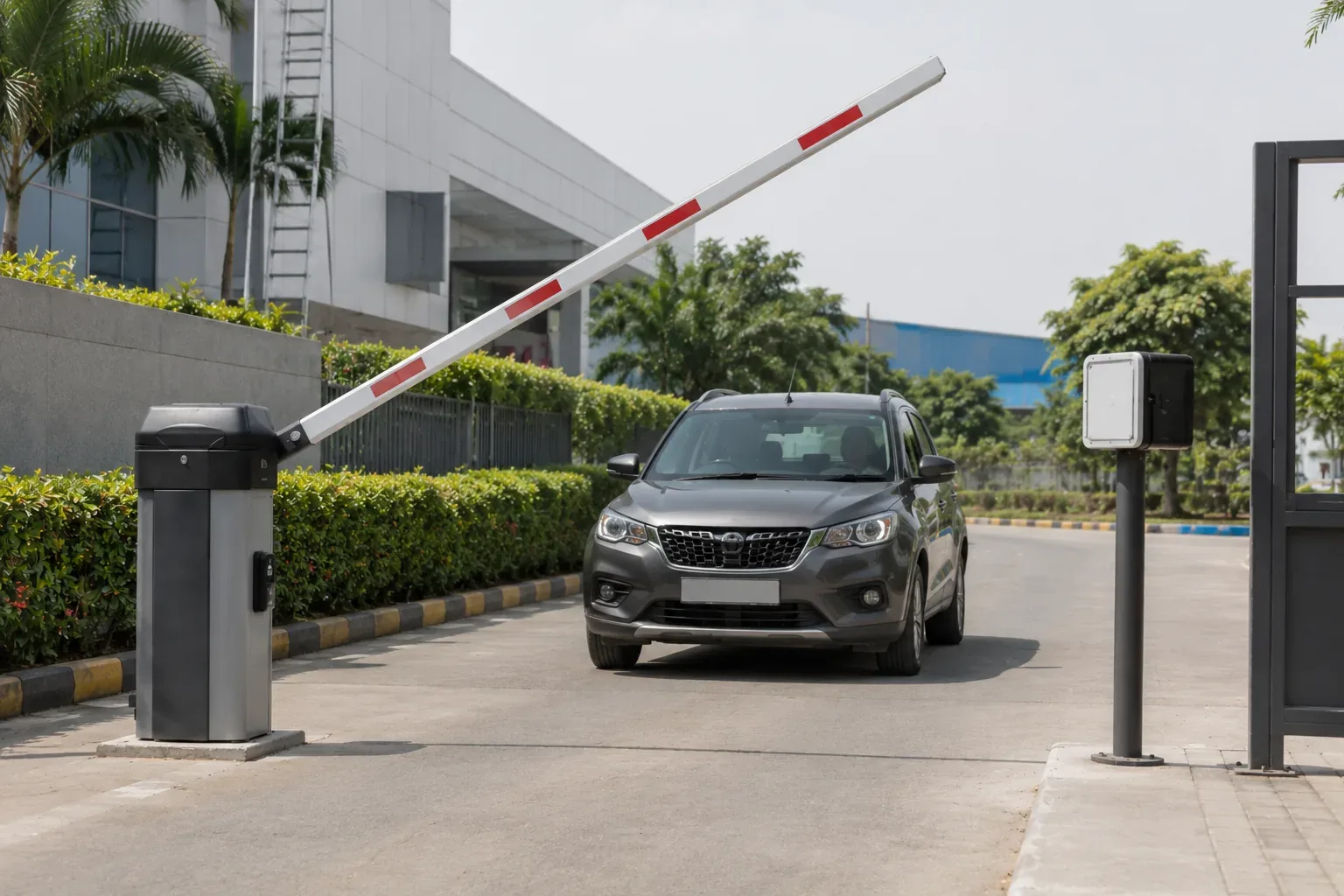
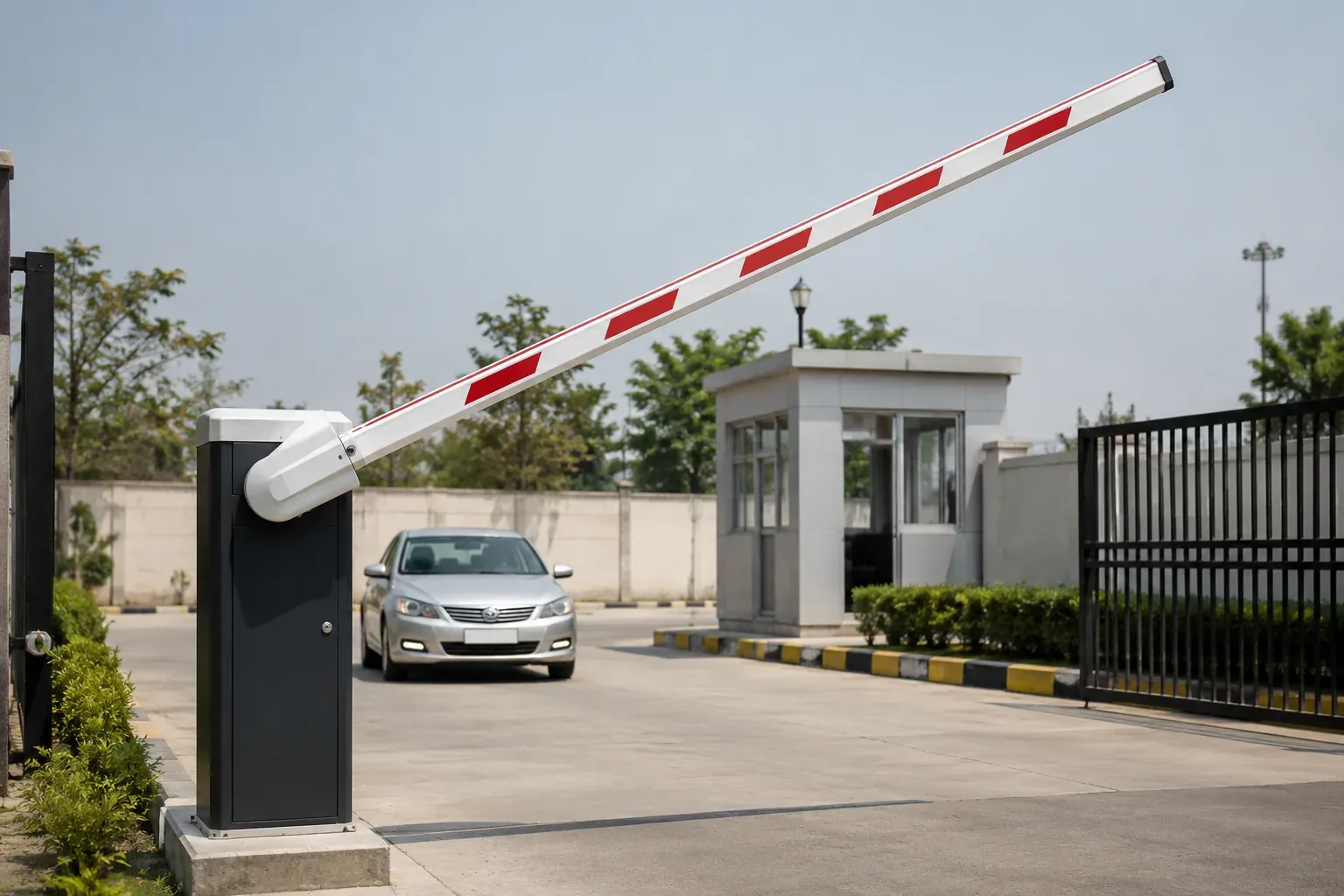
A boom barrier is a motorised arm, called the boom, that lifts to let a vehicle through and lowers behind it. The cabinet at the side holds the motor, drive and controller. The barrier opens when it receives a signal: from a guard's remote, a push button, a card reader, a tag reader or a camera system.
It is a traffic control device. A standard boom barrier stops honest drivers and can record who passed, but it will not stop a vehicle driven through it on purpose. Sites that must stop hostile vehicles need crash-rated equipment, which is a different class of product.
Three ways to control a boom barrier
The barrier itself is similar in each case. What changes is how it gets the signal to open.
| Guard-operated | RFID | ANPR | |
|---|---|---|---|
| How it opens | Guard presses a remote or push button | A reader detects a tag fixed to the vehicle | A camera reads the number plate and software checks it against a list |
| What the driver needs | Nothing; the guard decides | A tag issued by the site | Only a readable number plate |
| Best for | Factory gates with a guard on duty | Staff, residents and fleet vehicles that come daily | Mixed traffic, visitors, and sites that do not want to issue tags |
| Record of entries | Only if the guard logs them | Automatic log of each tag | Automatic log with plate and image |
| Main limitation | Depends on the guard; slow at peak times | Tags must be issued, replaced and cancelled | Dirty, damaged or non-standard plates may not read |
Automatic boom barrier with guard control
This is the simplest set-up, and the right one for many Indian factory gates. The automatic boom barrier is opened by a guard with a remote, a push button in the cabin or an intercom. The guard checks the vehicle, opens the barrier, and the boom closes behind it on its own.
It suits sites where every vehicle is checked anyway, such as a plant gate where trucks carry gate passes and delivery challans. It is also the base that RFID or ANPR can be added to later, as long as the controller can accept a signal from a reader. Ask for that at the start, so an upgrade does not mean a new barrier.
RFID boom barriers: best for regular vehicles
RFID stands for radio frequency identification. Each approved vehicle gets a tag, usually a sticker on the windscreen. A reader near the lane picks up the tag as the vehicle approaches, checks it against the approved list and opens the barrier, so the driver does not need to stop or roll down a window. Read range depends on the tag and reader type; long-range UHF readers can pick up a tag while the vehicle is still rolling slowly towards the gate.
- Good fit: housing societies, corporate offices, staff parking, bus and truck depots, and any site where the same vehicles return every day.
- Plan for: issuing tags, cancelling tags when staff leave or cars are sold, and a way to handle visitors who have no tag.
- Watch out for: tags moved between vehicles. A tag identifies the tag, not the car.
See the RFID boom barrier and, for larger car parks, the RFID parking system.
ANPR: number-plate cameras instead of tags
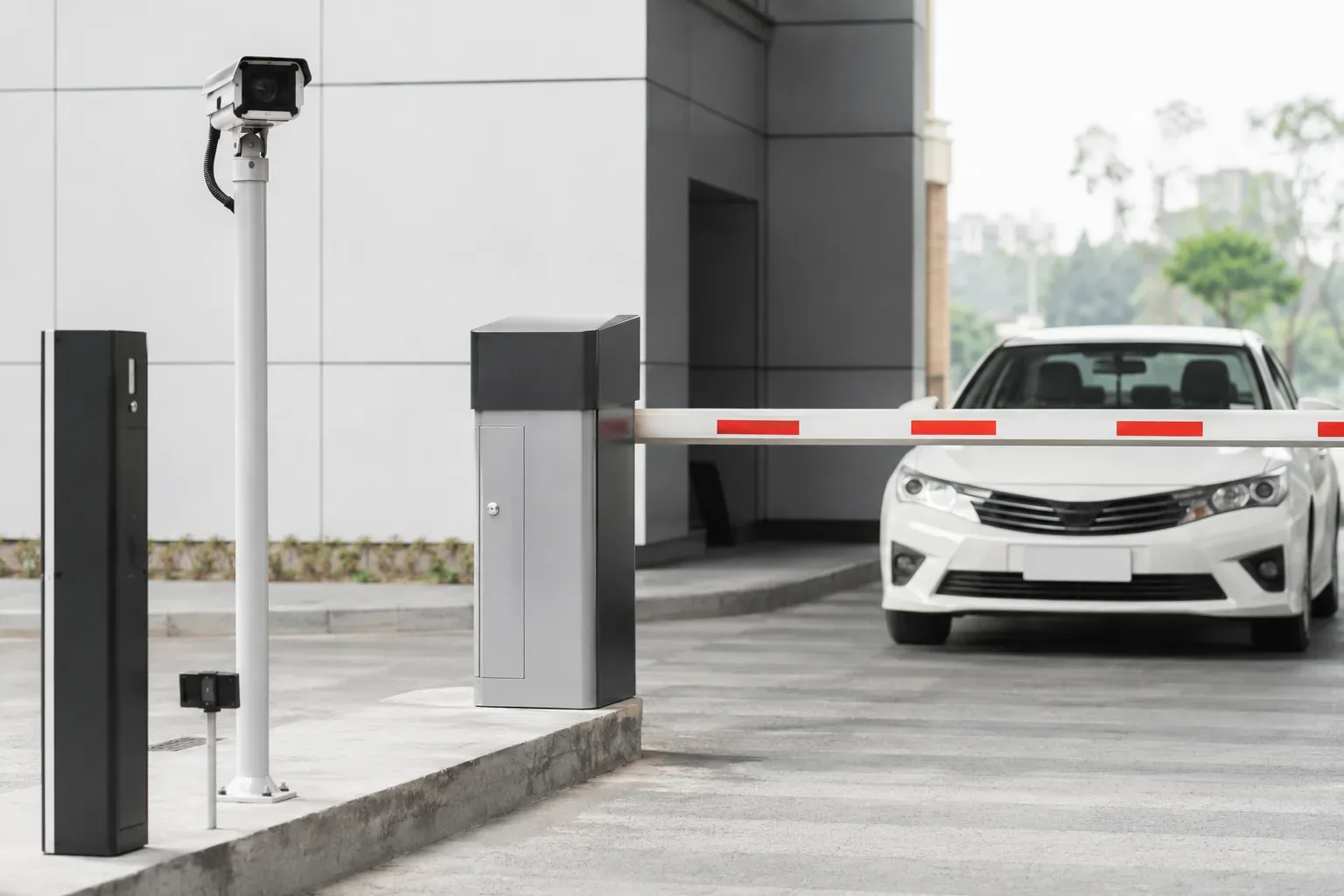
ANPR stands for automatic number plate recognition. A camera captures the number plate as the vehicle approaches, software reads the characters and checks them against an approved list, and the barrier opens for approved vehicles. Nothing has to be issued to the driver.
- Good fit: car parks with many different vehicles, visitor-heavy sites, and gates where you want a photo record of every entry and exit.
- Plate quality matters: standard-format plates, such as the high security registration plates on newer vehicles in India, read best. Dirty, damaged, bent or decorated plates can be missed.
- Camera placement matters: the camera needs a clear, straight view of the plate and lighting that works at night. Most ANPR cameras use infrared light for this.
- Keep a fallback: a guard override or intercom for the vehicle that does not read.
- Data: entries are stored with images. Decide who can see the logs and how long they are kept.
See the ANPR parking system.
Match the barrier to your traffic
Look at the busiest half-hour of the day, not the daily average. At shift change, a factory gate may see more vehicles in a few minutes than in the rest of the morning.
- Opening speed: faster barriers keep queues short at peak times. Ask for the opening time in the quote.
- Duty rating: a barrier built for continuous use handles constant cycling. A lighter barrier at a busy gate wears out early.
- Separate lanes: separate entry and exit lanes, each with its own barrier, move traffic better than one shared lane.
- Two-wheelers: decide whether bikes and scooters use the same lane. Many sites give them a separate lane or gate so they do not squeeze under the boom.
- Pedestrians: give people their own gate. A vehicle barrier is not a pedestrian gate.
Boom length and lane width
The boom must span the lane. Longer booms are heavier, move more slowly and catch more wind, so the drive has to be sized for them. For very wide openings, two barriers facing each other and meeting in the middle often work better than one long boom.
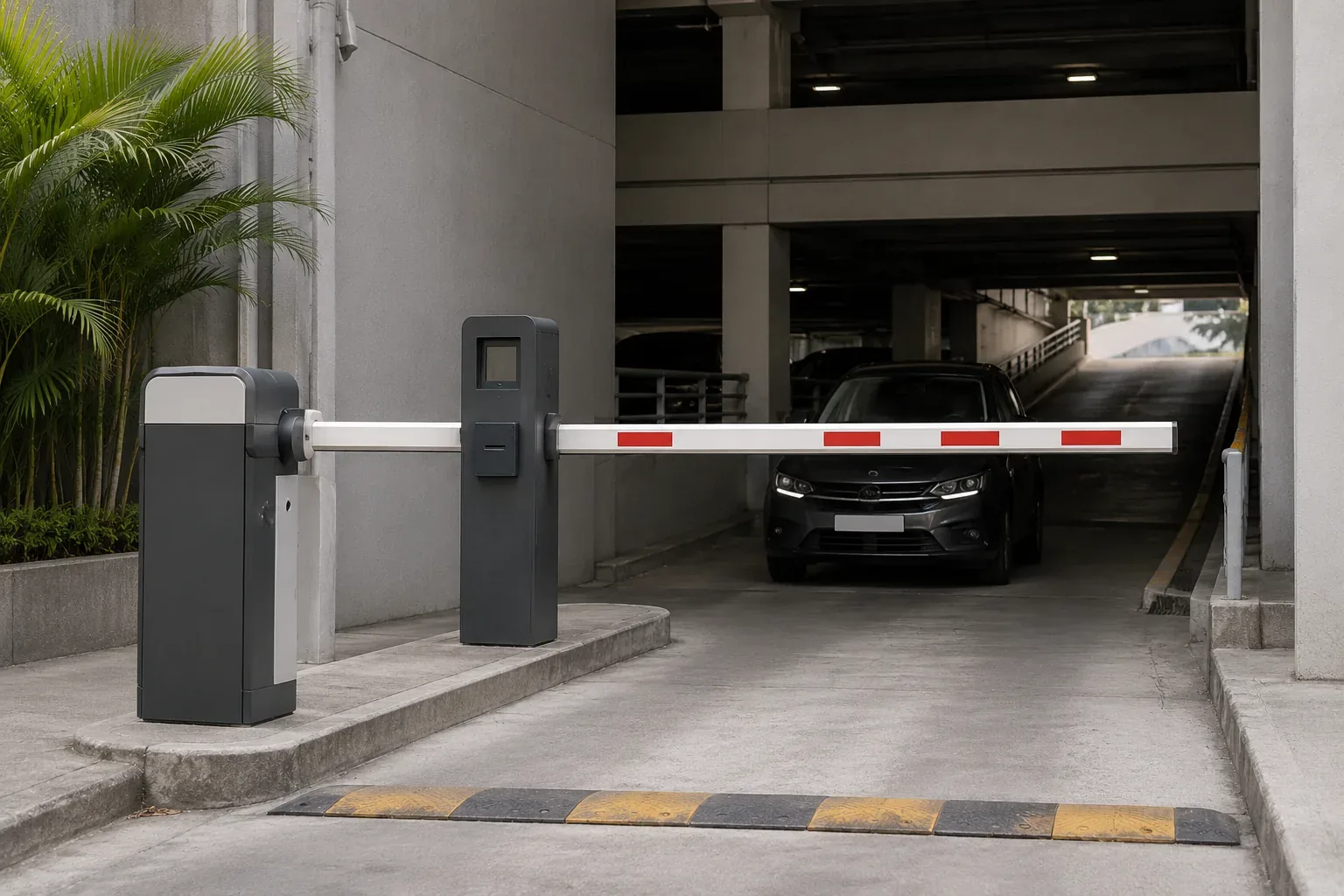
Check the height above the barrier too. In basements and under canopies, a straight boom may hit the ceiling as it rises. An articulated boom, which folds as it lifts, is the usual answer. A boom with a hanging skirt or fence discourages people and two-wheelers from ducking underneath.
Safety: the boom must never come down on a vehicle
The main risk with any boom barrier is the boom closing on a car, a two-wheeler or a person. Ask for these features:
- Loop detector: a loop of wire set into a groove cut in the road. It senses the metal of a vehicle standing over it and holds the boom up until the vehicle has cleared.
- Photocell: a light beam across the lane that stops the boom closing if the beam is broken.
- Obstruction reverse: the boom stops and lifts again if it meets resistance.
- Manual release: so the boom can be raised by hand during a power cut or a fault.
- Visibility: reflective strips or lights on the boom, so drivers see it at night.
Car parks: think in terms of a system
In a mall, hospital, office or paid car park, the barrier is one part of a larger system. A parking boom barrier works with ticket dispensers, RFID or ANPR readers, a pay station and software that counts vehicles in and out. Planning them together avoids buying parts that do not talk to each other.
Our parking management range covers the lanes, readers and software as one design. For the barrier range as a whole, see boom barriers.
Power, civil work and Indian site conditions
- Power: each barrier needs a supply at the lane. We confirm 230V single-phase or 415V three-phase at 50 Hz on the drawing, depending on the model.
- Power cuts: ask about battery backup or a UPS if the gate must keep working during outages. Otherwise, the manual release is the fallback.
- Civil work: the barrier needs a solid concrete base. Lay conduits for power, loops and data cables across the road before the final surface goes down.
- Monsoon: put the cabinet on a raised plinth where water collects, and make sure loop grooves are properly sealed.
- Heat and dust: cabinets, cameras and readers sit in the sun all day. Keep camera lenses clean and check them after dust storms.
- Data link: RFID and ANPR systems need a network cable or link to the guard room or server.
What drives the cost
We quote per site, because the control method and lane layout matter more than the barrier alone. The main factors are:
- Number of lanes and barriers
- Boom length and type: straight, articulated or skirted
- Duty rating and opening speed
- Control method: guard-operated, RFID or ANPR
- Number of RFID tags, if used
- Software, ticketing and payment for car parks
- Safety devices such as loops and photocells
- Civil work, cabling and backup power
Checklist before you request a quote
- Site type: factory, office, housing society, hospital, mall or depot
- Lane widths and the number of entry and exit lanes
- Vehicles in the busiest half-hour, and the mix of cars, trucks and two-wheelers
- Who needs access: staff, residents, fleet, visitors, the public
- Guard on duty, or unattended?
- Headroom, if the gate is in a basement or under a canopy
- Power available at the gate, and whether it must work during outages
- Photos of the gate and the approach road
Frequently asked questions
What is the difference between an RFID and an ANPR boom barrier?
An RFID barrier opens when a reader detects a tag fixed to an approved vehicle, so each vehicle needs a tag. An ANPR barrier uses a camera to read the number plate and opens for plates on the approved list, so no tag is needed. RFID suits regular vehicles that come every day. ANPR suits mixed traffic and visitors.
Can ANPR replace the security guard?
It can take over routine entries, but most sites should keep a person or an intercom for exceptions. Some plates will not read because they are dirty, damaged or non-standard, and visitors arrive without being on the list. ANPR works best as a way to let known vehicles through quickly while the guard deals with everyone else.
Can I add RFID or ANPR to my existing boom barrier?
Often, yes. Many barrier controllers accept an open signal from an external reader or camera system. It depends on the controller, its condition and the cabling at the gate. Share the barrier make and model and photos of the gate, and our engineers will check whether it can be upgraded or whether a new barrier makes more sense.
Does a boom barrier work during a power cut?
Not on mains power alone. Most barriers have a manual release so the boom can be raised by hand. If the gate must keep working through outages, ask for battery backup or connect the barrier to a UPS or generator-backed supply. Decide in advance whether the boom should stay up or down during an outage.
How do I stop the boom coming down on a car?
Fit a loop detector in the road under the boom, which holds the boom up while a vehicle is over it, and a photocell across the lane. Obstruction reverse makes the boom lift again if it meets resistance. Give pedestrians and two-wheelers their own path, because they are harder to detect than cars.
Will a boom barrier stop a vehicle that tries to force its way through?
No. A standard boom barrier is a traffic control device. It controls and records honest traffic, but a determined driver can break through it. Sites that must stop hostile vehicles need crash-rated barriers, bollards or road blockers, which are designed and tested for that job. Tell us if your site has that requirement.
Which boom barrier suits a housing society?
Most societies use RFID tags for residents' vehicles, so residents enter without stopping, and a guard-operated or ANPR lane for visitors, deliveries and cabs. Keep a separate gate for pedestrians and a clear plan for two-wheelers. Decide who issues and cancels tags when residents move in or out, so the approved list stays up to date.
How long should the boom be?
Long enough to span the lane it controls. Longer booms are heavier, slower and catch more wind, so the drive must suit the length. For very wide gates, two barriers meeting in the middle often work better than one long boom. In basements or under canopies, check the headroom and consider an articulated boom that folds as it rises.
What do you need from me to prepare a quote?
The site type, lane widths, number of entry and exit lanes, vehicles at peak time, who needs access, and whether a guard is on duty. Add the power available at the gate, the headroom if the gate is covered, and photos of the gate and approach. An engineer will then recommend a barrier and control method and send a written quotation.