
 ⭐ Best Seller
Click to enlarge
⭐ Best Seller
Click to enlarge
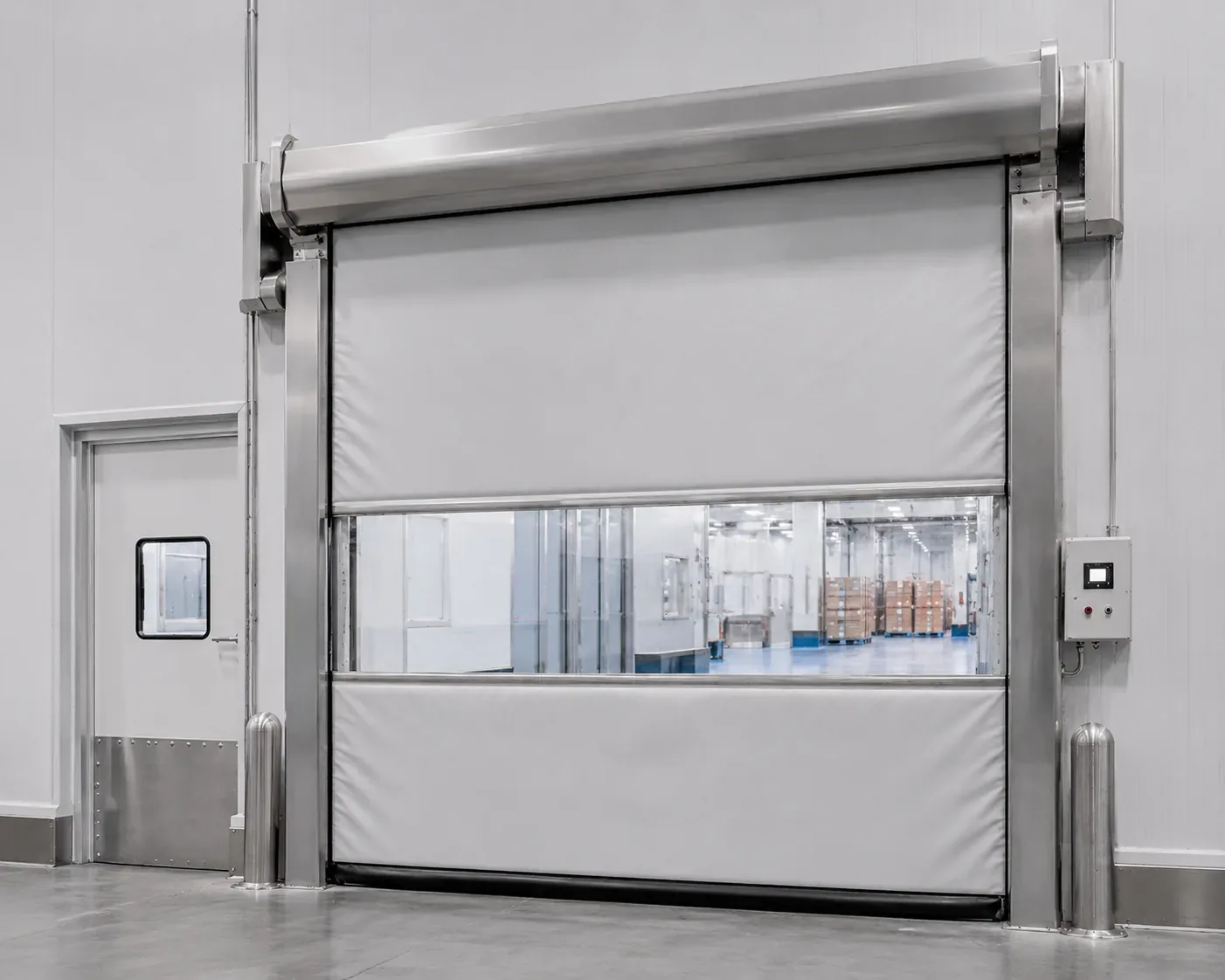
High Speed Doors: PVC Rapid Roll-Up Doors
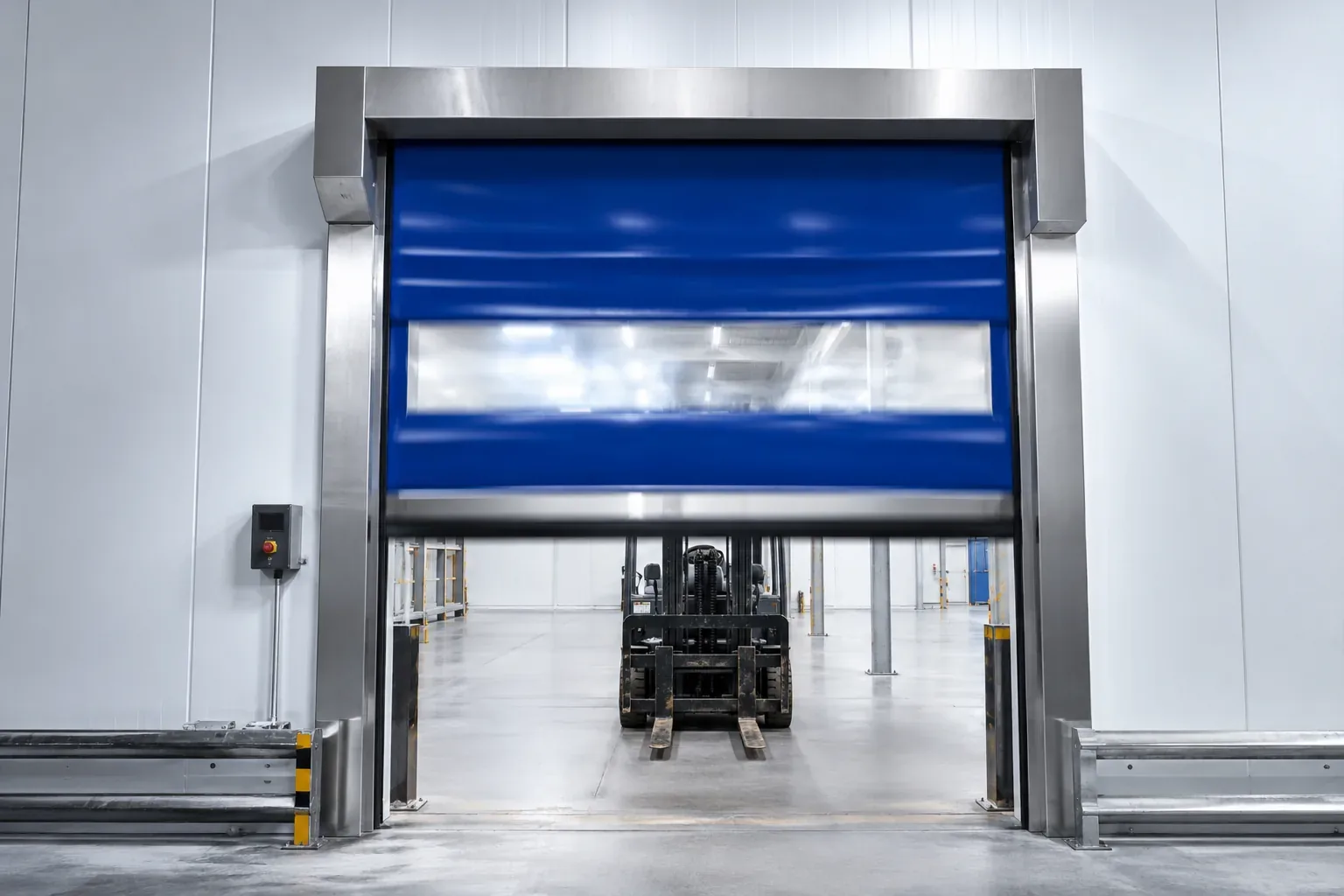
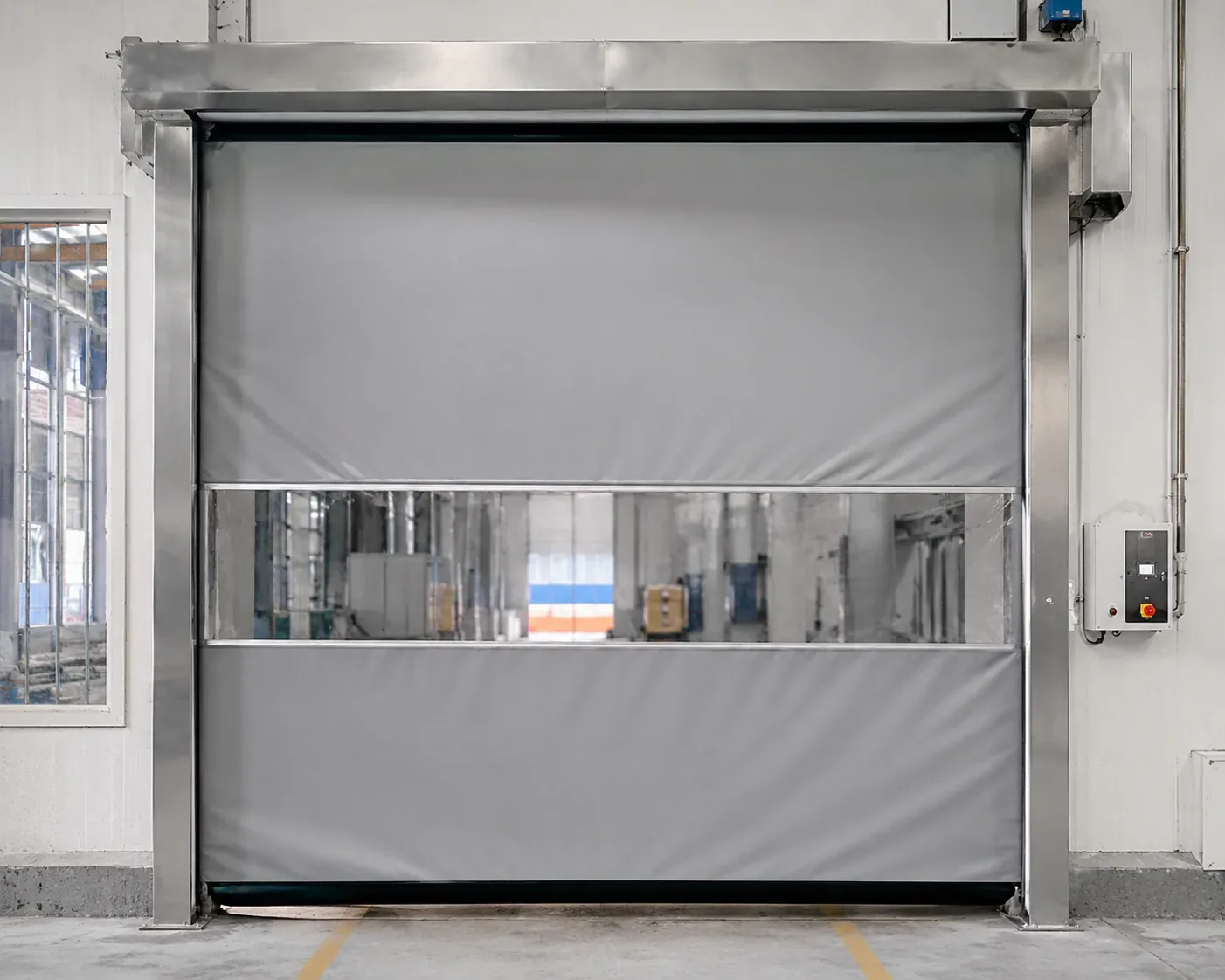
Yadav Entrance Automation is a high speed door manufacturer in India, building PVC high speed doors, zipper doors, clean room, cold storage and industrial high speed doors. Every fast, rapid roll-up door operates at speeds up to 2.5 m/s to reduce energy loss, increase throughput, and withstand high-cycle operations with minimal maintenance.
| Opening Speed | Up to 2.5 m/s (opening) / 0.8 m/s (closing) |
| Max Width × Height | 10,000 mm × 8,000 mm |
| Wind Load Rating | Up to 120 km/h |
| Operating Temperature | -20°C to +60°C |
Engineered for Every Demand
Six engineering advantages that make our high speed doors the preferred choice for India's most demanding industrial facilities.
High Cycle Life: 500,000 Cycles
Tested and certified for 500,000 full open-close cycles. Our doors are built for facilities that run 24/7, automotive paint lines, pharma clean corridors, cold storage docks, without degradation in speed or seal integrity.
Energy Efficient by Design
Fast 2.5 m/s opening speed dramatically reduces doorway open time, cutting HVAC energy loss by up to 40% in temperature-controlled facilities. The tight PVC curtain seals out dust, insects, and contaminants when closed.
Custom Dimensions: Up to 10m × 8m
Every door is manufactured to your opening dimensions. Widths from 1,000mm to 10,000mm, heights from 1,500mm to 8,000mm. Standard RAL colours or custom powder coat finish. Stainless steel hardware available for food and pharma environments.
Low Maintenance Architecture
Self-lubricating guide rails, sealed drive unit, and modular PVC panel design mean annual servicing requires only 2–4 man-hours. Replacement panels can be installed in under 30 minutes without specialist tools.
Safety Sensor Suite Standard
Every installation includes radar-based motion detection, photo-electric bottom edge safety, and emergency break-out capability. Our IP55 control panel includes PLC logic with remote diagnostics via optional GSM module.
Fast Installation: 1–2 Days
Our trained installation teams complete a single door in 6–10 hours. Pre-assembled header box, pre-wired control panel, and self-drilling guide rail anchors eliminate on-site fabrication. Zero structural modification required in most cases.
Types of High Speed Doors We Manufacture
Seven high speed door configurations covering every industrial, cold-chain and clean-environment application. Each is built to order. Tell us your opening size, environment and cycle rate and we engineer to match.
Most Popular
PVC High-Speed Door
The workhorse PVC high speed door with a reinforced fabric curtain rolling up at up to 2.5 m/s. Ideal for internal and external doorways where rapid, fast cycling cuts energy loss and keeps forklift traffic moving without bottlenecks.
View details
Impact Resistant
Self-Repairing High-Speed Door
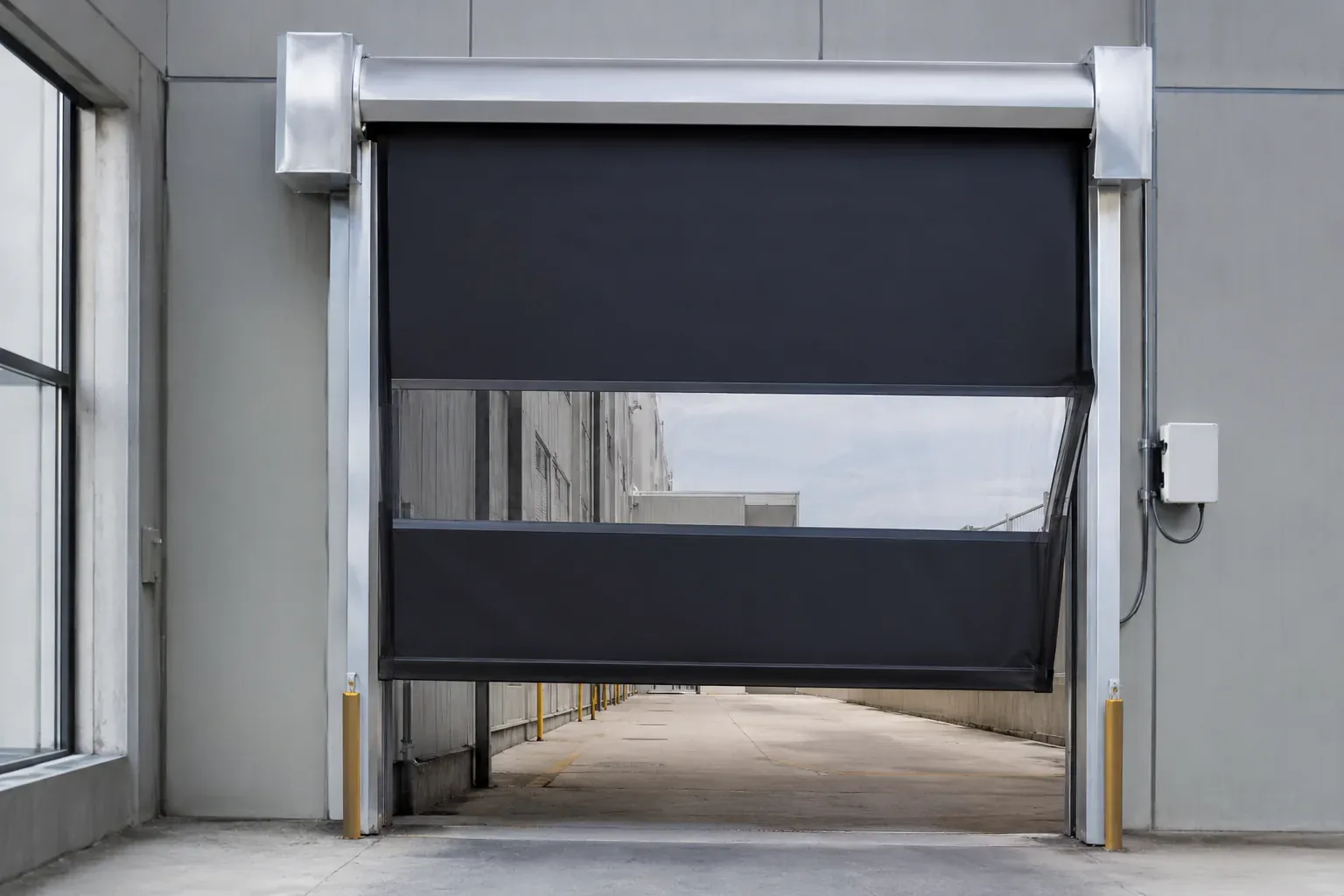
A self-repairing high speed door whose curtain pops back into the guide rails after an accidental forklift strike. No manual reset, no downtime. The right choice for busy, high-traffic openings where impacts are routine.
View details
GMP / Pharma
Clean Room High-Speed Door
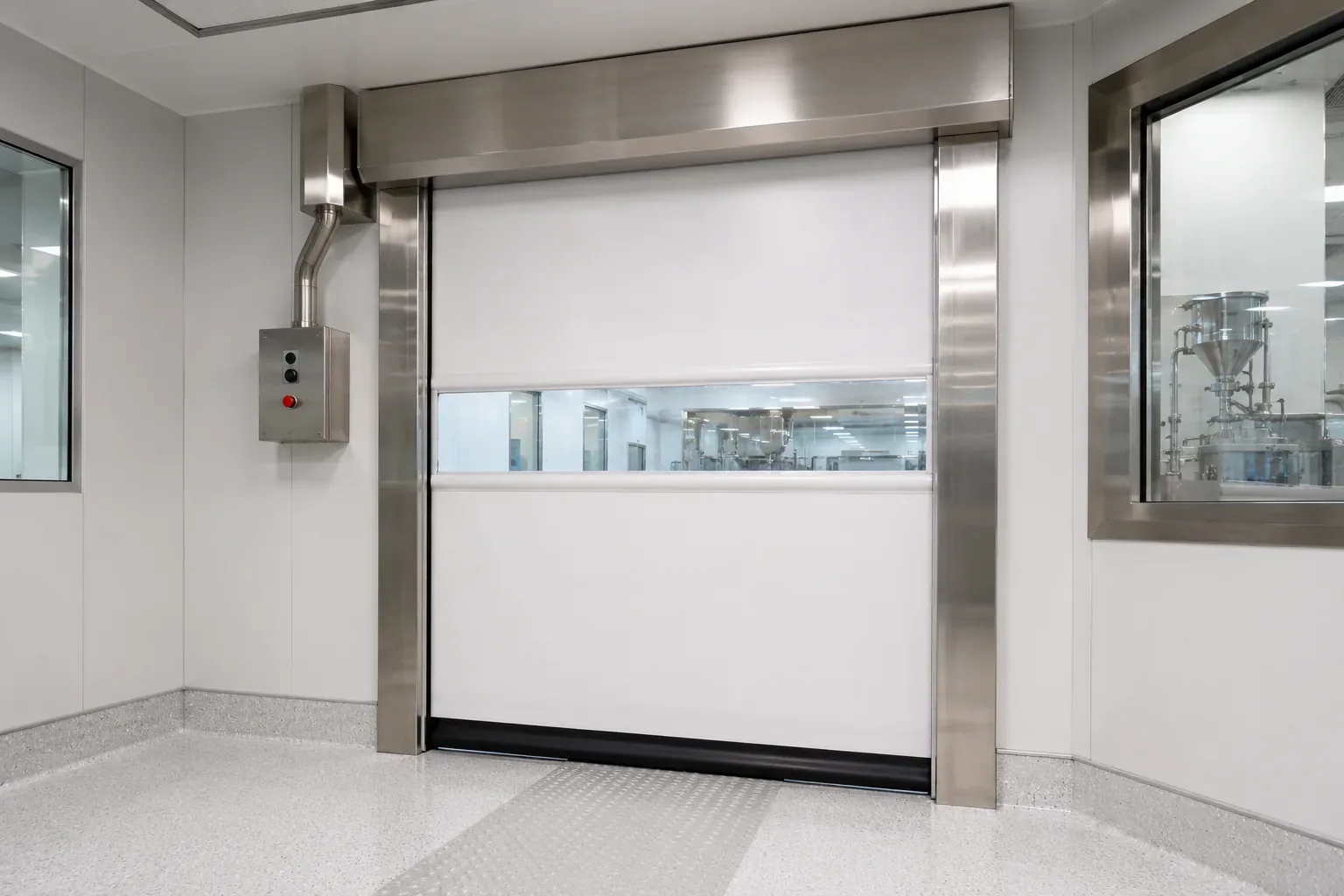
A clean room high speed door with a tight-sealing PVC curtain and SS304 hardware for pharma airlocks and GMP corridors. Maintains pressure differentials and contamination control while cycling fast between controlled zones.
View details
Cold Chain
Cold Storage High-Speed Door
A cold storage high speed door with an insulated, anti-freeze-treated curtain rated for chilled rooms and refrigerated docks. Rapid opening minimises cold loss and condensation at every pallet movement.
View details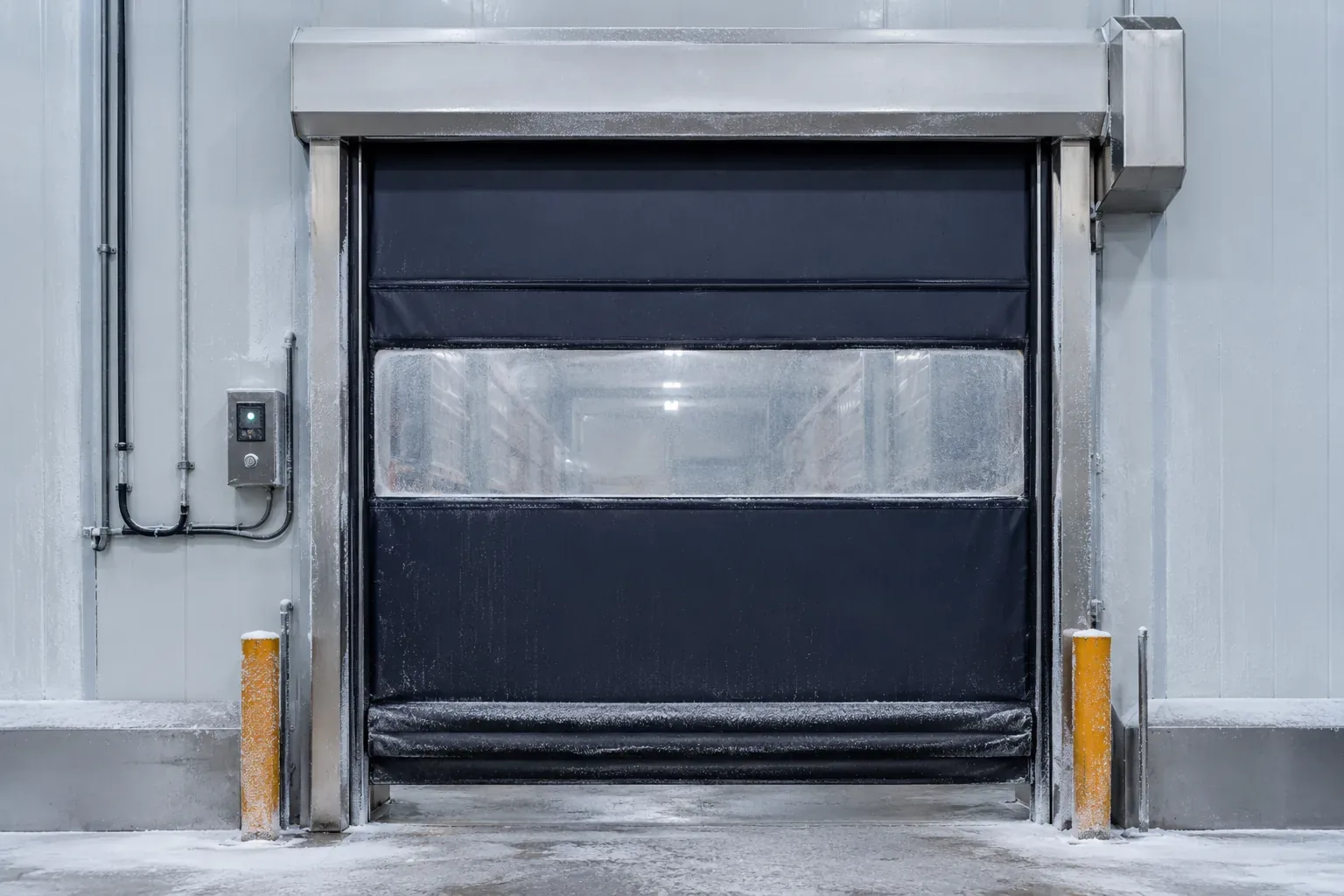 Deep Freeze
Freezer High-Speed Door
A heated-frame freezer high speed door engineered for blast freezers and deep-freeze stores down to -30°C. Heated guides and seals prevent icing, while the fast cycle protects the cold barrier and saves refrigeration energy.
View details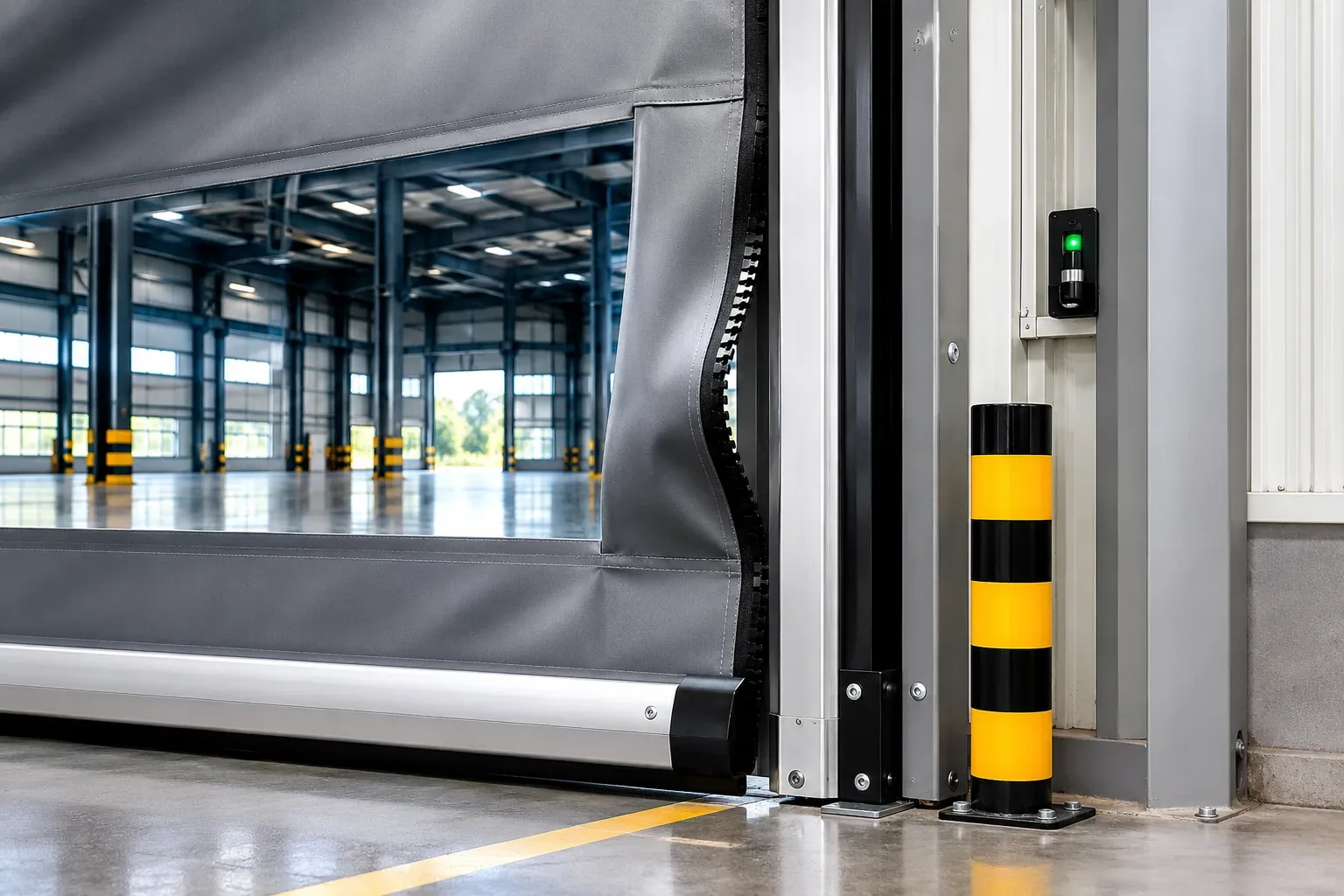 Soft Edge
Zipper High-Speed Door
A zipper door (zip door) whose curtain edges run in a flexible zip-track, re-engaging automatically after impact for crash-friendly, soft-edge operation. A heavy-duty, fast door for warehouses and dispatch bays with constant traffic.
View details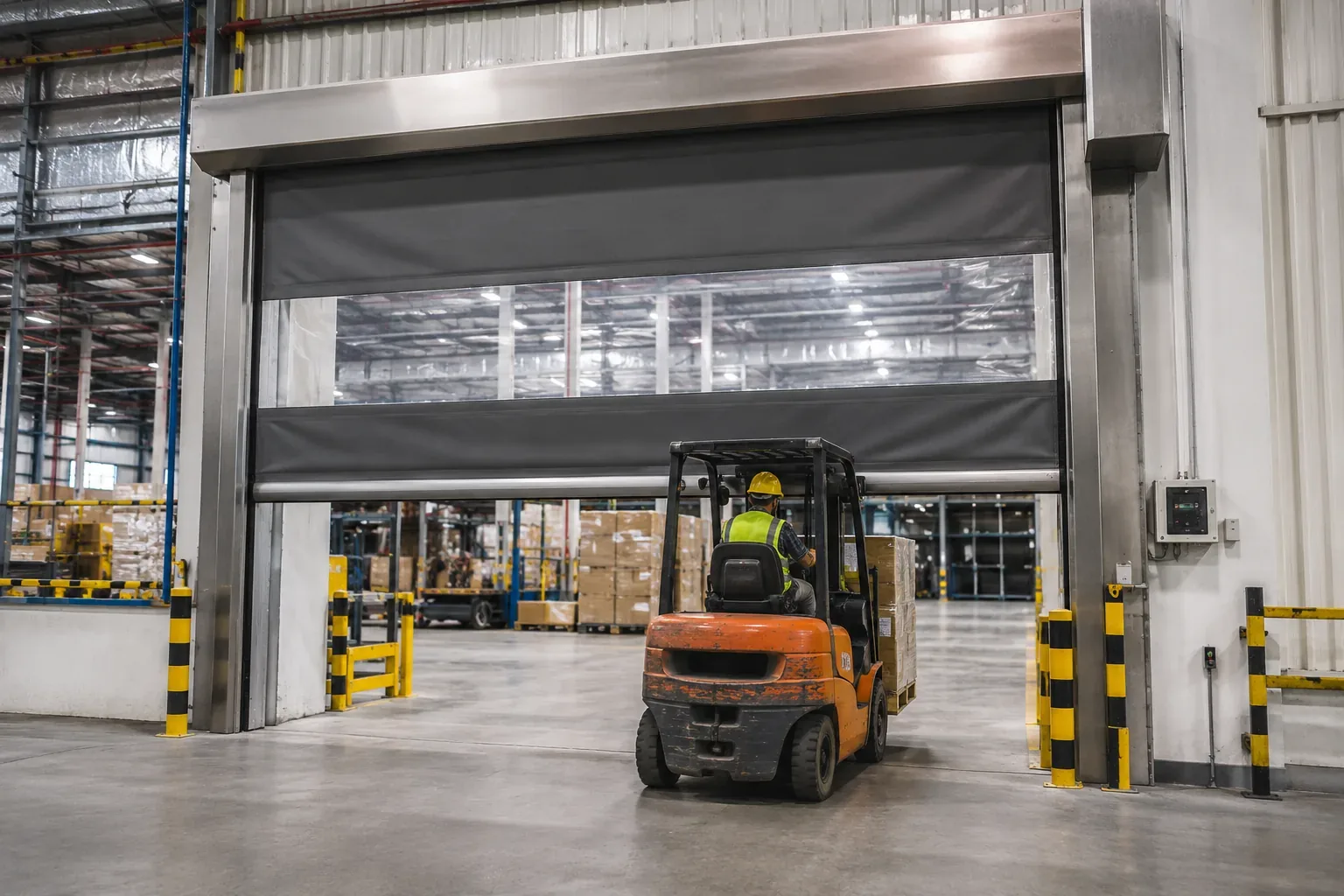 Heavy Duty
Industrial High-Speed Door
A heavy-duty industrial high speed door for large external openings, with wind-locks and a reinforced curtain rated to 120 km/h wind load. Built for warehouse, logistics and manufacturing bays demanding a rapid, durable door.
View detailsHigh Speed Doors: each type in detail
Where each one fits, how it compares with the alternatives, and what to decide before you ask for a quote.
PVC High-Speed Door
Where the PVC High-Speed Door fits. This is the default fast door for an internal opening that never stops working: a route between production and warehouse, a dispatch aisle, a doorway forklifts pass through all shift. At up to 2.5 m/s and spans to 10m, the curtain is open and shut again before a slow door has finished lifting, which is what keeps dust, draught and conditioned air where they belong.
PVC High-Speed Door vs the alternatives. Against a rolling shutter, the flexible PVC curtain is built for cycle count rather than security: it is a traffic door, not a closure for an unattended building overnight. Against the self-repairing model, this one is simpler and suits openings where impacts are rare. Against the insulated cold-chain models, PVC handles ambient openings; it is not the door for a freezer threshold.
Specifying a PVC High-Speed Door. Give us the real cycles per day rather than an estimate, because that single figure drives the specification more than any other. Confirm the clear opening width and height, whether the opening is internal or exposed, and what should trigger the door: a floor loop, radar, a pull cord or a button. Tell us the side room available for the guides and drive.
Self-Repairing High-Speed Door
Where the Self-Repairing High-Speed Door fits. Specify this where impacts are not an accident but a fact of the working day: narrow aisles, blind corners, busy dispatch bays, sites running multiple shifts with mixed traffic. The zip-back guides let the curtain leave its track when something strikes it, then draw it back in automatically on the next cycle, so a knock costs a few seconds instead of a service call.
Self-Repairing High-Speed Door vs the alternatives. Against a standard PVC fast door, the difference is entirely about what happens after a collision. A conventional curtain pulled out of its guides stays out until an engineer re-seats it, and the opening is unusable meanwhile. The self-repairing curtain recovers on its own. It costs more up front and earns that back on the first few impacts, so the honest test is how often your openings actually get hit.
Specifying a Self-Repairing High-Speed Door. Tell us how often impacts happen now, even approximately, and what causes them, because a door being clipped by pallet corners needs a different answer to one being struck square by a counterbalance truck. Confirm cycles per day, opening size, and whether the approach is blind. Side room matters here, since the zip-back guides need their clearance.
Clean Room High-Speed Door
Where the Clean Room High-Speed Door fits. This door belongs on a controlled threshold: a GMP airlock, a pharmaceutical corridor, a food production wash-down area, a clean room boundary. SS304 hardware means the frame and fittings tolerate the cleaning chemistry those environments use daily, which ordinary painted steel does not survive for long.
Clean Room High-Speed Door vs the alternatives. Against a standard PVC fast door, the visible difference is the stainless hardware and the smooth, cleanable detailing; the functional difference is that this door can be part of a validated environment rather than merely near one. Against a hermetic sliding door, the fast door is about rapid traffic and pressure recovery, while a hermetic door is about a sealed, gasketed closure. Many facilities use both, at different points in the same corridor.
Specifying a Clean Room High-Speed Door. Tell us the classification of the space and whether the door forms part of an airlock, because interlocking two doors so both cannot open together is a control decision, not an accessory. Confirm the pressure differential across the opening, the cleaning regime and chemicals used, and whether documentation is required for validation. Say whether the opening is washed down directly.
Cold Storage High-Speed Door
Where the Cold Storage High-Speed Door fits. Rated down to -20°C, this door sits on the threshold of a cold room or chilled store where traffic is constant and every second the opening stands open costs refrigeration. The insulated curtain limits what crosses while the door is shut, and the speed limits how much crosses while it is open.
Cold Storage High-Speed Door vs the alternatives. Against an ambient PVC fast door, the curtain is insulated and the components are specified for the cold, which matters because seals stiffen and condensation behaves differently below freezing. Against an insulated rolling shutter, the two attack the same energy loss from opposite ends: the shutter seals a closed opening well, the fast door minimises open time. Busy cold-chain sites frequently justify both on the same bay.
Specifying a Cold Storage High-Speed Door. Give us the temperature on each side of the opening and the cycle count, since those two together decide the specification. Say whether condensation or icing is already a problem nearby. Confirm whether this door is the primary barrier or sits behind a shutter that closes overnight, because that changes how hard it works.
Freezer High-Speed Door
Where the Freezer High-Speed Door fits. Deep freeze thresholds are a harder problem than chilled ones, and this door is built for them: rated to -30°C with a heated anti-ice frame. In a freezer, moisture carried in on every cycle freezes where the curtain meets the frame, and a door without frame heating eventually binds, tears its curtain or refuses to seal.
Freezer High-Speed Door vs the alternatives. Against the cold storage model, the difference is the temperature rating and the heated frame. That heating is not a comfort feature; it is what stops ice bridging the curtain to the guides. Against any ambient door, a freezer threshold is simply outside what an unheated assembly can sustain, and specifying one there produces a door that fails in its first winter of use.
Specifying a Freezer High-Speed Door. Confirm the freezer temperature and the condition of the air on the warm side, since humidity is what becomes ice. Tell us the cycle count and whether the opening is used by pedestrians as well as trucks. Say what power is available at the opening, because frame heating needs a supply and it must stay energised.
Zipper High-Speed Door
Where the Zipper High-Speed Door fits. Where pedestrians and vehicles share the same opening, the flexible zip-track edge is the safety argument for this door. There is no rigid bottom bar to strike a person, and the curtain edge is soft rather than framed, which makes it the sensible choice for mixed-traffic doorways in warehouses, workshops and production halls.
Zipper High-Speed Door vs the alternatives. Against a rigid-edge fast door, the soft zip-track trades a little wind stiffness for a much more forgiving edge and self-engaging recovery after a knock. Against the self-repairing model, the two overlap: both recover from impact, but the zipper design's advantage is the soft edge itself, which is about people rather than about downtime.
Specifying a Zipper High-Speed Door. Tell us whether pedestrians use this opening and whether they share it with vehicles, since that is the reason to choose this variant. Confirm cycles per day, opening size and exposure. If the opening is external and windy, say so, because a soft-edge curtain behaves differently under pressure than a rigid-bottom one.
Industrial High-Speed Door
Where the Industrial High-Speed Door fits. Rated to wind loads up to 120 km/h across spans to 10m, this is the fast door for an exposed opening: an external dispatch bay, a yard-facing entrance, a coastal or open-ground site where wind pressure across a wide curtain is a real structural load rather than a footnote.
Industrial High-Speed Door vs the alternatives. Against the standard PVC door, the reinforcement and guide design are what let it hold a wide curtain steady in wind that would pull a lighter door out of its tracks. That robustness makes it heavier and slower than the fastest internal models, which is the honest trade: it is built to stay working on an exposed opening rather than to post the quickest cycle time on a sheltered one.
Specifying an Industrial High-Speed Door. Describe the exposure properly, including whether the opening faces open ground or a yard and whether the site is coastal. Give the clear opening at the widest point vehicles actually pass through. Confirm cycles per day and activation method, and tell us the side room available, since a wind-rated guide is deeper than a standard one.
High-Speed Rolling Shutter
A high-speed rolling shutter that opens at up to 1.5–2.0 m/s to cut energy loss and speed forklift traffic at busy bays. Self-repairing curtain options and high cycle ratings suit cleanrooms, cold stores and logistics hubs.
Where the High-Speed Rolling Shutter fits. Speed matters where an opening is in constant use: a dispatch bay, an internal route between production and warehouse, a doorway that forklifts pass through all shift. At up to 1.5 to 2.0 m/s the curtain spends far less time open, which cuts the draught, dust and temperature exchange that a slow door lets through on every single cycle.
High-Speed Rolling Shutter vs the alternatives. Against a standard motorised shutter, this variant is designed around cycle count rather than occasional use, with components rated for constant duty. Against an insulated shutter, the two reduce energy loss by opposite means: a fast door limits the time the opening is open, while an insulated curtain limits what crosses when it is shut. On a busy cold-chain opening, the fast door normally takes the traffic and a second shutter seals the opening overnight.
Specifying a High-Speed Rolling Shutter. The number that decides everything here is cycles per day, and it is the figure most often missing from an enquiry. Count the actual traffic rather than estimating it. Tell us what should activate the door: a floor loop, radar, a pull cord or a remote. Say whether the opening is internal or external, since wind exposure changes the specification, and confirm the space available at the sides for the drive.
The Right Door for Every Sector
High speed doors are installed across eight major industrial verticals. Each with specific performance requirements our engineering team addresses at specification stage.
Paint booth entry/exit, body shop clean zones, press shops requiring rapid cycle separation
Cleanroom airlock access, controlled environment corridors, GMP compliant, SS304 hardware
Cold storage entries, blast freezer access, -20°C rated PVC curtains with anti-freeze option
Loading dock doors, cross-dock terminals, sortation facility throughput optimization
HACCP zone separation, insect/pest barrier, washdown IP65 rated for daily sanitization
Server room access control, positive pressure corridor maintenance, ESD-safe panel option
Hangar apron access doors, MRO facility bays, high wind load rating for exposed locations
Turbine hall separation, coal handling plant dust barriers, high-temperature environment rated
Full Technical Specifications
Complete engineering data for the High Speed Door series. All specifications subject to final design confirmation for custom dimensions.
| Parameter | Specification |
|---|---|
| Opening Speed | Up to 2.5 m/s (adjustable 0.5–2.5 m/s) |
| Closing Speed | 0.5–0.8 m/s (with safety ramp-down) |
| Maximum Door Width | 10,000 mm (single curtain); wider by multi-curtain |
| Maximum Door Height | 8,000 mm |
| Panel / Curtain Material | 2mm reinforced PVC fabric: 650 g/m² density |
| Transparency Option | PVC vision panels up to 30% of curtain area |
| Drive System | 3-phase 0.75 kW AC motor; single-phase option available |
| Control Panel | NEMA-rated / IP55 PLC panel; IP65 on request |
| Power Supply | 415V / 3-phase / 50 Hz (or 230V single-phase) |
| Operating Temperature | -20°C to +60°C ambient |
| Cycle Life (Tested) | 500,000 cycles: TÜV/CE type-tested |
| Wind Load | Up to 120 km/h (Class 4 per EN 12424) |
| Noise Level | < 68 dB at 1m from door (operating) |
| IP Rating | IP55 standard; IP65 available for washdown environments |
| Safety Devices | Radar motion sensor + photo-electric safety edge standard |
| Crash Recovery | Automatic soft-edge rewind: no manual reset required |
| Emergency Operation | Manual chain override + 4-hour battery backup UPS |
| Guide Rail Material | Hot-dip galvanized steel; SS304 option for food/pharma |
| Header Box | Powder-coated steel; fully enclosed motor housing |
| Finish / Color | Standard RAL 7035 / 9002; custom RAL on request |
| Certifications | ISO 9001:2015, CE Marked, EN 13241, EN 12978 |
| Warranty | 2 years motor, 3 years structure, 1 year PVC curtain |
Compare All HSD Variants
Choose the right configuration for your facility. All variants share the same drive platform, control system, and safety architecture, only the curtain type and frame differ.
| Feature | PVC Roll-Up ⭐ Most Popular | Self-Repairing | Cold Storage | Clean Room |
|---|---|---|---|---|
| Max Opening Speed | 2.5 m/s | 2.0 m/s | 1.5 m/s | 1.2 m/s |
| Max Width | 10,000 mm | 6,000 mm | 4,000 mm | 3,600 mm |
| Temperature Rating | -20°C to +60°C | 0°C to +60°C | -20°C / -30°C freezer | +5°C to +40°C |
| Crash Recovery | Soft-edge rewind | Self-repairing zip-back | Soft-edge rewind | Soft-edge rewind |
| Certifications | ISO 9001, CE, EN 13241 | ISO 9001, CE | ISO 9001, CE | ISO 9001, CE, GMP |
| Best For | Warehouse, Logistics, Automotive | High-traffic forklift bays | Cold rooms, refrigerated docks | Pharma, Food, Biotech |
| Delivery Lead Time | 3–4 weeks | 4–5 weeks | 5–6 weeks | 5–6 weeks |
Certified to International Standards
Our manufacturing facility and product range carry certifications from globally recognised bodies, ensuring compliance with Indian regulations and multinational procurement requirements.
9001
Quality management system certification covering design, manufacture, installation, and after-sales service of all industrial door products.
European conformity marking per EN 13241 (industrial doors). Required by all multinational clients and confirms compliance with EU machinery directive 2006/42/EC.
13241
The harmonized standard for industrial, commercial, and garage doors and gates. Our products meet all performance classes for wind load, water tightness, and air permeability.
2016
National Building Code of India 2016 compliant, required for installations in permitted buildings across all Indian states. Essential for occupancy certificate clearance.
in India
100% manufactured at our registered Indian facilities. Qualifies for government procurement preferences and PSU tender eligibility under DPIIT Make in India guidelines.
Precise Quotes in 24 Hours: No Guesswork
Our engineers review every enquiry and provide a detailed quotation with drawings, lead times, and a full bill of materials. No run-around.
In-House Manufacturing
No middlemen. Every door manufactured under ISO 9001 quality control.
Free Site Survey
Our engineers visit your facility, measure the opening, and check structural suitability, at no charge.
AMC & Service Plans Available
Comprehensive Annual Maintenance Contracts with guaranteed 4-hour emergency response across India.
Choosing high-speed doors: what actually decides the specification
A high speed doors is a fabric or PVC door that opens and closes in seconds. The right one is decided by the opening and how it is used, not by the catalogue. These are the things worth settling before anyone quotes.
What to measure
- Clear opening width and height: the daylight opening the vehicle or person passes through, not the hole in the wall.
- Headroom above the opening: decides which products are possible at all.
- Side-room, both sides: guides, tracks and motors live here, and it is rarely equal on both sides.
- Power at the position: 230V single-phase or 415V three-phase, 50 Hz.
- Cycles per shift: the most under-specified figure on a typical enquiry.
- Environment: temperature, dust, washdown, coastal air or a hygiene requirement.
The full high speed doors range
- PVC High-Speed Door: The workhorse PVC high speed door with a reinforced fabric curtain rolling up at up to 2.
- Self-Repairing High-Speed Door: A self-repairing high speed door whose curtain pops back into the guide rails after an accidental forklift strike: no manual reset, no downtime.
- Clean Room High-Speed Door: A clean room high speed door with a tight-sealing PVC curtain and SS304 hardware for pharma airlocks and GMP corridors.
- Cold Storage High-Speed Door: A cold storage high speed door with an insulated, anti-freeze-treated curtain rated for chilled rooms and refrigerated docks.
- Freezer High-Speed Door: A heated-frame freezer high speed door engineered for blast freezers and deep-freeze stores down to -30°C.
- Zipper High-Speed Door: A zipper door (zip door) whose curtain edges run in a flexible zip-track, re-engaging automatically after impact for crash-friendly, soft-edge operation.
- Industrial High-Speed Door: A heavy-duty industrial high speed door for large external openings, with wind-locks and a reinforced curtain rated to 120 km/h wind load.
Where high-speed doors are typically installed
We build high-speed doors for cold stores, freezer rooms, clean rooms and high-traffic internal openings.
Sectors we supply
- Warehousing and logistics: distribution centres, 3PL facilities and dispatch docks.
- Cold chain: cold stores, freezer rooms and temperature-controlled dispatch.
- Automotive and engineering: component plants, press shops and assembly lines.
- Pharmaceutical and clean manufacturing: controlled and hygiene-critical areas.
- Infrastructure and construction: plant perimeters, site structures and civil scopes.
- Commercial and institutional: offices, campuses, hospitals and parking facilities.
What drives the cost
We quote per project rather than publishing prices. The figure moves with the opening size, the operating temperature, the cycle count per day and the control system. Send the measurements above and an engineer returns a drawing and a written quotation. Talk to an engineer →
For a side-by-side comparison before you enquire, read our buyer's guide: High-speed door or rolling shutter? How to choose for your opening.
Standards, materials and what we certify
- ISO 9001: our quality management system is certified to it.
- CE marking on applicable products: a manufacturer's declaration of conformity, not a quality grade.
- IS 2062 structural steel for fabrication, gates and structures.
- IS 6248 for metal rolling shutters.
- EN 1634 as the reference for fire-resistance testing.
- Make in India and GST registered: relevant to government and PSU procurement.
- 230V single-phase / 415V three-phase, 50 Hz: standard Indian industrial mains.
Reference sources: European Commission, CE marking · Bureau of Indian Standards
From enquiry to handover
- Enquiry. Opening sizes, site location and application. An engineer picks it up.
- Site survey. We measure the clear opening, headroom, side-room and power position.
- Drawing and quotation. Equipment, safety schedule, electrical requirement and a written delivery date.
- Manufacture at Neemrana. Built to the approved drawing and the measured opening.
- Installation and commissioning. Fitted and tested by our own team through full travel with safety devices live.
- Handover, spares and AMC. Operating instructions on site, then service through the nearest team.
Explore the full product range, the sectors we serve, our delivered installations, or the areas we cover.
Planning an opening in Gurugram? See our high-speed door service for Gurugram facilities. Manufacturing is at Neemrana, with a Gurugram sales office.
High-Speed Doors: frequently asked questions
Who manufactures high-speed doors in India?
Yadav Entrance Automation Pvt. Ltd. manufactures high-speed doors in India, at our plant at Neemrana, Rajasthan on the Delhi-Jaipur NH-48 corridor. We have been building entrance automation equipment since 2011, with more than 500 installations across over 50 cities. Equipment is made to the measured opening rather than to a catalogue size, then installed and commissioned by our own engineers.
What is a high speed doors?
A high speed doors is a fabric or PVC door that opens and closes in seconds. It is specified against the opening it serves and the way that opening is used, so two openings of the same width can need different equipment. We build high-speed doors for cold stores, freezer rooms, clean rooms and high-traffic internal openings.
What does a high speed doors cost?
We quote per project rather than publishing a price, because the figure moves with the opening size, the operating temperature, the cycle count per day and the control system. Send the opening dimensions, the site location and how the opening is used, and an engineer will come back with a drawing and a written quotation. That is faster than a list price that would need revising once the site is measured.
Do you supply high-speed doors near me?
We install and service across North and West India, with the plant at Neemrana and teams in Delhi NCR and Gujarat. Installations to date cover more than 50 cities, concentrated in the Delhi-Jaipur corridor, Haryana, Rajasthan and Gujarat. Tell us the site location with your enquiry and we will confirm coverage before quoting.
Can high-speed doors be motorised or automated?
Yes, where the product supports it. Motorised operation is specified against the weight being moved and the number of cycles per day, not simply added on. The drive, the control panel and the safety devices are listed on the technical drawing you approve before manufacture, so nothing about the automation is a surprise on site.
What power supply is needed?
Standard Indian industrial mains: 230V single-phase or 415V three-phase at 50 Hz. Which one applies depends on the product, the size of the opening and the duty cycle. The requirement is confirmed on the approved drawing so your electrical contractor can position the supply and isolator before delivery.
What measurements do you need to quote for high-speed doors?
Clear opening width and height first. The daylight opening, not the wall opening. Then the headroom above the opening and the free side-room each side. Add the power available at the position, how many openings, and roughly how often each is used in a shift. Those figures let an engineer rule out the wrong products before visiting.
Do you handle installation, or only supply?
We manufacture, install and commission with our own team, and we do not sub-contract installation of our own equipment. How well a unit is fitted to its opening decides how long it lasts, so it is not work we hand off. Handover includes operating instructions on site.
Do you provide service, spares and AMC?
Yes. We supply genuine spares and offer Annual Maintenance Contracts for the equipment we manufacture. On high-cycle equipment maintenance matters more than most buyers expect, because wear tracks cycles rather than calendar age. Tell us the site and the equipment and we will route it to the nearest service team.
Which standards and certifications apply?
Our manufacturing is certified to ISO 9001 and applicable products are CE marked. Structural steelwork commonly references IS 2062 and rolling shutters IS 6248, both published by the Bureau of Indian Standards; fire-resistance testing is commonly referenced to EN 1634. If your specification names a standard, send the clause with the enquiry so it is written into the drawing.
Can you make high-speed doors to a non-standard size?
Yes, and most industrial openings are non-standard. Equipment is built to the measured opening rather than to a catalogue size. We take the clear width, clear height, headroom and side-room on site, then confirm the achievable size on the drawing before manufacture begins.
How long does manufacture and delivery take?
It depends on the product and whether the opening is standard or bespoke, and it moves with material availability and the current order book. Rather than quote a general figure that may not hold, we confirm a delivery date in writing with the quotation.
Do you work with contractors, consultants and PSUs?
Yes. We supply end users directly and also work as a vendor to main contractors, PMCs and design consultants. We are GST registered and manufacture under Make in India, which matters for government and PSU procurement. For tendered work we can provide drawings, product data and the compliance documentation the specification calls for.
What safety devices are included?
For powered equipment, typically safety photocells across the opening, a safety edge where applicable, limit switches at both travel ends, and a manual release for use during a power cut. Vehicle equipment can add loop detectors. The exact schedule is listed on the drawing you approve, so check that rather than assuming a standard set.
How do I get a quote for high-speed doors?
Use the enquiry form on this page and the details reach our team directly, or call and send a WhatsApp message on +91 95492 20707, or email [email protected]. If you already hold drawings or a specification, say so and an engineer will respond rather than a generic reply.
How fast does a PVC high-speed door open?
Up to 2.5 m/s on our standard range. What matters in practice is the time the opening stands open on each cycle, which is what governs air exchange, so a fast door on a busy opening saves far more than the same door on a rarely used one.
Is a PVC high-speed door secure enough to close a building overnight?
No, and it is not intended to be. The curtain is a flexible PVC sheet built for speed and cycle life. Where an opening also needs to be secured out of hours, the usual arrangement is a fast door for traffic with a rolling shutter behind it for security.
What happens if a forklift hits a PVC high-speed door curtain?
On the standard PVC door an impact typically pulls the curtain from its guides and needs a service visit to re-seat. If impacts are routine at your opening rather than rare, specify the self-repairing model instead, which re-engages itself.
What does self-repairing mean on a high-speed door?
The curtain is held in zip-back guides rather than fixed tracks. When something hits it, the curtain releases from the guide instead of tearing, and re-engages itself on the next open or close cycle. There is no manual re-threading and no service visit for an ordinary knock.
Does a self-repairing high-speed door repair itself after any impact?
It recovers from the everyday impacts that pull a curtain out of its guides. A severe strike that damages the curtain material or the frame is still a repair. The mechanism removes the routine downtime, not the consequences of a serious collision.
Does the self-repairing feature slow the door down?
No. It is a change to how the curtain is retained in its guides, not to the drive. The door runs at high-speed cycle rates in normal operation.
Why stainless steel hardware on a clean room door?
Because the environment is cleaned frequently with aggressive chemistry. SS304 hardware tolerates that regime, where painted mild steel corrodes at fixings and edges and becomes a particle source, which is exactly what a controlled space cannot have.
Can two clean room high-speed doors be interlocked to form an airlock?
Yes, and this is the normal arrangement on a GMP threshold. The control logic prevents both doors being open at once so the pressure cascade is maintained. Tell us at enquiry, because it changes the control panel rather than being added afterwards.
Does a fast door help maintain clean room pressure?
It reduces the time the opening is breached on every cycle, which limits how much the pressure cascade is disturbed and how quickly the space recovers. It is not a substitute for a properly designed air handling system.
How cold can a cold storage high-speed door work in?
Our cold-chain range is rated down to -20°C. Below that, into deep freeze territory, the freezer model with its heated anti-ice frame is the correct specification rather than pushing this one past its rating.
Will a cold storage high-speed door stop condensation forming around the opening?
It reduces the air exchange that drives condensation, but the outcome depends on humidity and airflow on the warm side as well as temperature. Describe the conditions at your opening and we will advise honestly rather than promise a result.
Does a fast door or an insulated shutter save more energy?
On a frequently used opening, most loss happens during the seconds the door is open, so speed wins. For the hours an opening is shut, insulation wins. That is why busy cold stores often run a fast door for traffic and a shutter for overnight.
Why does a freezer door need a heated frame?
Because every cycle carries moist air into a sub-zero opening, and that moisture freezes at the coldest surfaces, which are the frame and guides. Without heating, ice builds until the curtain binds or tears. The heated frame keeps those surfaces above the point where ice can form a bridge.
How cold can a freezer high-speed door operate?
Rated to -30°C. If your application is colder than that, tell us the actual temperature rather than assuming, and we will confirm what is appropriate instead of stretching a rating.
Can I use a cold storage door on a freezer instead?
No. The cold storage model is rated to -20°C and has no frame heating. On a deep-freeze threshold it will ice up. This is one of the places where specifying down to save cost reliably produces a failed door.
What makes a zipper door safer for pedestrians?
The curtain edge runs in a flexible zip-track rather than ending in a rigid bottom bar, so contact with a person is a soft one. On openings shared by people and forklifts, that is the main reason to choose it.
Does a zipper door curtain re-engage itself after an impact?
Yes. The zip-track is self-engaging, so the curtain draws back into its guides on the next cycle rather than needing an engineer to re-thread it.
How does a zipper door compare with the self-repairing door?
Both recover from impact. Choose the zipper door when the priority is a forgiving edge on an opening people walk through; choose the self-repairing door when the priority is surviving frequent vehicle strikes.
What wind speed can an industrial high-speed door withstand?
Our industrial range is specified for wind loads up to 120 km/h. Whether that suits your opening depends on its size and exposure together, which is why we ask about the setting rather than quoting the figure alone.
Is an industrial high-speed door as fast as an internal one?
Not quite, and that is deliberate. The reinforcement that makes it stable in wind adds mass. On an exposed opening that trade is worth making; on a sheltered internal doorway a lighter, faster door is the better specification.
Can a high-speed door replace a rolling shutter on an external bay?
For traffic, yes. For overnight security, no. A fast door is a traffic door. Many external bays run a high-speed door for the working day and a shutter for closing the building.
How many cycles a day can a high-speed rolling shutter handle?
That depends on the model and how it is specified, which is why we ask for your actual daily cycle count rather than a rough guess. A door specified for the wrong duty will either cost more than it needed to or wear out early, and the cycle count is what prevents both.
What activates a high-speed shutter?
Floor loops, radar detectors, pull cords, push buttons and remotes are all used, and busy openings often combine two. The right choice depends on what is approaching the opening and whether the driver should keep both hands on the controls.
What happens if a vehicle hits a high-speed rolling shutter?
High-speed doors are designed on the assumption that an impact will eventually happen. Self-repairing curtain options are available that allow the curtain to re-seat itself rather than requiring a service visit for every knock, and are worth specifying on genuinely busy openings.