
 100 kg – 4,000 kg
Click to enlarge
100 kg – 4,000 kg
Click to enlarge
Gate Motors & Automation Accessories
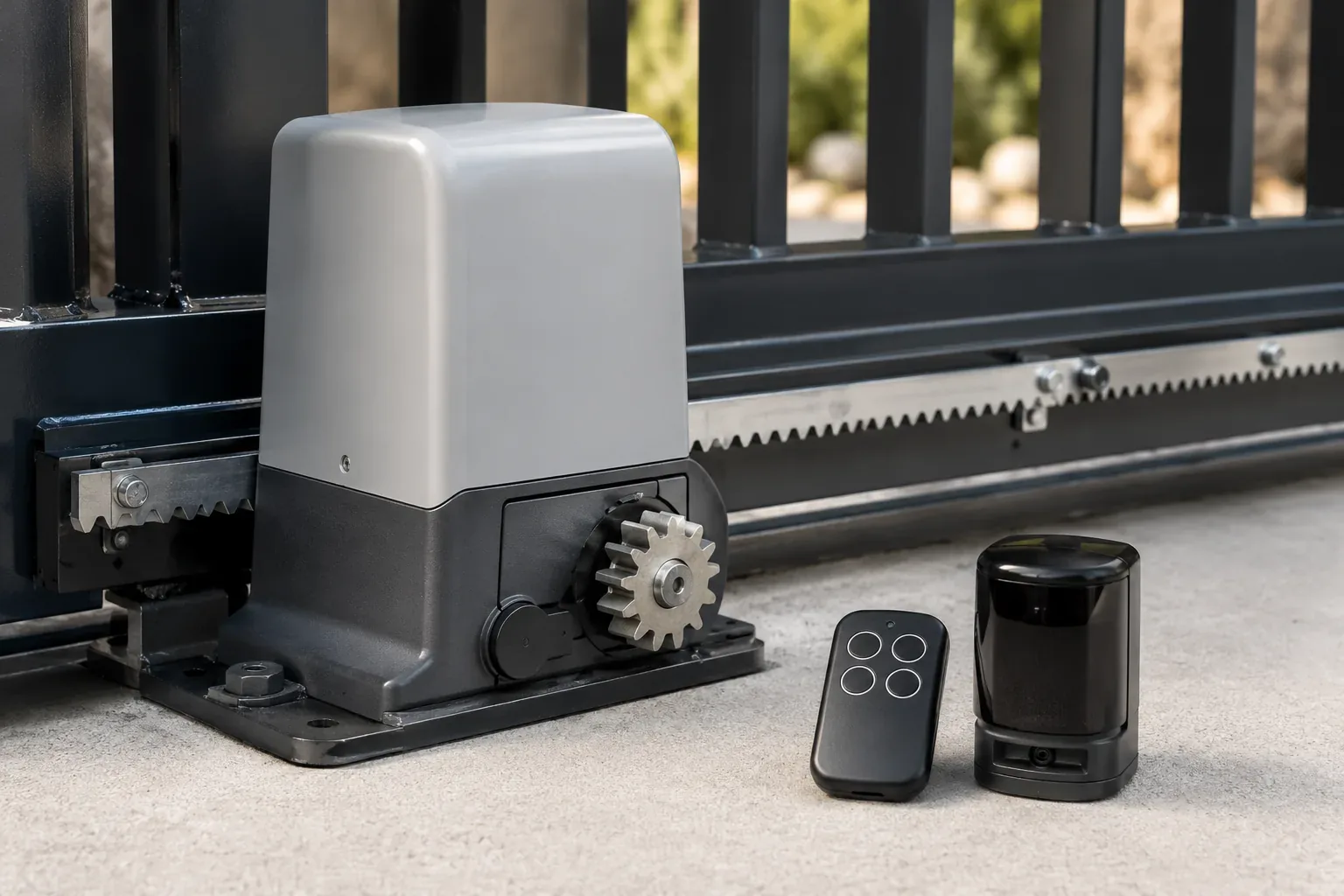
Yadav Entrance Automation supplies a complete gate motor and shutter motor range for India's gates and shutters, sliding-gate operators, swing-gate operators and rolling shutter motors from 100 kg to 4,000 kg, backed by control panels, rolling-code remotes, safety photocells and loop detectors. Every gate motor is engineered for reliable, safe automation with encoder soft start/stop, battery backup and fail-safe obstacle detection as standard.
| Gate Capacity | 600 / 1,000 / 1,800 / 2,500 / 4,000 kg (sliding) |
| Shutter Motor Range | 100 kg – 1,500 kg (tubular & side gear) |
| Power Supply | 24V DC / 230V single-phase / 415V 3-phase |
| Remote / Photocell | 433MHz rolling-code; IP65 thru-beam pair |
Gate Motors & Shutter Motors Built for Indian Conditions
Six engineering advantages that make Yadav Entrance Automation gate motors and rolling shutter motors the preferred choice for factories, warehouses, gated estates and commercial premises across India.
Rack-and-Pinion Sliding Operators
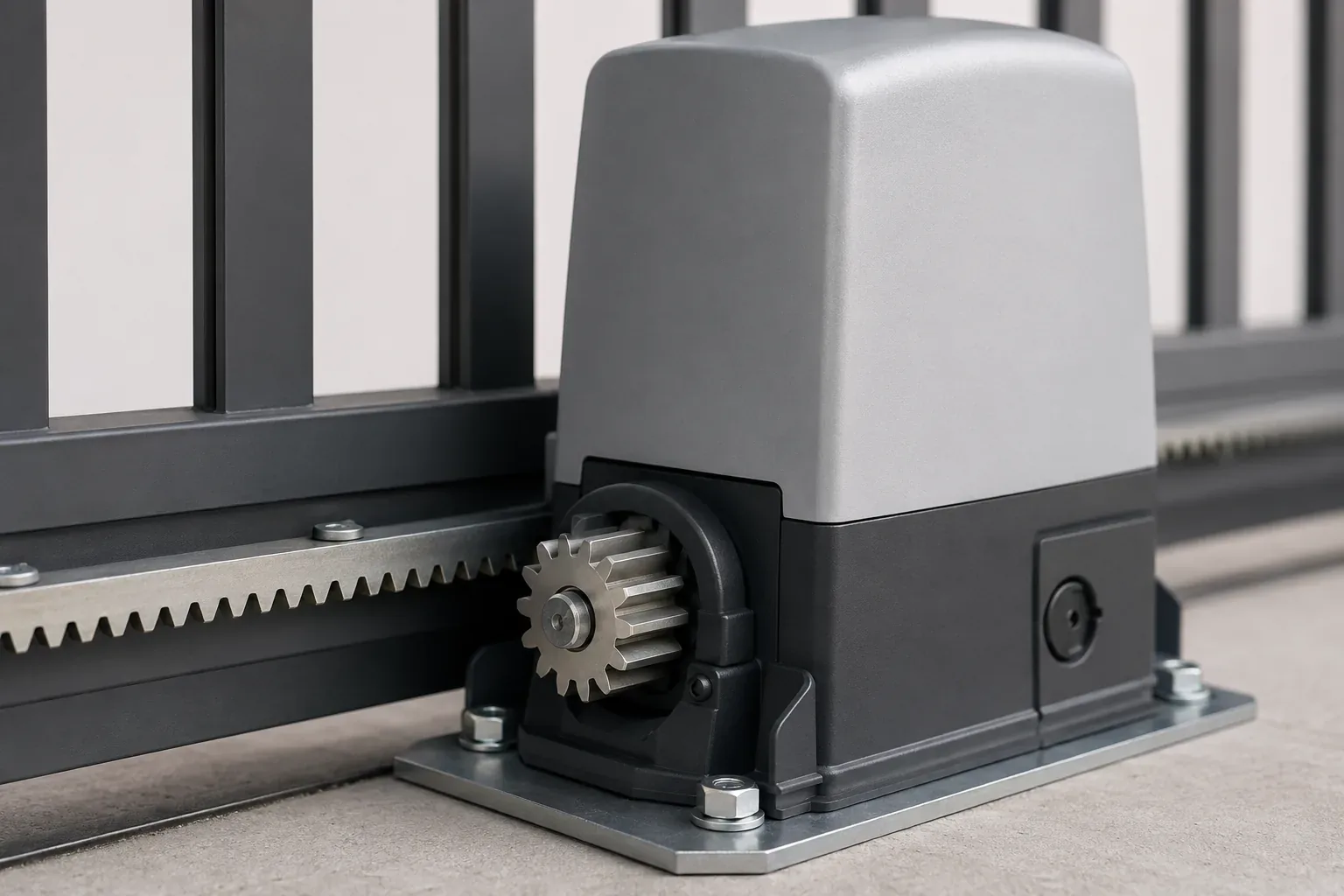
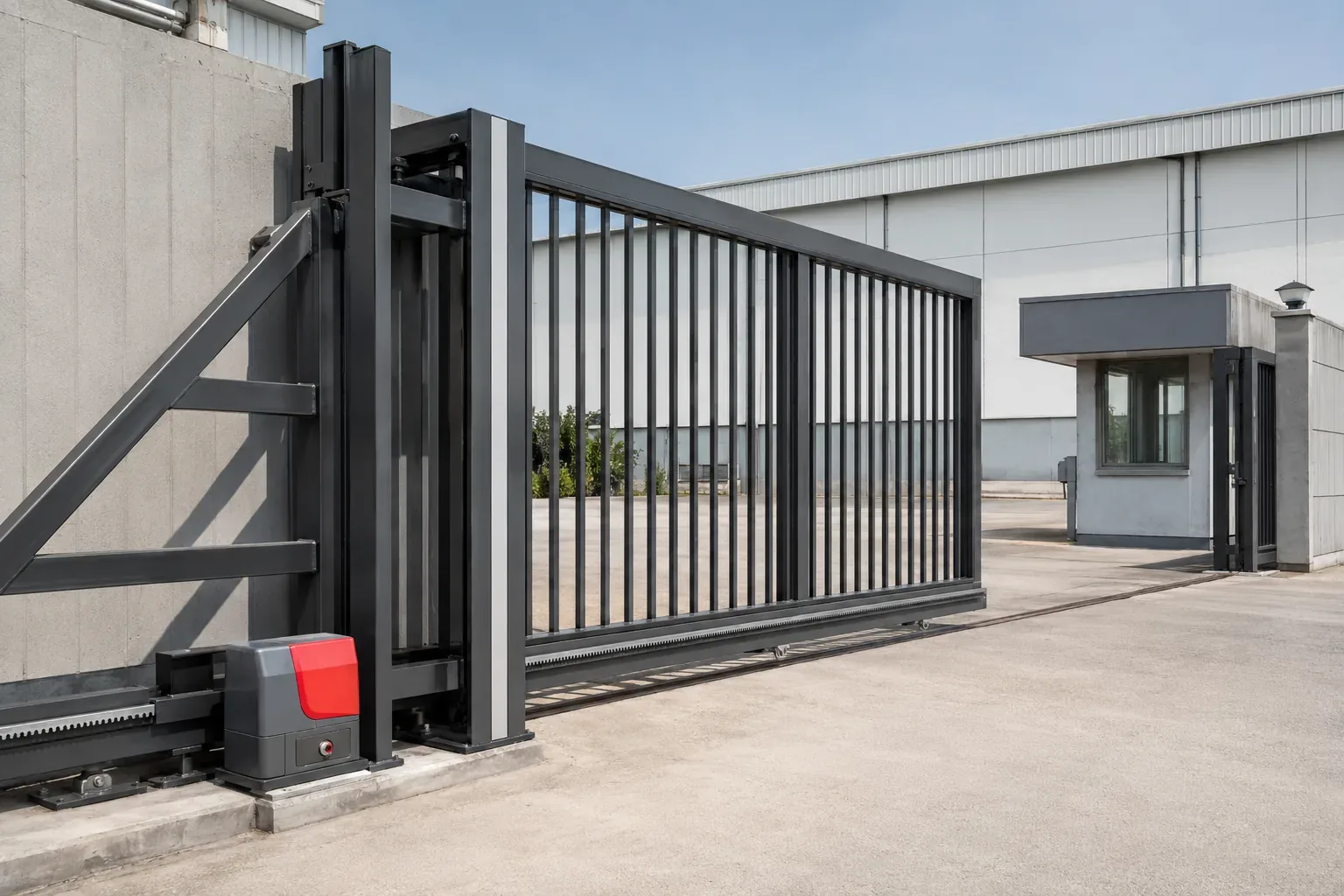
Our sliding gate motor range drives leaves from 600 kg to 4,000 kg on hardened rack-and-pinion, with encoder positioning for smooth soft start and soft stop. Heavy industrial operators handle continuous-duty factory gates without overheating.
Swing & Shutter Motor Options
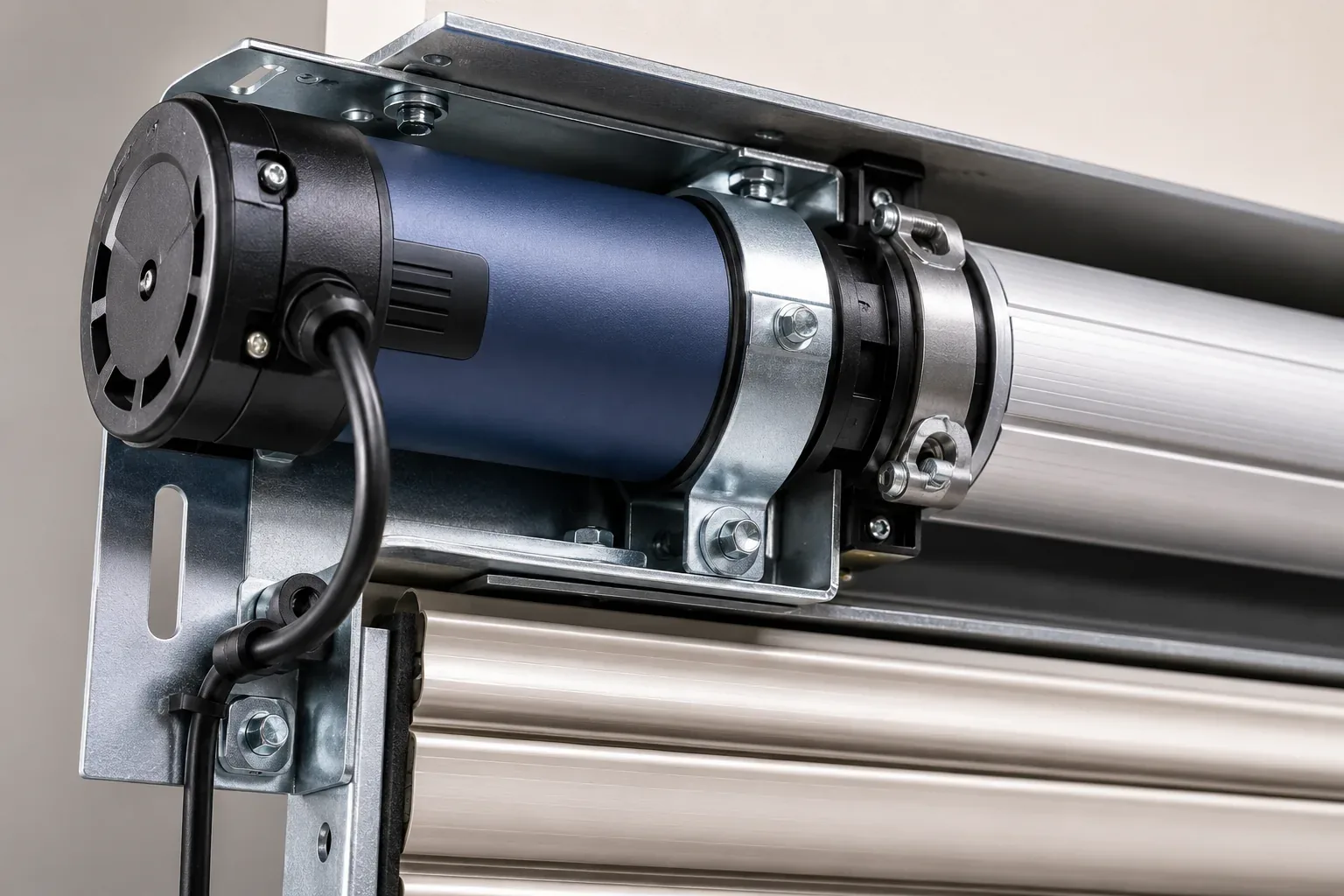
Articulated-arm and ram swing-gate operators for residential and estate gates, plus rolling shutter motors in tubular and side-gear types from 100 kg to 1,500 kg. One vendor covers every gate motor and shutter motor format you run.
24V DC with Battery Backup
Low-voltage 24V DC gate motors run through mains failure on integrated battery backup, keeping the gate operable in a power cut. High-traffic and 3-phase 230V/415V operators are available for heavy industrial shutter motor duty.
Safety Photocell & Loop Detector
Every automation is completed with IP65 thru-beam safety photocells that reverse the gate on obstruction, inductive loop detectors for vehicle presence, and safety edges on the leading rail, fail-safe protection as standard, not an add-on.
Rolling-Code Remote Control
433MHz rolling-code remote control gate transmitters defeat code-grabbing, with up to several hundred user memories per control panel. Add keypads, GSM modules and RFID readers for fleet-gate and estate-entry management.
Pan-India Install & AMC
Our service network installs and maintains gate motors and shutter motors nationwide, with Annual Maintenance Contracts carrying a 4-hour emergency response SLA. One vendor for supply, installation, spares and service, no middlemen.
Gate Motors & Automation Accessories We Supply
Eight gate motor and automation-accessory categories covering every gate and shutter application. Each is matched to your leaf weight, traffic and safety requirement. Tell us your gate and we specify the right kit.
Most Popular
Gate Motors
Sliding-gate and swing-gate operators for residential, estate and industrial gates. Rack-and-pinion sliding motors from 600 kg to 4,000 kg, plus articulated-arm and ram swing operators. All with encoder soft start/stop and obstacle detection.
View details
Shutter Automation
Rolling Shutter Motors
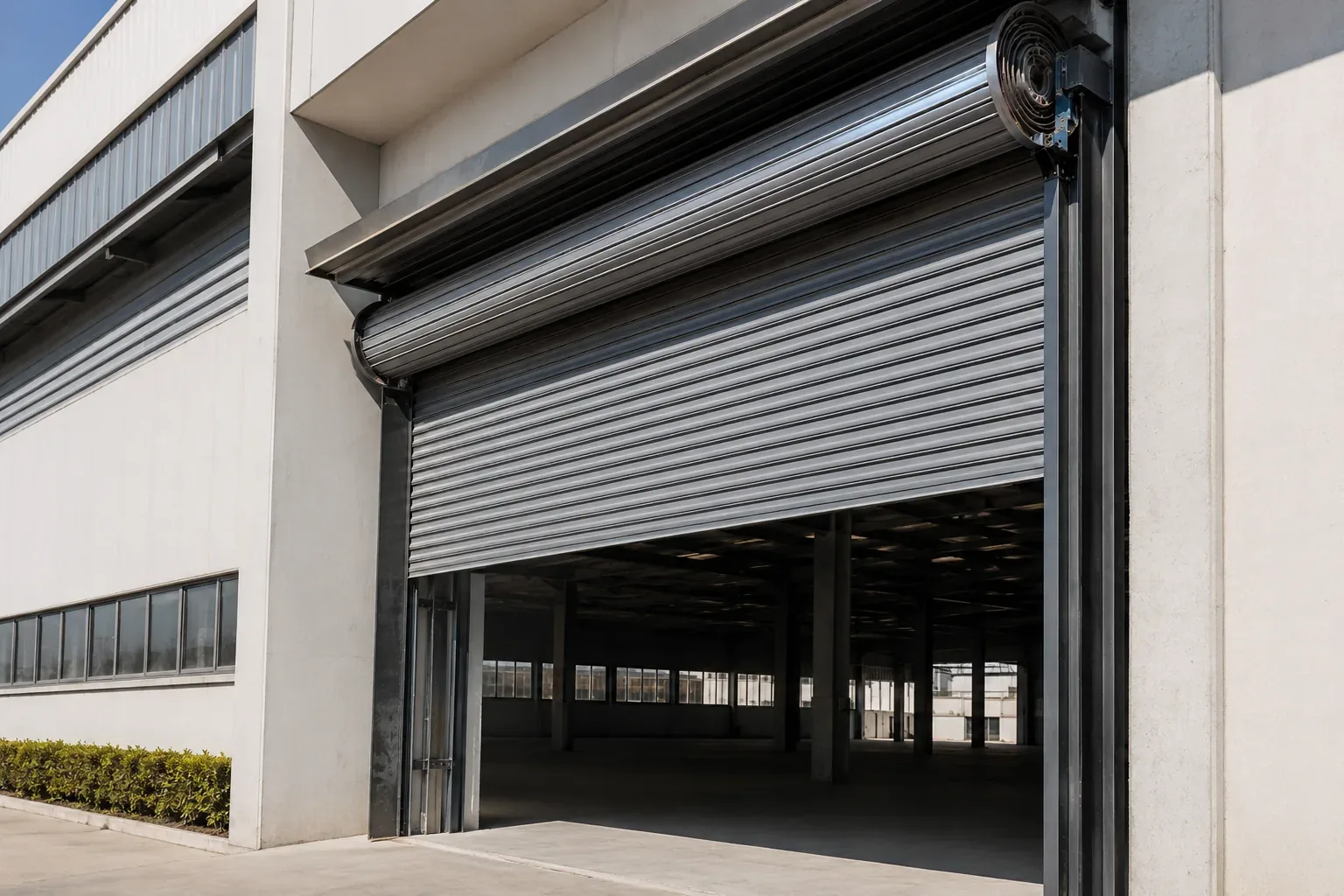
Side-gear and tubular rolling shutter motors that automate galvanized and aluminium shutters from 100 kg to 1,500 kg. Manual override chain, electronic limits and a control panel let one shutter motor drive bay doors, shopfronts and warehouse closures.
View details
Brain of the System
Control Panels
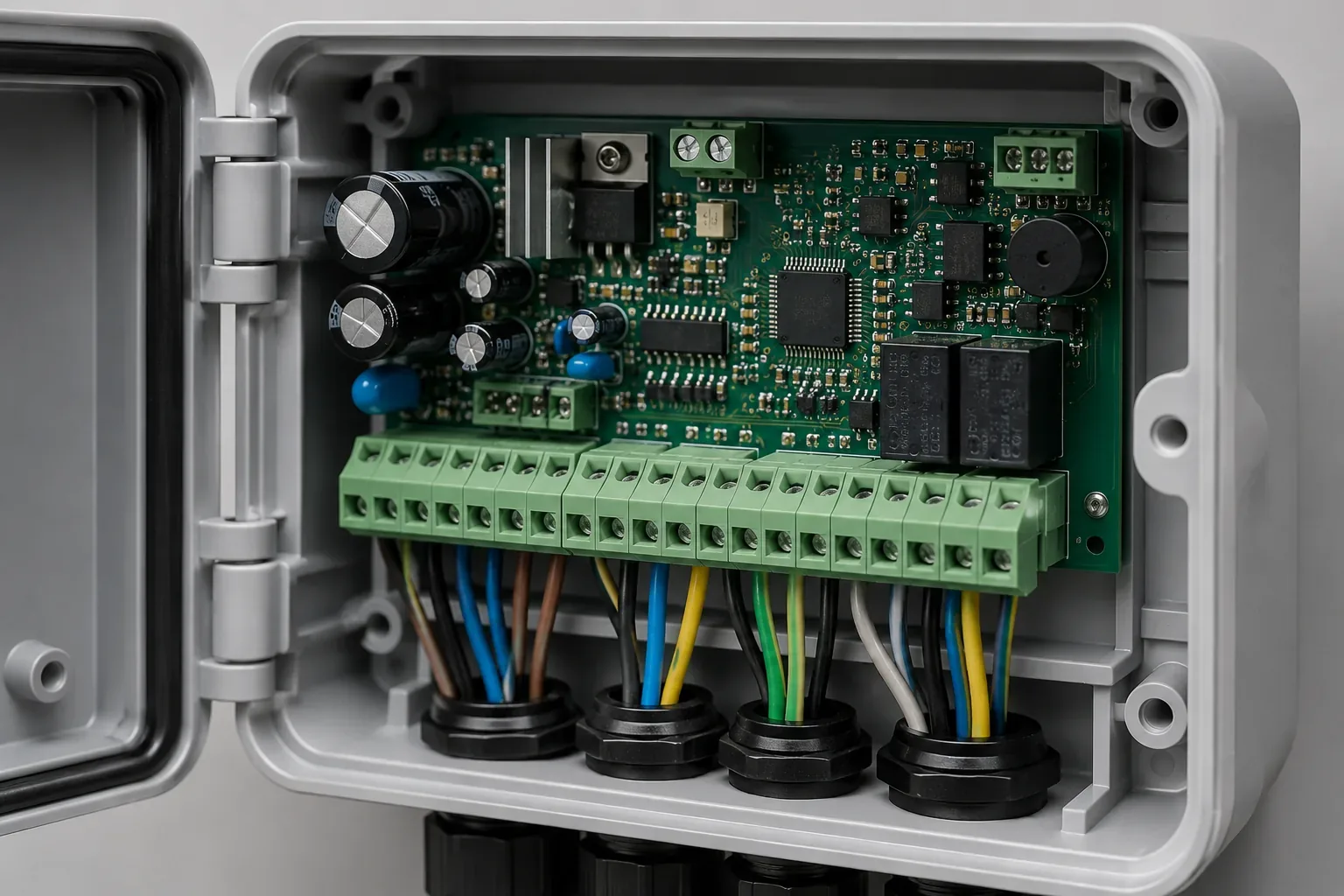
MCU-based control panels that drive the gate motor, manage limits, store remotes and integrate every safety device. Auto-close timers, partial-open mode and diagnostic LEDs make commissioning and fault-finding fast on site.
View details
Access Control
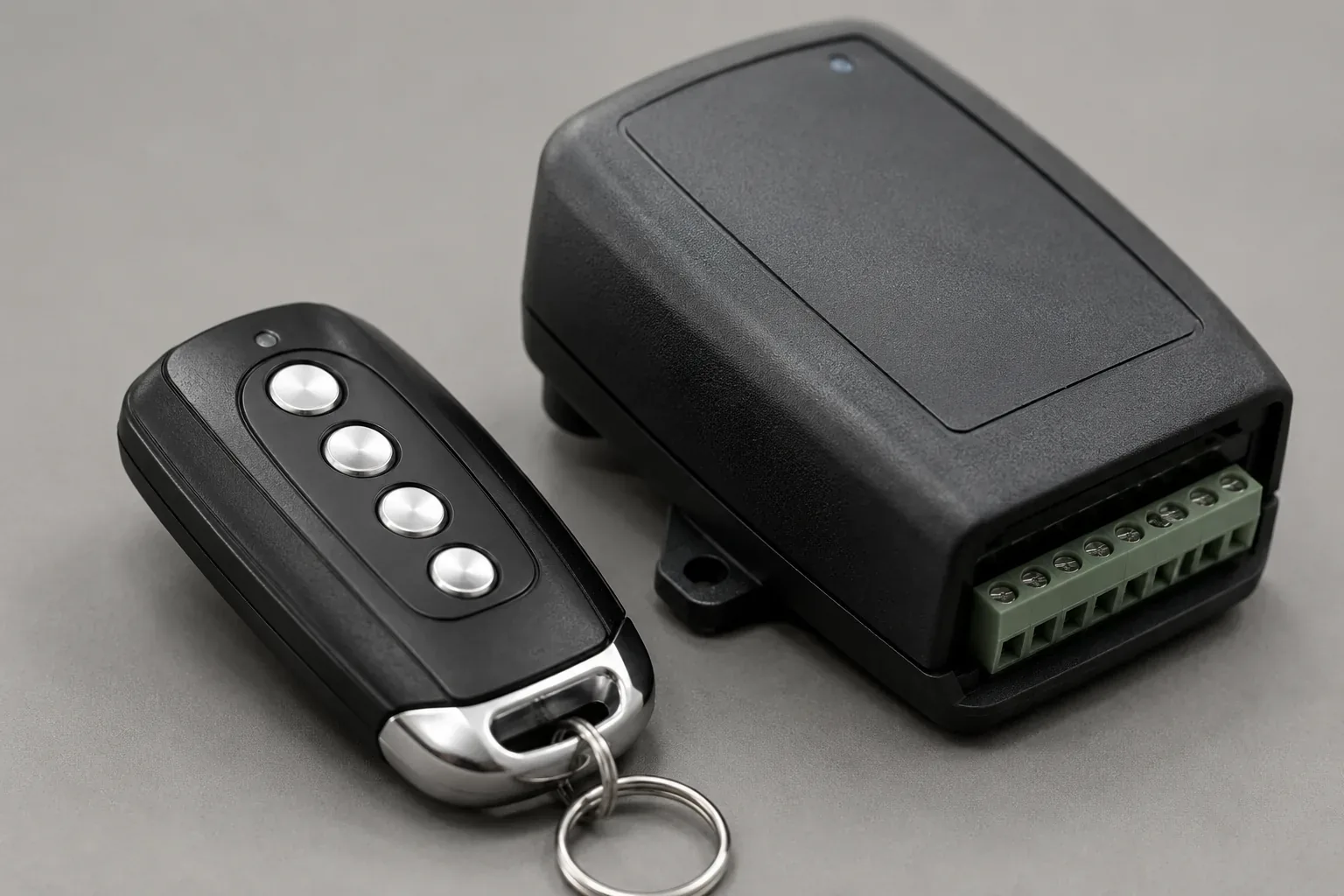
Remote Control Systems
433MHz rolling-code remote control gate transmitters, wall keypads, RFID readers and GSM modules. Rolling-code encryption defeats grabbers, while multi-user memory suits estates, factories and fleet gates with many drivers.
View details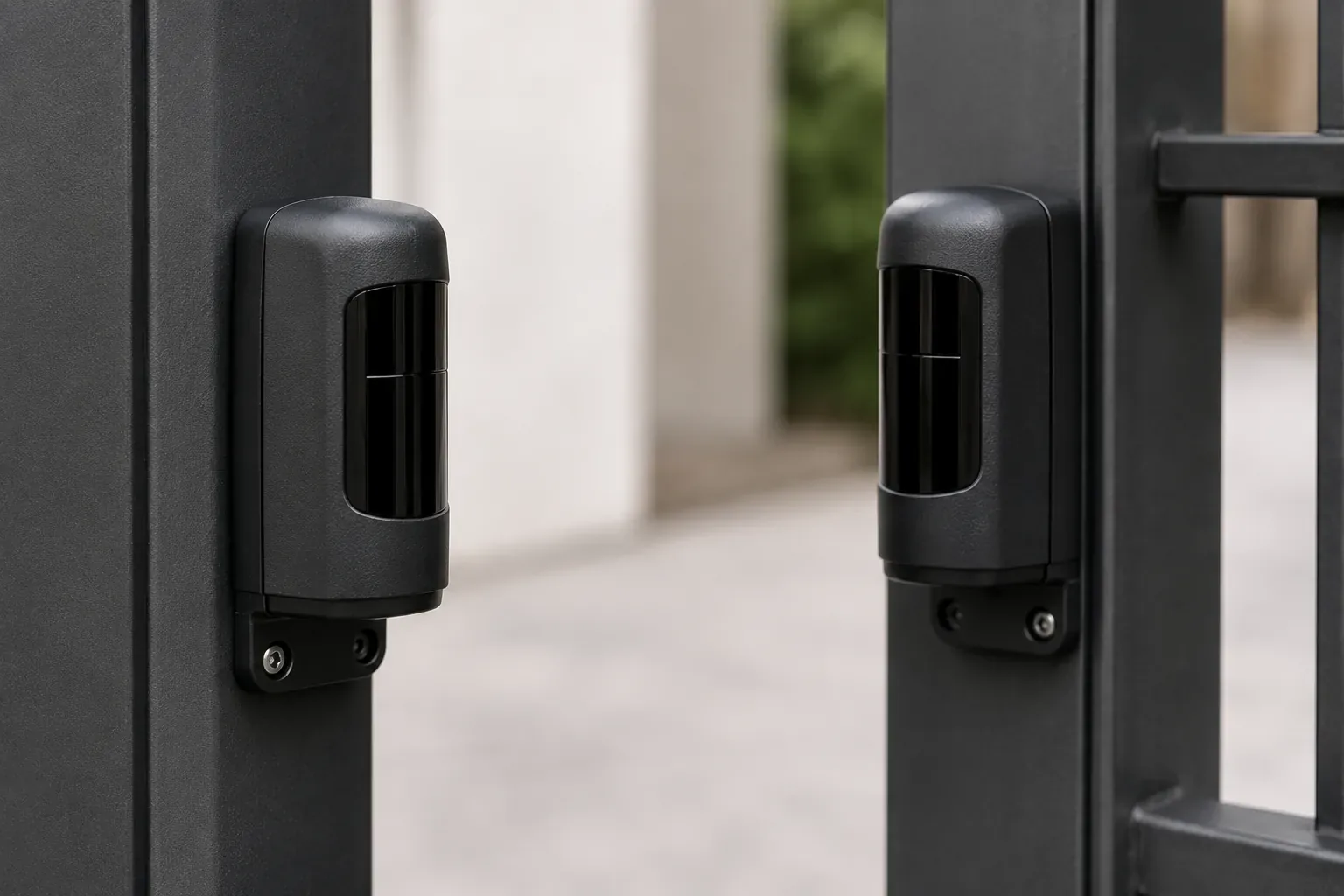 Obstacle Detection
Safety Photocells
Thru-beam safety photocell pairs that reverse the gate or shutter the instant the beam is broken, protecting vehicles, people and the motor itself. IP65 housings with a working range to suit wide industrial entrances.
View details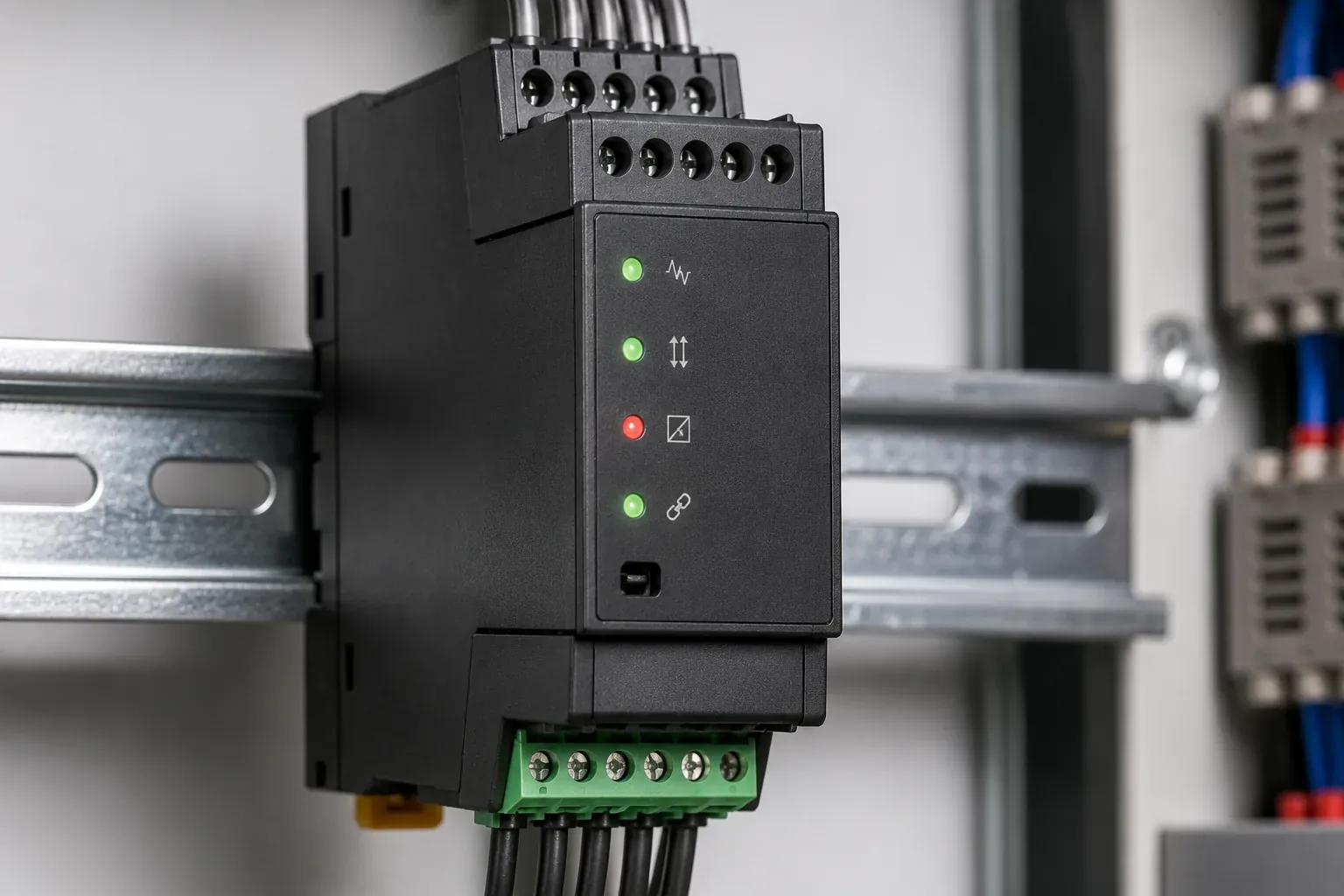 Vehicle Sensing
Loop Detectors
Inductive loop detectors that sense a vehicle over a buried loop for safety reversing and free-exit opening. Single- and dual-channel units with adjustable sensitivity, ideal for barrier and sliding-gate vehicle automation.
View details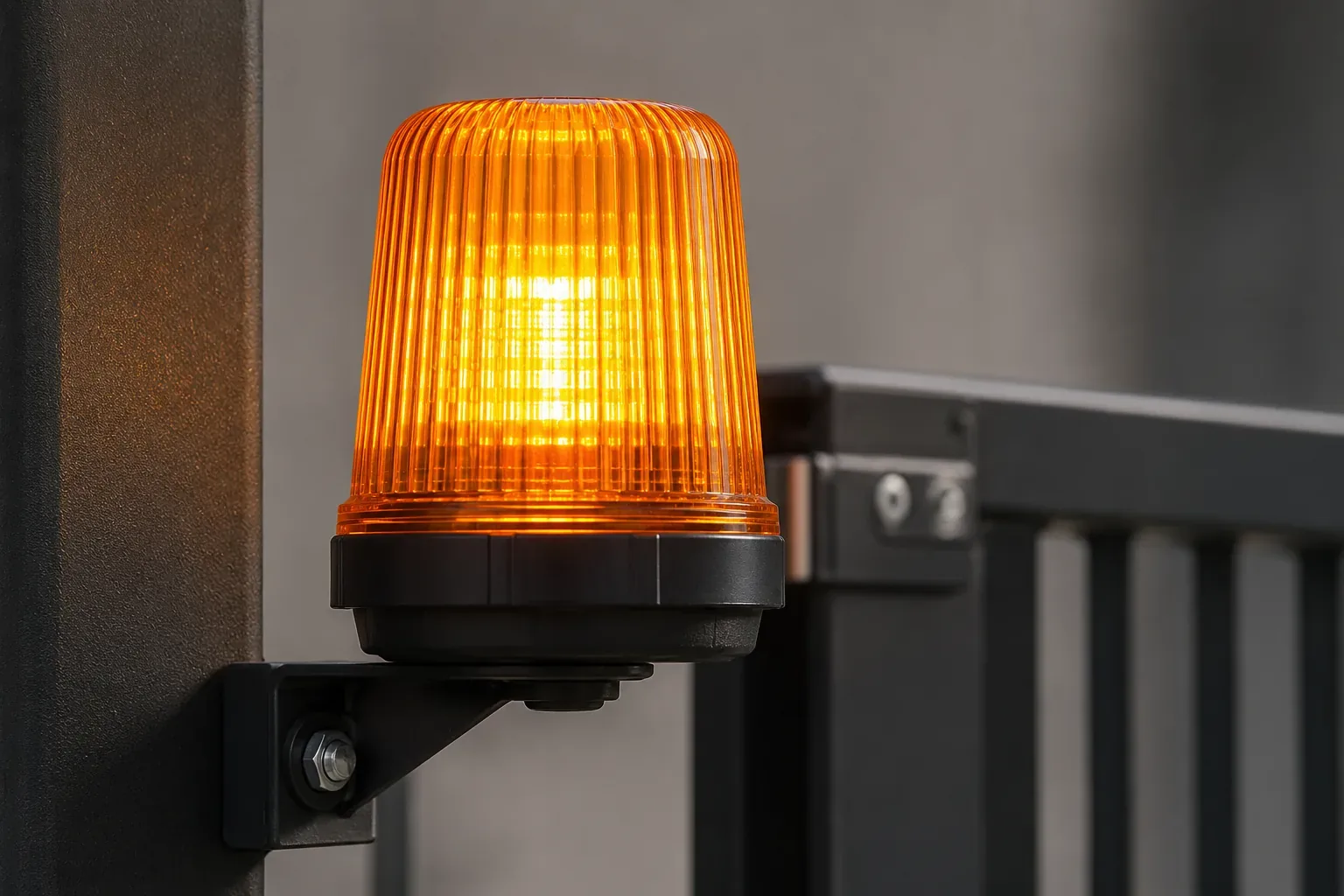 Visual Warning
Flashing Lamps
LED flashing and courtesy lamps that warn pedestrians and drivers whenever the gate motor is in motion. Low-power, weatherproof and wired straight to the control panel for automatic operation on every gate cycle.
View details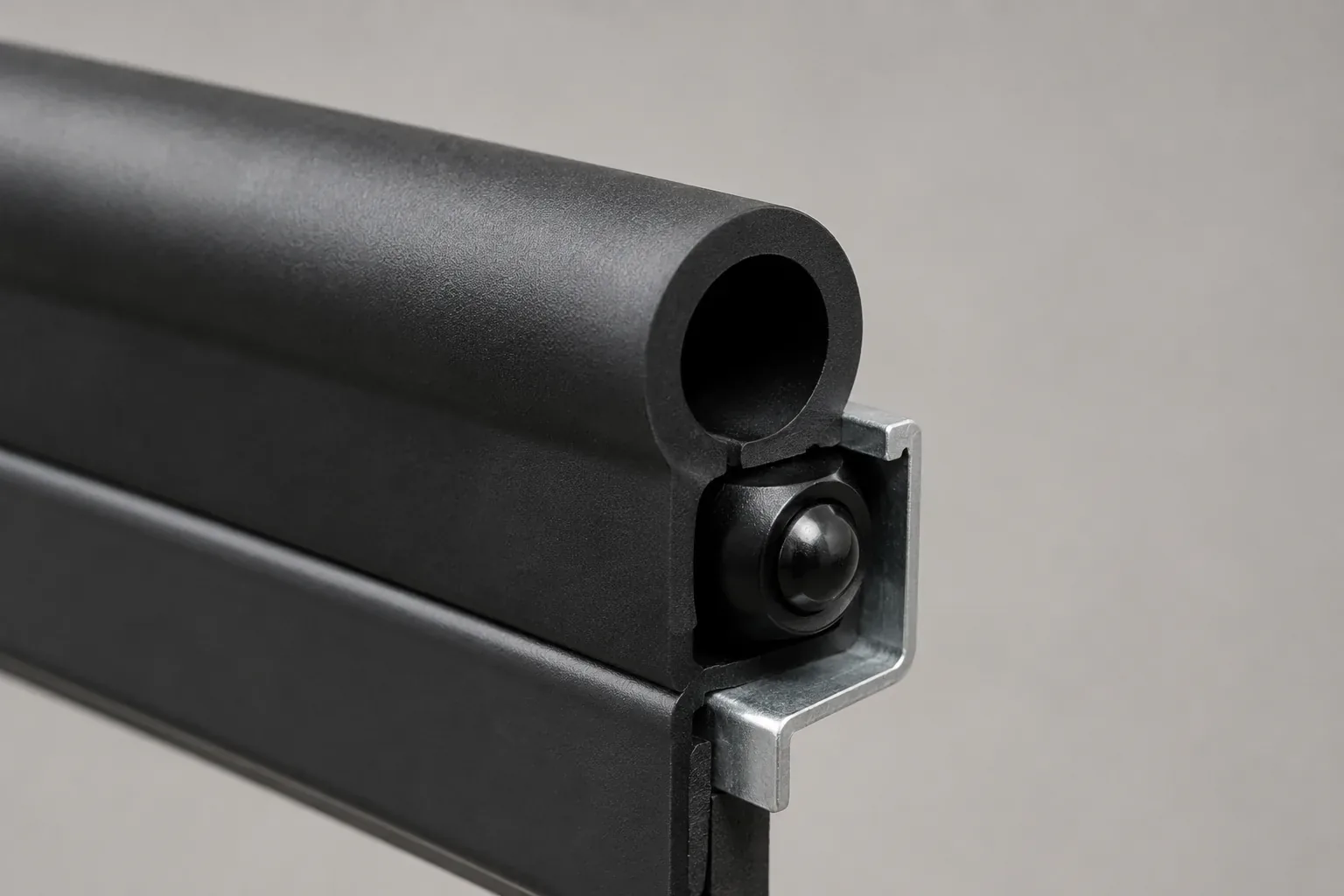 Edge Protection
Safety Sensors
Safety edges and contact sensors fitted to the leading rail of gates and shutters to stop and reverse motion on physical contact. The final layer of fail-safe protection alongside photocells and loop detectors on automated entrances.
View detailsGate Motors / Automation Accessories: each type in detail
Where each one fits, how it compares with the alternatives, and what to decide before you ask for a quote.
Control Panels
Where the Control Panels fits. The part of an automated entrance that decides what happens: an MCU-based panel taking inputs from photocells, loop detectors and safety edges, and driving the motor accordingly. Every automated gate, shutter and barrier has one, and it is where most of the behaviour people notice actually lives.
Control Panels vs the alternatives. Against a simple relay arrangement, a programmable panel handles conditional behaviour: hold-open times, auto-close, partial opening for pedestrians, and correct responses when a safety device triggers. Against a proprietary panel supplied with one motor, a properly specified panel integrates with your access control rather than sitting beside it. The panel is also where most retrofit incompatibility shows up.
Specifying a Control Panels. Tell us what the panel must control and what it must listen to: photocells, loops, safety edges, access control, fire alarm. Say what behaviour you want, particularly auto-close timing and whether pedestrian part-opening is needed. Confirm the environment, since a panel in a dusty or wet location needs an enclosure specified for it.
Remote Control Systems
Where the Remote Control Systems fits. The everyday way most people operate a gate: 433MHz handsets with rolling-code security, for households, small offices and any site where the users are known and few enough to hold a remote.
Remote Control Systems vs the alternatives. Against a keypad, a remote is faster and needs nothing remembered, but it can be lost or lent and it keeps working for whoever holds it. Against RFID tags, remotes need a deliberate press rather than reading automatically. Against app control, remotes work without a phone, a network or a battery in anything but the handset, which is why most sites keep at least a few.
Specifying a Remote Control Systems. Tell us how many handsets are needed and who holds them. Confirm the gate operator and panel so the receiver matches. Say whether rolling code is required, which for anything security-relevant it is. Consider whether a keypad or tag system should sit alongside for visitors and contractors who should not keep a handset.
Safety Photocells
Where the Safety Photocells fits. The device that stops a gate or shutter closing on a vehicle or a person: an IP65-rated through-beam pair mounted either side of the opening. Every powered gate, barrier and shutter should have them, and on most installations they are the difference between a safe entrance and an accident waiting for the wrong moment.
Safety Photocells vs the alternatives. Against safety edges, photocells detect something in the opening before contact, while an edge responds after touching it. They are complementary rather than alternative: photocells prevent the closure starting or continuing, edges catch what the beam misses. A properly specified installation has both, which is why we quote them together.
Specifying a Safety Photocells. Tell us the opening width so the beam range is right, and where the units can be mounted at a sensible height for what you need to detect. Confirm the environment, since IP65 handles most outdoor positions but dust and direct spray still deserve mention. Say what else is on the installation so the panel inputs are specified correctly.
Flashing Lamps
Where the Flashing Lamps fits. Warning people that a gate is about to move: LED flashing and courtesy lamps mounted where anyone approaching can see them. On a large or fast gate, a light that starts before movement is the only warning a pedestrian gets that several hundred kilograms is about to travel across their path.
Flashing Lamps vs the alternatives. Against relying on the gate being visible, a lamp gives warning before movement starts rather than after, which matters most in the dark and where the gate is approached from an angle. Against an audible warning, a light works for anyone wearing hearing protection or headphones, which on an industrial site is most people. Many sites specify both.
Specifying a Flashing Lamps. Tell us where people approach the gate from, since that determines lamp position more than the gate itself does. Confirm whether the lamp should pre-flash before movement, which on heavy gates it should. Say whether the location is exposed, and whether a courtesy light is also wanted to illuminate the entrance at night.
Safety Sensors
Where the Safety Sensors fits. Edge protection on a moving leaf or curtain: a safety edge that detects contact and immediately stops and reverses the movement. It is the last line of defence, catching what photocells and loops did not see, and it belongs on the leading edge of any powered gate, shutter or barrier that could trap someone.
Safety Sensors vs the alternatives. Against photocells, which detect before contact, an edge responds on contact. That sounds like a weaker protection and it is, which is exactly why it is a backup rather than a substitute. Nothing detects everything: a beam can be stepped over or under, an edge only reacts once touched. Together they cover far more than either alone.
Specifying a Safety Sensors. Tell us what the edge is fitted to and the leading-edge profile, since the sensor has to fit it. Confirm the movement type, because a swinging leaf, a sliding leaf and a descending curtain present different trapping risks. Say what else is installed so the panel handles the stop-and-reverse correctly, and confirm the environment.
Where Gate Motors & Accessories Are Used
Yadav Entrance Automation gate motors, shutter motors and safety accessories are deployed across India's industrial, commercial and residential sectors. Each with specific leaf weight, traffic and safety requirements our engineers address at specification stage.
Heavy sliding gate motors and shutter motors for continuous-duty factory entrances, with loop detectors for truck movement
Rolling shutter motors and bay-door automation with photocells and flashing lamps for safe high-traffic loading bays
Sliding and swing gate motors with rolling-code remotes, keypads and RFID for resident and visitor estate access
Swing-gate operators and control panels with safety sensors for corporate campuses and IT-park entrances
Loop detectors and gate motors integrated with boom barriers for car-park and toll-lane vehicle automation
Tubular rolling shutter motors with remote control for shop shutters, showrooms and shopping-centre entrances
Multi-gate control panels with safety photocells and flashing lamps for high-footfall public-building entrances
Sealed shutter motors and safety edges for refrigerated dispatch bays needing reliable, hygienic automated closure
Full Gate Motor & Shutter Motor Specifications
Complete engineering data for the Yadav Entrance Automation gate motor, rolling shutter motor and accessory range. All systems are configured to your gate, leaf weight, traffic level, power supply and safety devices are matched to the application.
| Parameter | Specification |
|---|---|
| Sliding Gate Capacity | 600 kg / 1,000 kg / 1,800 kg / 2,500 kg / 4,000 kg (rack-and-pinion) |
| Swing Operator | Articulated arm or hydraulic ram; leaves up to 5 m / 500 kg per leaf |
| Rolling Shutter Motor | Tubular & side-gear types, 100 kg – 1,500 kg; manual override chain |
| Power Supply | 24V DC (battery backup) / 230V single-phase / 415V 3-phase |
| Drive & Control | Encoder soft start / soft stop; MCU control panel with auto-close timer |
| Remote Control | 433MHz rolling-code transmitter; multi-user memory; keypad / RFID / GSM optional |
| Safety Photocell | Thru-beam pair, IP65, working range up to 20 m; auto-reverse on beam break |
| Loop Detector | Inductive, single or dual channel; adjustable sensitivity & frequency |
| Flashing Lamp | LED weatherproof courtesy/flashing lamp; wired to control panel |
| Safety Sensor | Resistive / pneumatic safety edge on leading rail; stop & reverse |
| Battery Backup | Integrated on 24V DC operators: continued operation during mains failure |
| Certifications | ISO 9001:2015, CE Marked (EU Machinery Directive 2006/42/EC) |
| Warranty | 1 year on accessories; 2 years on gate motor / shutter motor drive unit |
Gate Motor & Accessory Comparison
| Accessory / Product | Rating / Spec | Gate Motor (Sliding) ⭐ Most Popular | Compatible With | Function |
|---|---|---|---|---|
| Remote Control (Rolling-Code) | 433MHz, 4-button | All operators | Any gate / shutter motor | Wireless open / close |
| Safety Photocell (Pair) | IP65, thru-beam, 20 m | All operators | Sliding / swing / shutter | Auto-reverse on obstruction |
| Flashing Lamp | LED, weatherproof | All operators | Any control panel | Visual motion warning |
| Loop Detector | Single channel, inductive | Sliding gates / barriers | Sliding gate / boom barrier | Vehicle presence sensing |
| Rolling Shutter Motor | 100–1,500 kg, tubular/side gear | Shutter assemblies | Galvanized / aluminium shutters | Powered shutter open / close |
| Gate Motor (Sliding) | 600–4,000 kg, rack-and-pinion | Sliding gates | Industrial / estate gates | Automated sliding gate drive |
Certified to International Standards
Our gate motor and automation-accessory range carries the certifications required by India's largest industrial operators, multinational manufacturers and government procurement bodies.
9001
Quality management certification covering supply, manufacture, installation and after-sales service of all gate motors, shutter motors and accessories.
European conformity per EU Machinery Directive 2006/42/EC, required by multinational clients and confirming gate motor safety compliance.
Safety photocells, lamps and outdoor accessories rated IP65 for dust- and water-jet protection in exposed Indian gate environments.
2016
Installation methodology compliant with the National Building Code of India 2016 for fire-egress and access-control safety clearance.
in India
Supplied and integrated by our registered Indian facilities, qualifies for government procurement preference and PSU tenders.

Gate Motor Selection + Quote in 24 Hours
No generic quotes, no run-around.
Genuine Branded Motors
Every gate motor and shutter motor supplied under ISO 9001 quality control, genuine units, no grey-market parts, no middlemen.
Free Site Survey & Wiring Plan
Our engineers survey your gate or shutter and supply a full wiring and safety-device layout for your contractor, at no charge.
AMC Available Nationwide
Annual Maintenance Contracts covering all gate motors, shutter motors and accessories with a 4-hour emergency response SLA.
Choosing gate motors & accessories: what actually decides the specification
A sliding gate motor is the motors, panels, sensors and controls that automate a gate, shutter or barrier. The right one is decided by the opening and how it is used, not by the catalogue. These are the things worth settling before anyone quotes.
What to measure
- Clear opening width and height: the daylight opening the vehicle or person passes through, not the hole in the wall.
- Headroom above the opening: decides which products are possible at all.
- Side-room, both sides: guides, tracks and motors live here, and it is rarely equal on both sides.
- Power at the position: 230V single-phase or 415V three-phase, 50 Hz.
- Cycles per shift: the most under-specified figure on a typical enquiry.
- Environment: temperature, dust, washdown, coastal air or a hygiene requirement.
The full gate motors accessories range
- Gate Motors: Sliding-gate and swing-gate operators for residential, estate and industrial gates.
- Rolling Shutter Motors: Side-gear and tubular rolling shutter motors that automate galvanized and aluminium shutters from 100 kg to 1,500 kg.
- Control Panels: MCU-based control panels that drive the gate motor, manage limits, store remotes and integrate every safety device.
- Remote Control Systems: 433MHz rolling-code remote control gate transmitters, wall keypads, RFID readers and GSM modules.
- Safety Photocells: Thru-beam safety photocell pairs that reverse the gate or shutter the instant the beam is broken: protecting vehicles, people and the motor itself.
- Loop Detectors: Inductive loop detectors that sense a vehicle over a buried loop for safety reversing and free-exit opening.
- Flashing Lamps: LED flashing and courtesy lamps that warn pedestrians and drivers whenever the gate motor is in motion.
- Safety Sensors: Safety edges and contact sensors fitted to the leading rail of gates and shutters to stop and reverse motion on physical contact.
Where gate motors & accessories are typically installed
We build gate motors & accessories for retrofits to existing gates and shutters, and spares for installed equipment.
Sectors we supply
- Warehousing and logistics: distribution centres, 3PL facilities and dispatch docks.
- Cold chain: cold stores, freezer rooms and temperature-controlled dispatch.
- Automotive and engineering: component plants, press shops and assembly lines.
- Pharmaceutical and clean manufacturing: controlled and hygiene-critical areas.
- Infrastructure and construction: plant perimeters, site structures and civil scopes.
- Commercial and institutional: offices, campuses, hospitals and parking facilities.
What drives the cost
We quote per project rather than publishing prices. The figure moves with the leaf or curtain weight, the duty cycle, and the safety devices required. Send the measurements above and an engineer returns a drawing and a written quotation. Talk to an engineer →
Standards, materials and what we certify
- ISO 9001: our quality management system is certified to it.
- CE marking on applicable products: a manufacturer's declaration of conformity, not a quality grade.
- IS 2062 structural steel for fabrication, gates and structures.
- IS 6248 for metal rolling shutters.
- EN 1634 as the reference for fire-resistance testing.
- Make in India and GST registered: relevant to government and PSU procurement.
- 230V single-phase / 415V three-phase, 50 Hz: standard Indian industrial mains.
Reference sources: European Commission, CE marking · Bureau of Indian Standards
From enquiry to handover
- Enquiry. Opening sizes, site location and application. An engineer picks it up.
- Site survey. We measure the clear opening, headroom, side-room and power position.
- Drawing and quotation. Equipment, safety schedule, electrical requirement and a written delivery date.
- Manufacture at Neemrana. Built to the approved drawing and the measured opening.
- Installation and commissioning. Fitted and tested by our own team through full travel with safety devices live.
- Handover, spares and AMC. Operating instructions on site, then service through the nearest team.
Explore the full product range, the sectors we serve, our delivered installations, or the areas we cover.
Gate Motors & Accessories: frequently asked questions
Who manufactures gate motors & accessories in India?
Yadav Entrance Automation Pvt. Ltd. manufactures gate motors & accessories in India, at our plant at Neemrana, Rajasthan on the Delhi-Jaipur NH-48 corridor. We have been building entrance automation equipment since 2011, with more than 500 installations across over 50 cities. Equipment is made to the measured opening rather than to a catalogue size, then installed and commissioned by our own engineers.
What is a sliding gate motor?
A sliding gate motor is the motors, panels, sensors and controls that automate a gate, shutter or barrier. It is specified against the opening it serves and the way that opening is used, so two openings of the same width can need different equipment. We build gate motors & accessories for retrofits to existing gates and shutters, and spares for installed equipment.
What does a sliding gate motor cost?
We quote per project rather than publishing a price, because the figure moves with the leaf or curtain weight, the duty cycle, and the safety devices required. Send the opening dimensions, the site location and how the opening is used, and an engineer will come back with a drawing and a written quotation. That is faster than a list price that would need revising once the site is measured.
Do you supply gate motors & accessories near me?
We install and service across North and West India, with the plant at Neemrana and teams in Delhi NCR and Gujarat. Installations to date cover more than 50 cities, concentrated in the Delhi-Jaipur corridor, Haryana, Rajasthan and Gujarat. Tell us the site location with your enquiry and we will confirm coverage before quoting.
Can gate motors & accessories be motorised or automated?
Yes, where the product supports it. Motorised operation is specified against the weight being moved and the number of cycles per day, not simply added on. The drive, the control panel and the safety devices are listed on the technical drawing you approve before manufacture, so nothing about the automation is a surprise on site.
What power supply is needed?
Standard Indian industrial mains: 230V single-phase or 415V three-phase at 50 Hz. Which one applies depends on the product, the size of the opening and the duty cycle. The requirement is confirmed on the approved drawing so your electrical contractor can position the supply and isolator before delivery.
What measurements do you need to quote for gate motors & accessories?
Clear opening width and height first. The daylight opening, not the wall opening. Then the headroom above the opening and the free side-room each side. Add the power available at the position, how many openings, and roughly how often each is used in a shift. Those figures let an engineer rule out the wrong products before visiting.
Do you handle installation, or only supply?
We manufacture, install and commission with our own team, and we do not sub-contract installation of our own equipment. How well a unit is fitted to its opening decides how long it lasts, so it is not work we hand off. Handover includes operating instructions on site.
Do you provide service, spares and AMC?
Yes. We supply genuine spares and offer Annual Maintenance Contracts for the equipment we manufacture. On high-cycle equipment maintenance matters more than most buyers expect, because wear tracks cycles rather than calendar age. Tell us the site and the equipment and we will route it to the nearest service team.
Which standards and certifications apply?
Our manufacturing is certified to ISO 9001 and applicable products are CE marked. Structural steelwork commonly references IS 2062 and rolling shutters IS 6248, both published by the Bureau of Indian Standards; fire-resistance testing is commonly referenced to EN 1634. If your specification names a standard, send the clause with the enquiry so it is written into the drawing.
Can you make gate motors & accessories to a non-standard size?
Yes, and most industrial openings are non-standard. Equipment is built to the measured opening rather than to a catalogue size. We take the clear width, clear height, headroom and side-room on site, then confirm the achievable size on the drawing before manufacture begins.
How long does manufacture and delivery take?
It depends on the product and whether the opening is standard or bespoke, and it moves with material availability and the current order book. Rather than quote a general figure that may not hold, we confirm a delivery date in writing with the quotation.
Do you work with contractors, consultants and PSUs?
Yes. We supply end users directly and also work as a vendor to main contractors, PMCs and design consultants. We are GST registered and manufacture under Make in India, which matters for government and PSU procurement. For tendered work we can provide drawings, product data and the compliance documentation the specification calls for.
What safety devices are included?
For powered equipment, typically safety photocells across the opening, a safety edge where applicable, limit switches at both travel ends, and a manual release for use during a power cut. Vehicle equipment can add loop detectors. The exact schedule is listed on the drawing you approve, so check that rather than assuming a standard set.
How do I get a quote for gate motors & accessories?
Use the enquiry form on this page and the details reach our team directly, or call and send a WhatsApp message on +91 95492 20707, or email [email protected]. If you already hold drawings or a specification, say so and an engineer will respond rather than a generic reply.
What does a gate control panel actually do?
It reads the inputs, decides what should happen and drives the motor. Auto-close timing, obstruction response, pedestrian opening and interfacing with access control all live in the panel rather than in the motor.
Can a gate control panel interface with our access control system?
Yes, and that is worth specifying rather than retrofitting. Tell us what system you run so the panel is chosen with the correct inputs and outputs from the start.
What is pedestrian part-opening?
The gate opens partially for someone on foot rather than fully for a vehicle, which saves cycle time and wear. It is configured in the panel and is worth having on any gate that people use as well as vehicles.
What is rolling code and why does it matter?
The code changes every time the button is pressed, so a captured transmission cannot simply be replayed to open the gate. Fixed-code remotes can be copied by anyone with inexpensive equipment, which is why rolling code is standard on our systems.
What happens if a gate remote is lost?
It should be deleted from the receiver so it stops working, in the same way a lost card is cancelled. If your installation has no record of which handsets are programmed, that is worth sorting out before it matters.
Should visitors get a gate remote or a keypad code?
A keypad, generally. Giving a handset to a contractor means they keep working access indefinitely, whereas a code can be changed. Most sites use remotes for regular users and a keypad or intercom for everyone else.
Should a gate have photocells or safety edges?
Both. Photocells detect an obstruction before contact; edges respond on contact for anything the beam misses. They cover different failure modes and a complete installation has both.
Why does my gate stop for no reason?
Most often a misaligned or dirty photocell, which reads a blocked beam. That is the system behaving correctly on bad information. Cleaning and realignment are routine service items rather than faults.
How high should gate safety photocells be mounted?
Low enough to detect a child or a low obstruction, which is the point of them. We set the height at installation for what actually needs detecting at your opening.
Do I really need a flashing lamp on a gate?
On a heavy or fast gate, yes. It is the only warning someone gets before movement starts, particularly at night or when approaching from an angle where the gate is not obviously about to move.
What is pre-flashing on a gate warning lamp?
The lamp starts flashing a few seconds before the gate moves rather than as it moves. Those seconds are what let someone stop walking. On heavy gates it should be configured as standard.
What is a courtesy light?
A light that illuminates the entrance for a period after the gate operates, so people can see the driveway. It is a convenience item rather than a safety one, and often specified alongside the warning lamp.
What does a safety edge do?
It detects contact along the leading edge and immediately stops and reverses the movement, so a person or object is released rather than crushed. It is the backup for anything the photocells did not detect.
Does a safety edge work on shutters as well as gates?
Yes. On a descending shutter the bottom edge is the trapping hazard, and an edge sensor there is particularly important on any shutter operated from where the operator cannot see the opening.
Will a safety edge stop and reverse the movement, or just stop it?
Stop and reverse, so whatever was struck is released. That behaviour is set in the control panel, which is why the panel and the safety devices are specified together.