
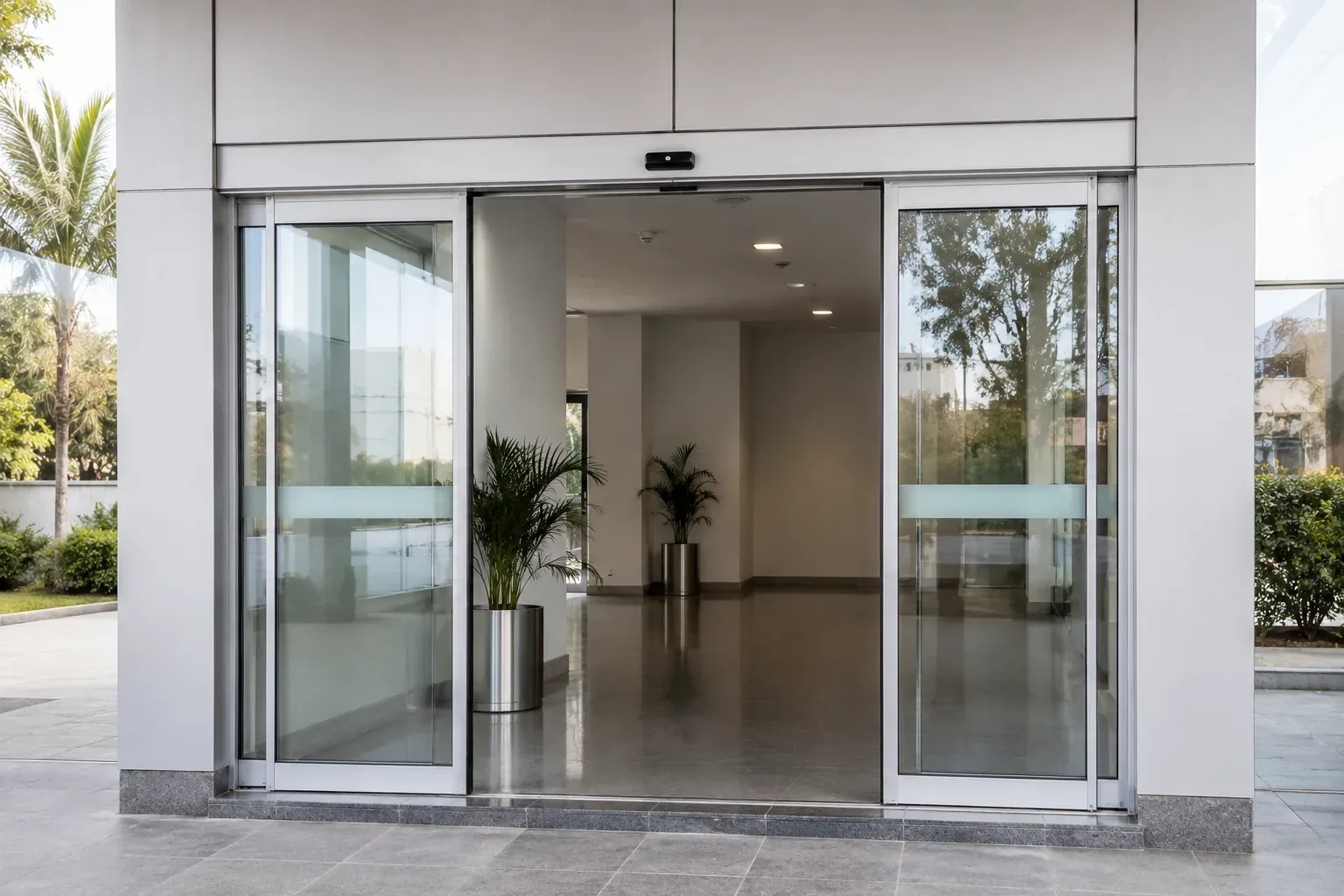
 microwave + PIR
Click to enlarge
microwave + PIR
Click to enlarge
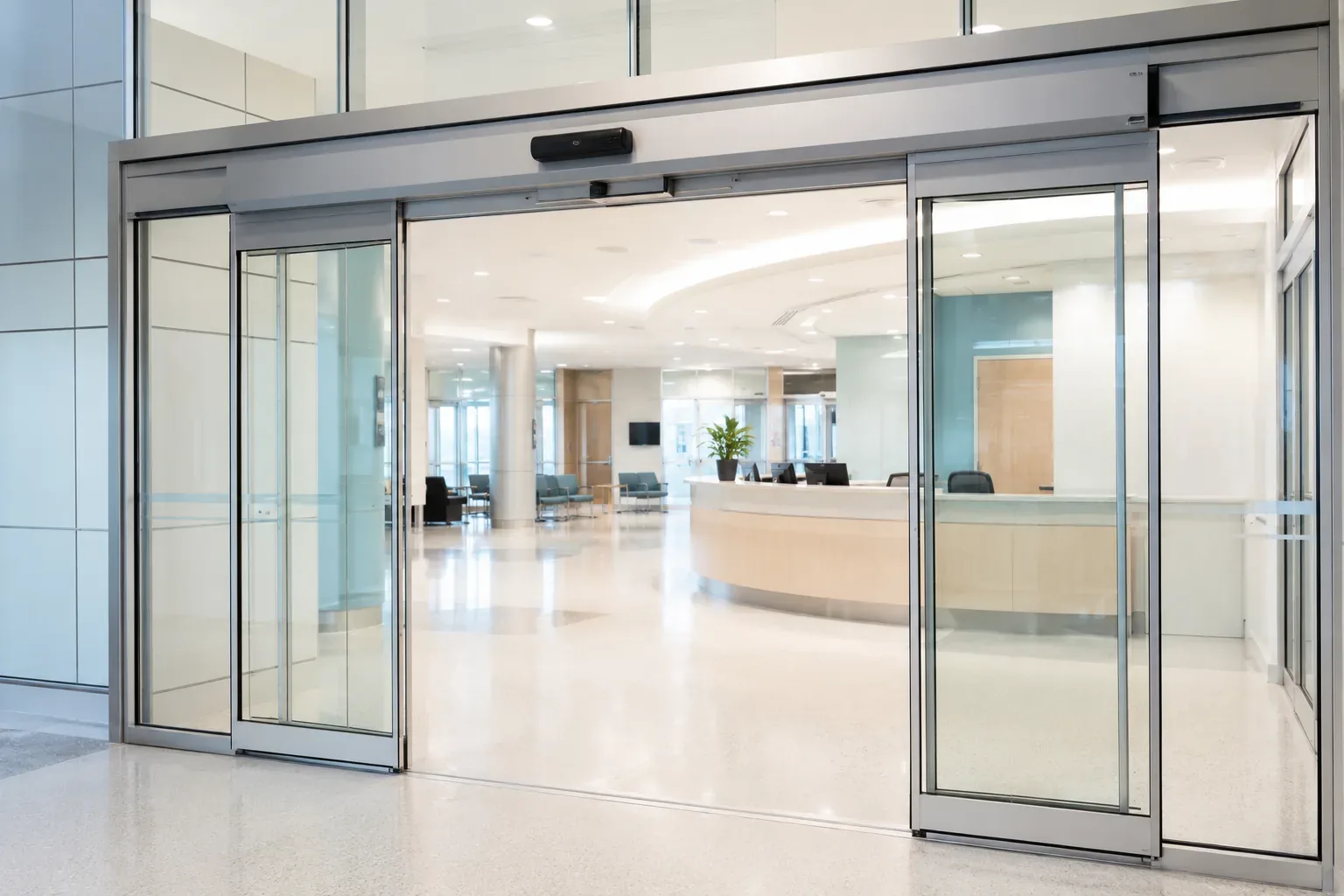
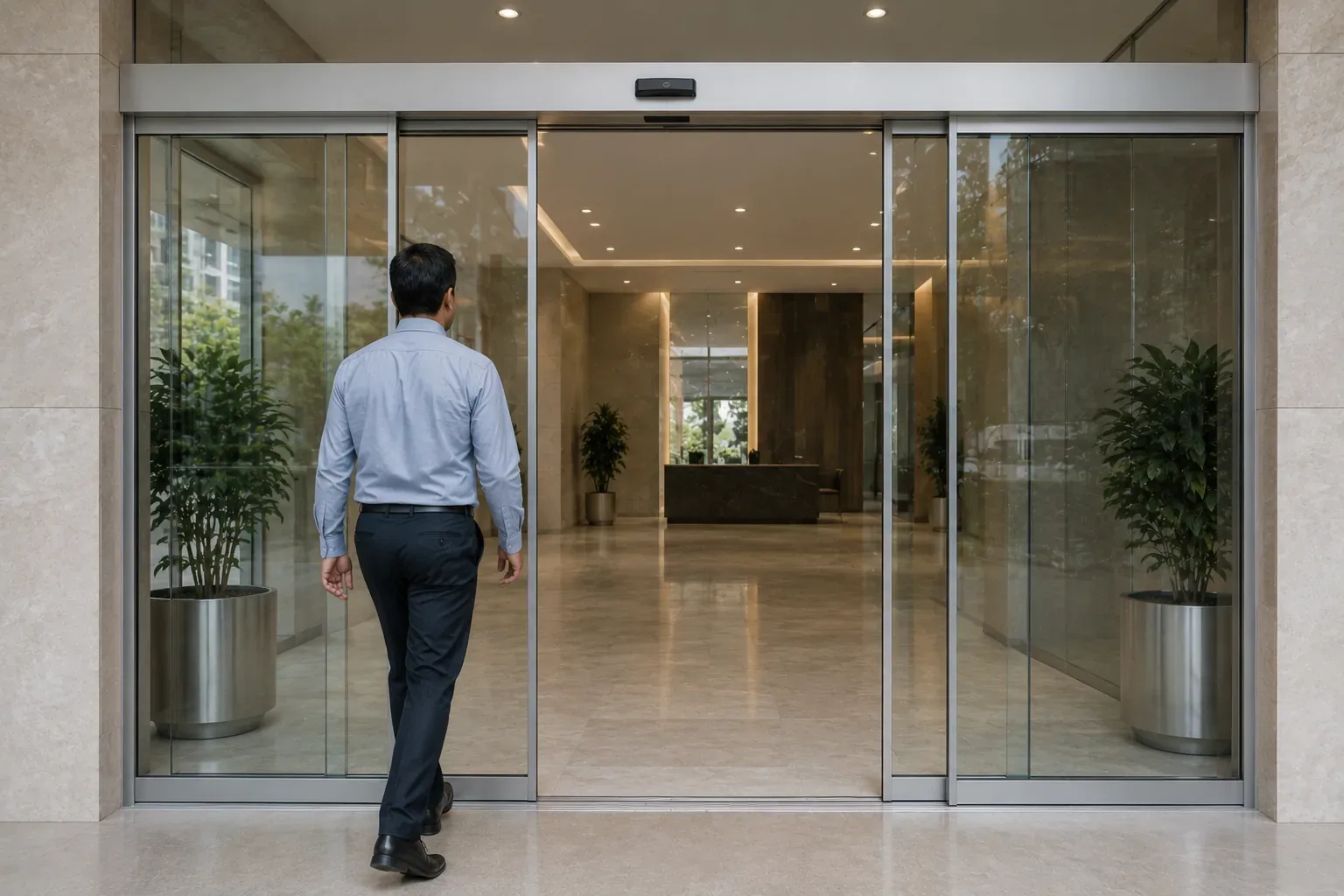

Sensor Door
The flagship automatic sliding sensor door for commercial and corporate entrances. A microwave motion sensor opens the leaves on approach and PIR presence sensors hold them clear, hands-free, high-traffic access on a brushless DC operator with battery backup.
| Activation | microwave + PIR |
| Leaf | 80–150 kg |
| Brand | Yadav Entrance Automation Pvt. Ltd. |
| Manufacturing | Made in India · ISO 9001 · CE |
ISO 9001 · CE marked · Make-in-India · Manufacturing since 2011 · 500+ installations across 50+ cities. See the full Automatic Door range and how we build it, or read more about our plant and capabilities.
Sensor Door: Technical Specifications
Complete engineering data for the Yadav Entrance Automation automatic door range. All systems are built to order, opening width, leaf weight, activation and finish are configured to your application.
| Parameter | Specification |
|---|---|
| Door Configuration | Single-slide or bi-parting (telescopic on request) |
| Activation | Microwave + PIR motion sensor; touchless wave switch; access control optional |
| Leaf Weight | 80 kg / 100 kg / 120 kg / 150 kg per leaf |
| Clear Opening Width | 900mm – 3,000mm (single 900–1,400mm; bi-parting up to 3,000mm) |
| Leaf Material | 10–12mm toughened glass; aluminium framed; SS hermetic (hospital) |
| Operator | Brushless DC motor with toothed-belt drive; soft start / soft stop |
| Opening Speed | Adjustable up to 0.6 m/s; closing speed up to 0.5 m/s |
| Power Supply | 230V single-phase, 50 Hz; ~150 W typical draw |
| Battery Backup | Standard: drives open or holds operable on mains failure |
| Fire Egress | Break-out leaves swing outward by hand for emergency exit |
| Safety Devices | Infrared safety light-curtain, threshold presence sensors, anti-trap reversal |
| Hospital / Hermetic Option | SS frame, sealed perimeter gaskets, antibacterial powder-coat finish |
| Certifications | ISO 9001:2015, CE Marked (EU Machinery Directive 2006/42/EC) |
| Warranty | 2 years operator & sensors, 5 years frame structure |
What the Sensor Door is, and who it suits
The Sensor Door is a type of automatic & sensor doors used across warehouses, factories, cold stores and commercial buildings. It is built to order at our Neemrana plant, installed and commissioned by our own engineers, and supported afterwards with spares and maintenance. See the full Automatic & Sensor Doors range, the sectors we serve, or every product line.
- Warehouse and distribution-centre openings
- Factory and production-floor entrances
- Cold stores and temperature-controlled rooms
- Clean rooms and pharmaceutical areas
- Loading bays and dispatch docks
- Commercial building entrances
- Clear opening width and height (the daylight opening, not the wall opening)
- Lintel / headroom above the opening
- Side-room free each side for guides and motor
- Power available at the opening: 230V single-phase or 415V three-phase, 50 Hz
- Approximate cycles per day
- Any fire-rating, temperature or hygiene requirement
Send these with your enquiry and an engineer replies with a drawing and a written delivery date, rather than a generic response. Talk to an engineer →
Reference: manufacturing certified to ISO 9001, applicable products CE marked (European Commission), built to Indian Standards published by the Bureau of Indian Standards.
Sensor Door: Engineered & Supported Across India
The Sensor Door is manufactured and supported entirely within India. As an Indian manufacturer of automatic & sensor doors, Yadav Entrance Automation Pvt. Ltd. engineers each unit for the realities of Indian warehouses, factories, cold stores and commercial buildings, variable power supply, high ambient temperatures, dust and monsoon humidity, and backs it with in-house manufacturing, pan-India installation and after-sales maintenance.
- Made in IndiaManufactured in-house at our Indian facilities: qualifies as a Make-in-India product for government and PSU procurement.
- Standard Indian MainsPowered models run on 230V single-phase or 415V three-phase at 50 Hz; manual / non-powered options where applicable.
- Established Since 2011Part of a track record of 500+ installations across 50+ Indian cities.
- Pan-India Install & AMCInstallation, genuine spare parts and Annual Maintenance Contracts (AMC) available nationwide.
- GST-Compliant SupplyGST invoicing for Indian businesses, with documentation suited to enterprise and PSU procurement.
- Built for Indian ConditionsSpecified for the heat, dust and monsoon humidity common on Indian industrial sites.
Strong on-ground presence in the NCR & Haryana industrial corridor, Gurugram, Manesar, Bhiwadi, Neemrana, Bawal, Faridabad, Noida, Jhajjar, Bahadurgarh and Delhi, and the Gujarat industrial belt, Ahmedabad, Sanand, Vithlapur and Mandal. Installation and service available across India. See all areas we serve →
Where the Sensor Door fits
The general-purpose automatic door for commercial premises: offices, clinics, retail units, small lobbies. Microwave and PIR activation handles leaves of 80 to 150 kg, opening for anyone who approaches and closing behind them without a button, a handle or a thought.
Sensor Door vs the alternatives
Against a manual door, the gain is accessibility as much as convenience: an automatic opening works for someone with an armful of files, a wheelchair user, or a delivery with a trolley. Against the high-traffic motion-sensor model, this is specified for normal commercial footfall; a genuinely busy entrance needs the dual-technology sensing and heavier duty of that variant.
Specifying a Sensor Door
Give the opening size and the leaf weight if the leaves are already chosen. Tell us the daily footfall, honestly, since duty cycle is what separates this from the high-traffic model. Confirm whether the door is on an escape route, whether it must lock out of hours, and what the approach looks like, because sensor siting depends on it.
Motion Sensor Door, Touchless Automatic Door and Sensor Sliding Door in detail
Where each one fits, how it compares with the alternatives, and what to decide before you ask for a quote.
Motion Sensor Door
A motion sensor door tuned for footfall, dual-technology sensing rejects passing traffic and ghost triggers while opening reliably for genuine approach. Adjustable detection field and hold-open timing make it ideal for malls, airports and showrooms.
Where the Motion Sensor Door fits. High-traffic entrances where the door barely stops moving: shopping centres, transport buildings, large offices, hospital main entrances. Dual-technology sensing and openings up to 3,000mm handle a stream of people rather than occasional visitors, and the duty rating is what keeps it working through years of that.
Motion Sensor Door vs the alternatives. Against the standard sensor door, the differences are duty rating and detection quality. Dual-technology sensors combine two sensing methods so the door reads a crowd correctly instead of chattering open and closed. Specifying a commercial-duty operator on a genuinely busy entrance is the most common false economy in this category, and it usually shows up as early failure.
Specifying a Motion Sensor Door. Give a realistic daily footfall, not a comfortable one, since duty is the whole reason to choose this variant. Confirm the opening width up to 3,000mm and the leaf construction. Describe the approach, including whether people arrive in groups, and say whether the entrance is exposed to weather or draught that could affect sensing.
Touchless Automatic Door
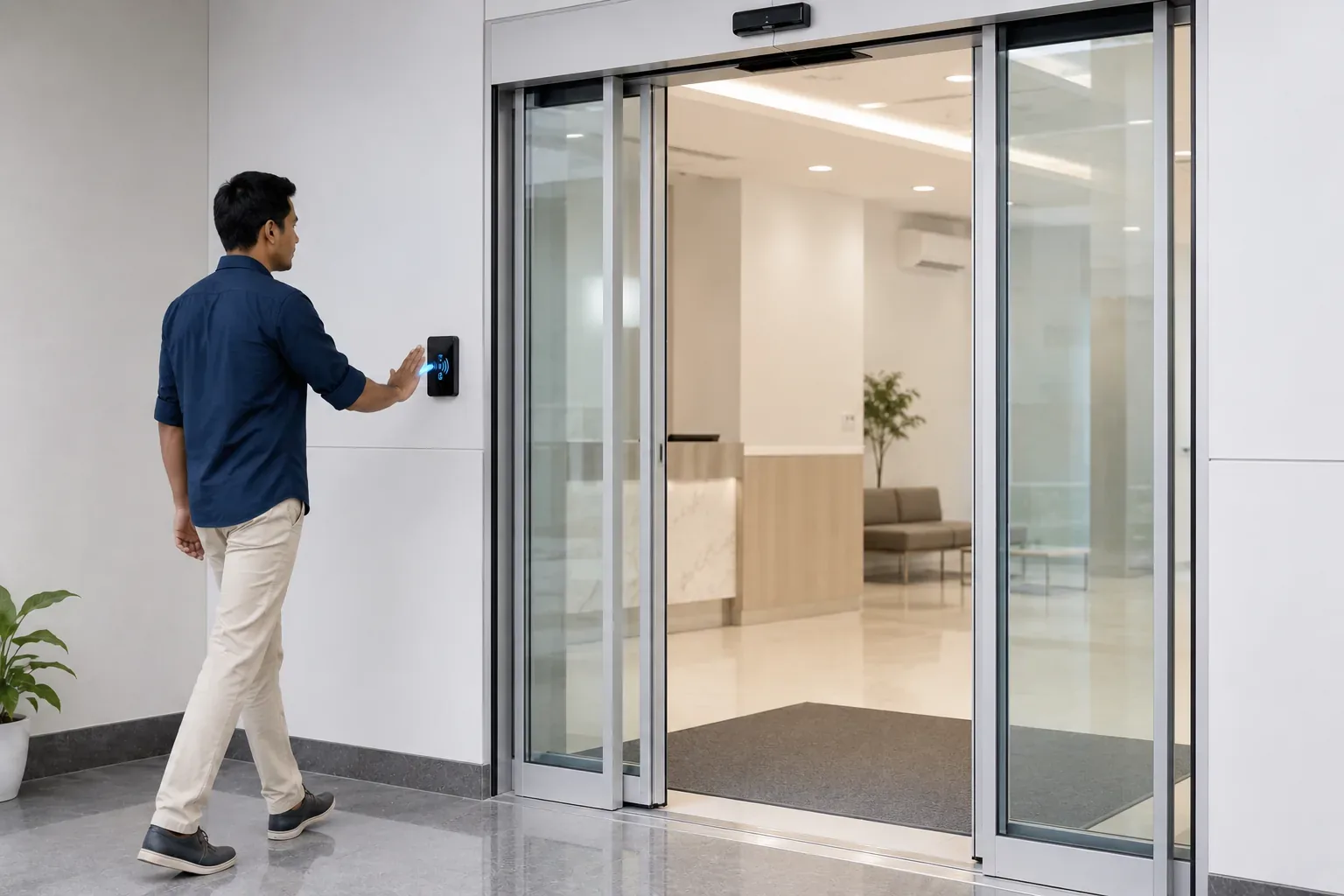
A touchless automatic door opens on a contact-free hand wave, eliminating shared-surface transmission at the entrance. The wave switch mounts either side and operates through gloves. The preferred choice for clinics, labs, kitchens and clean rooms.
Where the Touchless Automatic Door fits. Anywhere a contact surface is a problem: clinics, laboratories, food handling areas, pharmacies, and entrances where staff routinely have hands full or gloved. A wave switch opens the door with a gesture, so nobody presses anything and there is no shared plate for everyone in the building to touch.
Touchless Automatic Door vs the alternatives. Against a push-plate door, the wave switch removes the touchpoint while keeping deliberate activation, which is the difference from a fully automatic sensor door: the door opens when someone chooses, not whenever anyone walks past. That makes it useful where an entrance should not cycle for passing traffic but must still be hands-free.
Specifying a Touchless Automatic Door. Tell us why touchless matters at this opening, because hygiene and hands-full traffic lead to different switch placements. Confirm mounting height and whether users may be in wheelchairs or pushing trolleys. Say whether the door should also open automatically on approach, or only when someone deliberately activates it.
Sensor Sliding Door
A sensor sliding door tuned for fully hands-free, touchless operation in high-hygiene and high-traffic settings. Overhead microwave sensors detect approach and a threshold light-curtain guards the opening, with adjustable hold-open time, opening width and speed for energy-efficient, contactless entry.
Where the Sensor Sliding Door fits. Where nobody should touch the door: hospital corridors, clinics, food production, laboratories and any entrance where hygiene or hands-full traffic is the everyday reality. Microwave and curtain sensors together detect approach and presence, so the door opens ahead of the person and stays open while the opening is occupied.
Sensor Sliding Door vs the alternatives. Against a push-plate or button-operated door, touchless activation removes a contact surface that everyone in the building touches, which is the entire point in a clinical setting. Against a plain microwave-only setup, adding a curtain sensor is what stops the door closing on someone standing still in the opening, since motion detection alone cannot see a stationary person.
Specifying a Sensor Sliding Door. Tell us the traffic: pedestrians, trolleys, beds, or a mix, because detection patterns differ. Say whether people commonly pause in the opening. Confirm the environment, since dust and steam affect sensor choice. If hygiene is the driver, tell us so we specify sensing rather than any touch control at all.
Sensor Door: Frequently Asked Questions
What is the difference between microwave and PIR sensing?
How heavy a leaf can it operate?
Can it be locked out of hours?
What happens in a power cut?
Is it suitable for a busy shopping centre entrance?
Which regions do you install and service in?
Do you provide installation, spares and AMC?
Is the Sensor Door certified?
What is dual-technology sensing on a motion sensor door?
Why use a motion sensor door rather than a standard sensor door on a busy entrance?
Will a motion sensor door cope with people arriving in groups?
How does the wave switch on a touchless automatic door work?
Should a door use a wave switch or full sensor operation?
Does a touchless wave switch work with gloved hands?
Why does a sensor sliding door use both a microwave sensor and a curtain sensor?
Do sensors false-trigger from passing traffic or rain?
What happens if a sensor sliding door's sensor fails?
Sensor Door Design + Quote in 24 Hours
No generic quotes, no run-around.
In-House Manufacturing
Every automatic door manufactured under ISO 9001 quality control. No rebadged imports, no middlemen.
Free Site Survey & Drawing
Our engineers survey your opening and supply a full installation drawing for your contractor, at no charge.
AMC Available Nationwide
Annual Maintenance Contracts covering all sensor doors and entrance automation with a 4-hour emergency response SLA.