Choosing a scissor lift for your factory or warehouse
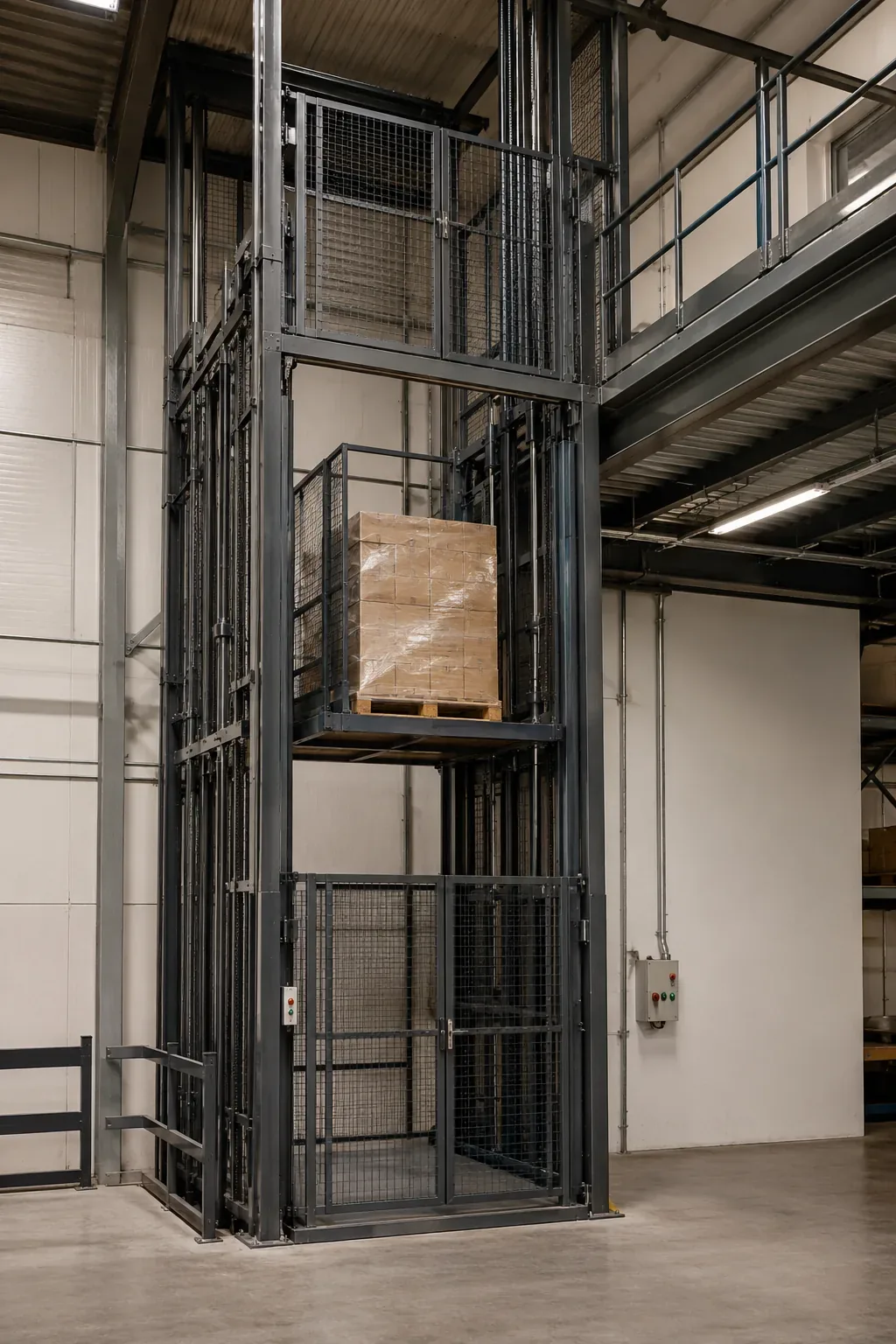
Start with the job: what you lift, how high, and how often. A fixed hydraulic scissor lift suits a single workstation or level change. A pit-mounted lift sits flush with the floor so pallet trucks roll straight on. A mobile lift moves around the plant for work at height, and a car lift raises vehicles. If goods must travel between several floors, a goods lift is usually the better answer.
What a scissor lift is
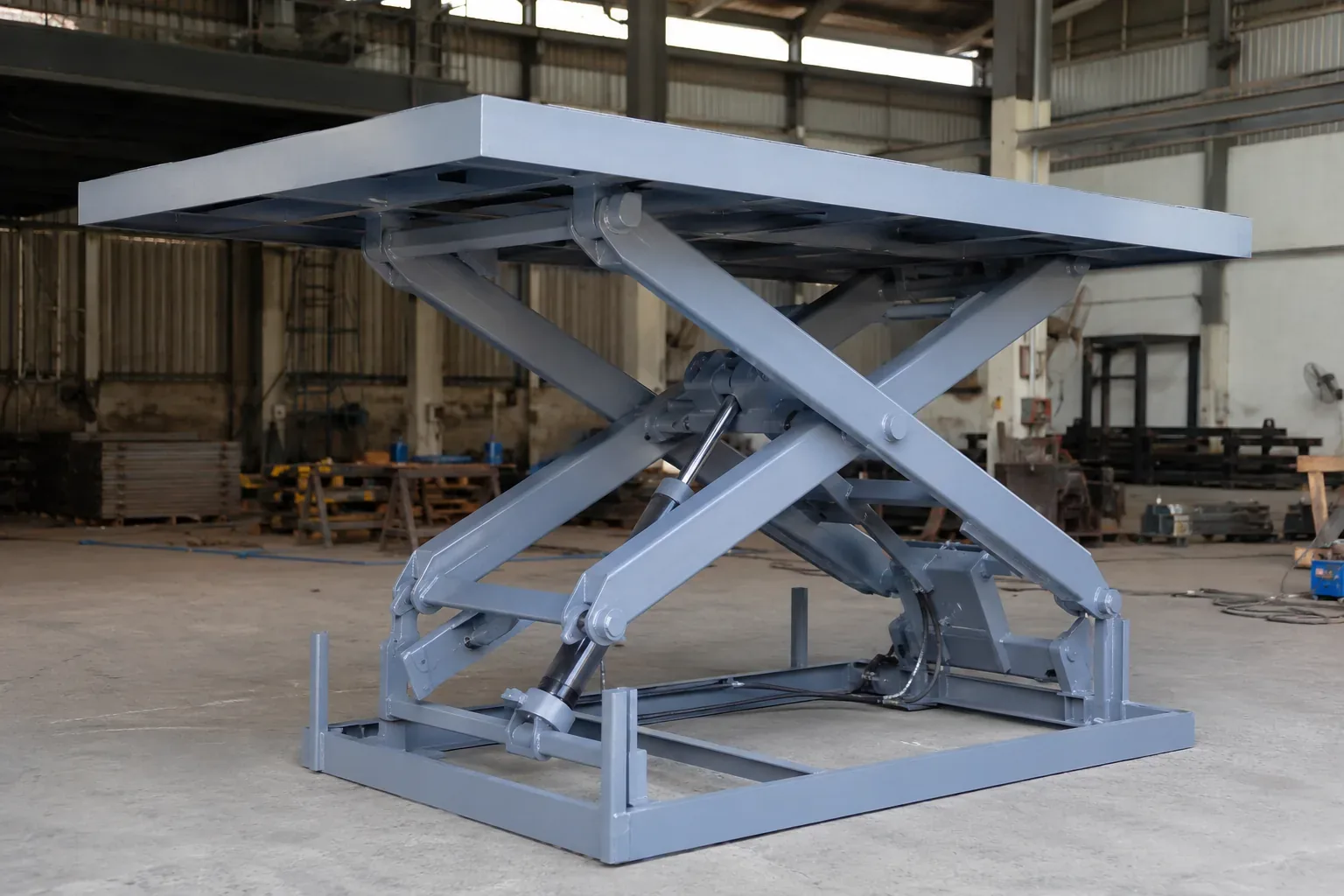
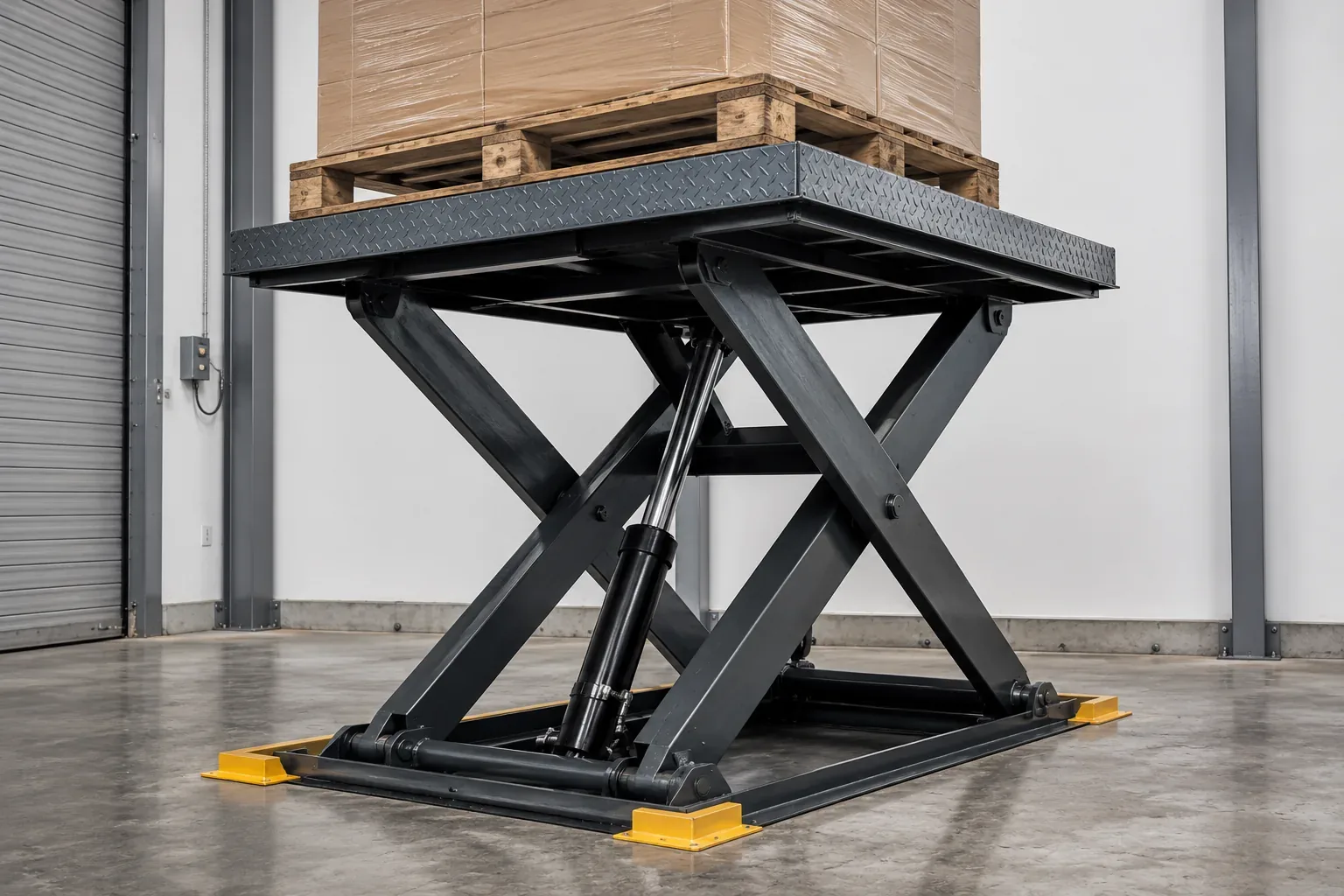
A scissor lift is a platform that rises on crossed steel arms. The arms work like a pair of scissors: as a hydraulic cylinder pushes them apart, the platform goes straight up. To come down, oil is released from the cylinder in a controlled way and the platform lowers under its own weight.
Three terms help when you compare quotes. The power pack is the motor, pump and oil tank that drives the cylinder. Travel is how far the platform moves, from its lowest to its highest position. Closed height is how tall the lift is when fully lowered. The hydraulic scissor lift is the basic fixed version that the other types build on.
The main types and where they fit
| Type | What it does | Where it fits | Watch out for |
|---|---|---|---|
| Hydraulic scissor lift (fixed) | Raises loads at one fixed spot | Workstations, level changes, loading points | Closed height means loads must be placed or ramped on |
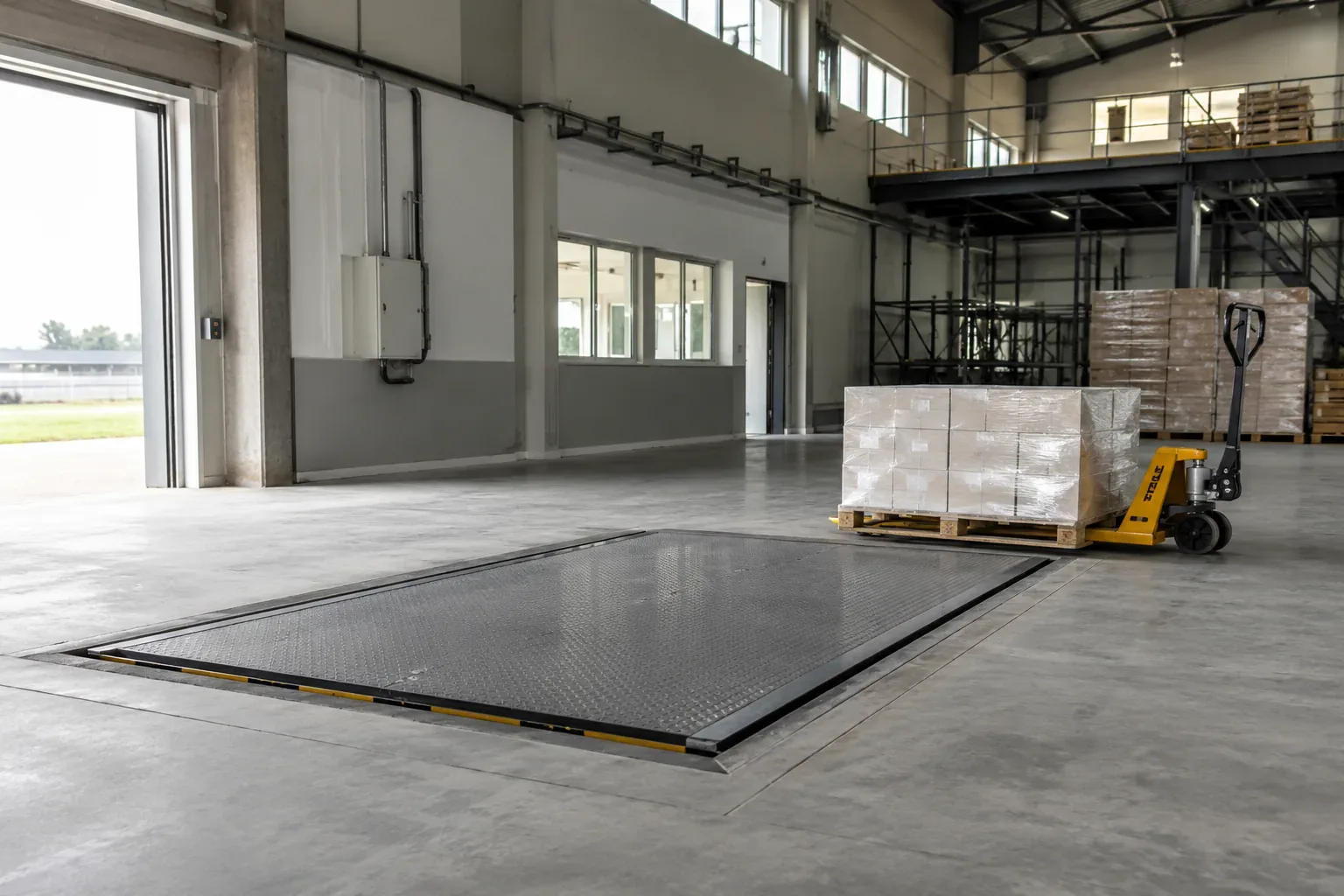
| Pit-mounted scissor lift | Sits in a floor pit, flush when lowered | Where pallet trucks must roll straight on | Needs civil work and edge protection around the pit |
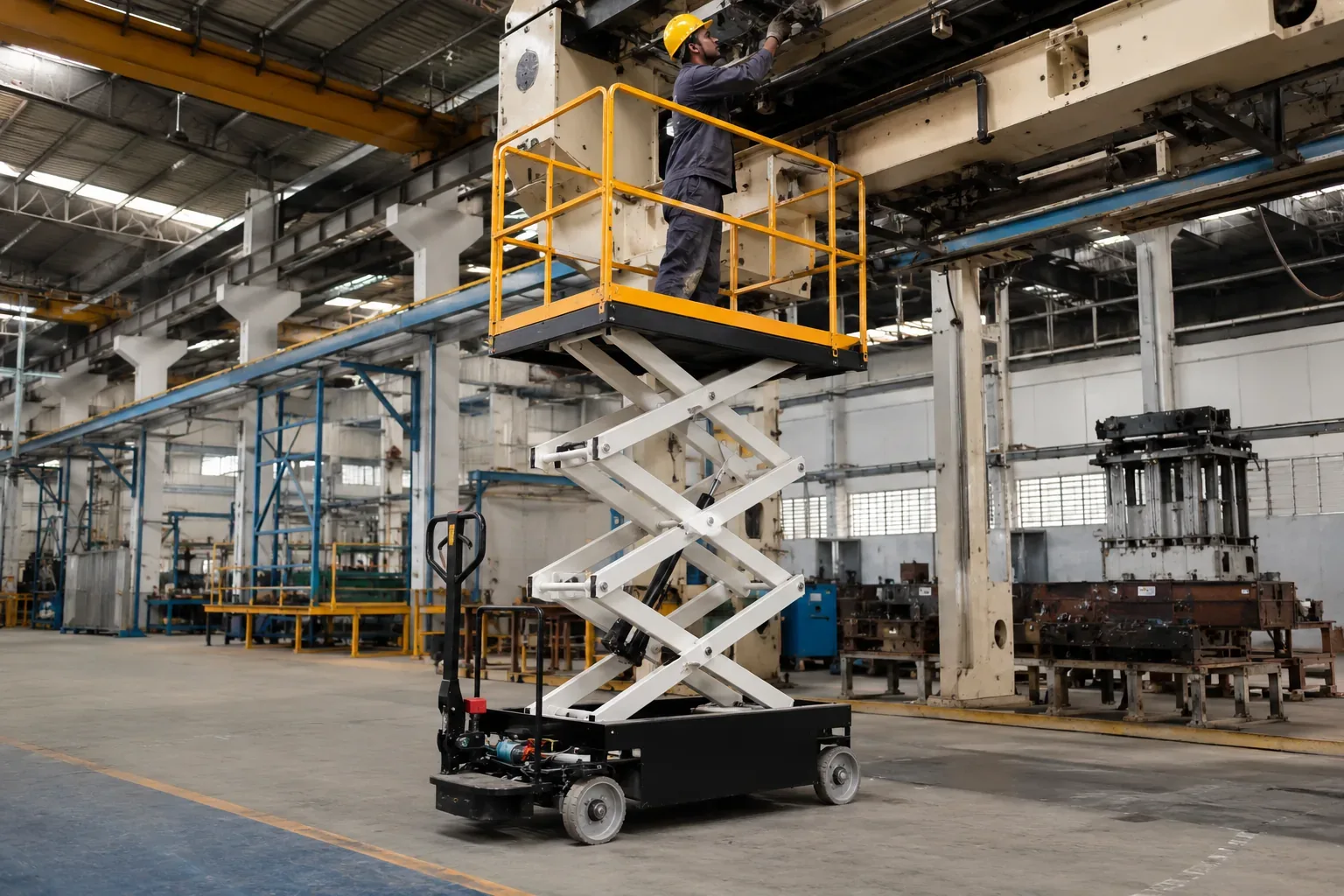
| Mobile scissor lift | Moves on castors to where the work is | Maintenance and stock work at height, multi-bay plants | Must be used on firm, level floors |
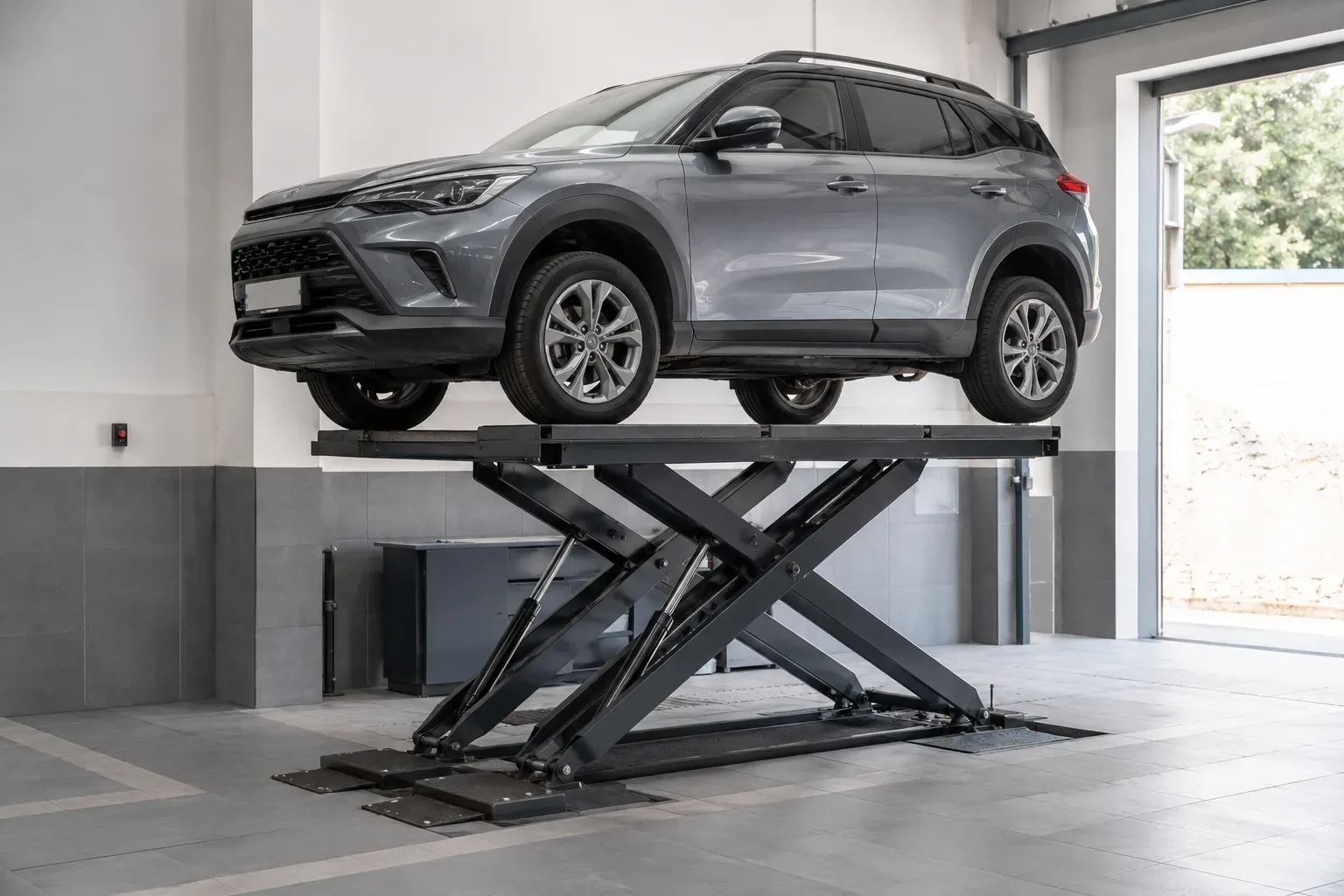
| Car scissor lift | Lifts vehicles | Workshops, service centres, stack parking | Floor strength and vehicle weights must be checked |
| Goods lift (alternative) | Moves goods between floors in a shaft | Multi-storey buildings | Needs a shaft and landing doors |
Four numbers to know before you ask for a quote
- Load. The heaviest thing that will ever be on the platform, including the pallet, any trolley, and any pallet truck or person that rides with it.
- Platform size. Big enough for the largest load, with room for the pallet truck if one drives on.
- Travel. The height the platform must rise, from floor level (or pit level) to the top position.
- Cycles per day. How many times it goes up and down. A lift used all shift needs a different duty design from one used twice a day.
Also tell us how loads get on and off: by forklift, hand pallet truck, by hand or by conveyor, and from which side. Wheels put concentrated weight on small spots of the deck, so a lift that a pallet truck drives onto is designed differently from one that only carries a pallet set down by forklift.
Surface-mounted or pit-mounted?
A surface-mounted lift stands on the floor. Even fully lowered, its platform sits above floor level, so a forklift places loads on it or a short ramp is added. It needs no civil work and can be moved later.
A pit-mounted scissor lift sits in a pit cast into the floor, so the platform is flush with the floor when lowered. Hand pallet trucks roll straight on, which makes it a common choice for dispatch points and workstations. The trade-offs: the pit needs civil work to a drawing, it must stay dry and clean, and when the platform is raised the open pit edge needs protection so nobody steps or drives into it.
Using a scissor lift at a loading dock
Where a building has no raised dock, or trucks vary too much for a dock leveller, a scissor lift can act as a dock lift. It lowers to yard level to receive goods and rises to the truck bed, so one lift can serve very different vehicles, including small tempos.
Each load has to ride up or down, so it moves fewer loads per hour than a dock leveller that forklifts simply drive across. It suits moderate traffic. For busy bays, compare it with our dock levellers.
Mobile and car scissor lifts
Mobile scissor lifts
A mobile scissor lift runs on castors and can be battery or mains powered, so it goes to the job instead of the job coming to it. It suits maintenance, lighting and stock work at height across several bays. Use it only on firm, level floors, and lower the platform before moving it.
Car scissor lifts
A car scissor lift raises vehicles for under-body service in workshops and service centres, or for stack parking where space is short. Share the heaviest vehicle you will lift, the floor area and the ceiling height, because those set the platform size and the travel.
Scissor lift or goods lift?
Both move goods up and down, but they solve different problems.
- Choose a scissor lift for a single level change, such as floor to mezzanine or floor to truck bed, when travel is limited and no shaft is available.
- Choose a goods lift when goods must move between several floors, when travel is greater, or when you want an enclosed shaft with landing doors at each level.
- Think about people: neither should carry people unless it is designed and approved for that use.
See our goods and cargo lifts for movement between floors.
Safety features to ask about
- Velocity fuse or pipe-rupture valve: stops the platform dropping if a hose bursts.
- Toe guard or safety edge: a sensing strip around the platform edge that stops lowering if it touches a foot or an object.
- Maintenance prop: a mechanical stand that holds the platform up safely while someone works underneath.
- Guardrails and gates: needed whenever the platform stands at a height people could fall from.
- Emergency stop and controlled lowering: so the lift can be stopped at once, and brought down safely during a power cut.
- Mechanical locks on car lifts: so the vehicle does not rest on hydraulics alone while someone works under it.
Ask for each safety device by name, and check it is listed on the drawing you approve.
Power, floor and space
- Power: power packs run on 230V single-phase or 415V three-phase at 50 Hz, depending on the lift. We confirm which on the drawing.
- Floor: the floor carries the lift and its full load through the base frame. Check slab strength, especially on upper floors and mezzanines.
- Space: leave room around the lift for access, the control station and servicing the power pack.
- Outdoors: protect the power pack and controls from rain and sun, and choose a finish suited to the weather.
Maintenance: what wears
Scissor lifts are simple machines, and regular checks keep them that way. Plan checks by how often the lift runs:
- Oil level, leaks and hose condition
- Pivot pins, bushes and rollers on the scissor arms
- Safety devices: toe guards, velocity fuses and limit switches
- Controls and the emergency stop
- Keeping the pit or base area clean and dry
What drives the cost
Every lift is built to a load and a height, so we quote per job. The main factors are:
- Rated load
- Platform size and deck type
- Travel height
- Duty: cycles per day
- Pit-mounted, surface-mounted or mobile
- Safety devices, guardrails and gates
- Power pack and controls
- Pit civil work and installation access
Checklist before you request a quote
- Heaviest load, including the pallet and anything that rides on the platform
- Largest load footprint, and how it is loaded: forklift, pallet truck, hand or conveyor
- Lowest and highest platform positions needed
- Cycles per day and number of shifts
- Pit possible, or surface-mounted only?
- Power available at the lift position
- Indoor or outdoor, and the floor type
- Photos and a rough sketch of the area
Frequently asked questions
How do I work out the capacity I need?
Add up the heaviest load that will ever be on the platform: the goods, the pallet, and any pallet truck, trolley or person that rides with it. Then tell us how it is loaded, because wheels rolling on put concentrated weight on the deck. Do not size to the average load. An under-rated lift wears quickly and is unsafe.
Pit-mounted or surface-mounted: which is better?
Pit-mounted is better when pallet trucks or trolleys must roll straight on, because the platform lowers flush with the floor. Surface-mounted is better when you cannot cut a pit, when the lift may move later, or when loads are placed on it by forklift. A pit needs civil work, drainage and edge protection when the platform is raised.
Can a scissor lift carry people?
Only if it is designed and specified for that. A goods-only lift should never carry people. Where an operator rides with the load or works from the platform, it needs guardrails, gates, suitable controls and safety devices meant for people. Tell us at enquiry stage if anyone will ride on it, because it changes the design.
Can a scissor lift replace a goods lift between floors?
For a single, short level change, such as ground floor to a mezzanine, a scissor lift can be a practical choice where no shaft exists. For several floors, greater heights or heavy daily use, a goods lift with a shaft and landing doors is usually the right answer. Share the floor heights and traffic, and we will advise which fits.
What happens to a scissor lift in a power cut?
The power pack cannot raise the platform without power. Many hydraulic scissor lifts have a manual lowering valve, because lowering uses the platform's own weight rather than the pump. Ask how emergency lowering works on the model you choose, and make sure operators know where the control is and how to use it safely.
Can a forklift drive onto a scissor lift?
Only if the lift is designed for it. A forklift is heavy and puts its weight through small wheels, so the deck, the arms and the capacity must be rated for the forklift plus its load. Most lifts are instead loaded by a forklift placing the pallet from the side. Tell us exactly how you plan to load it.
Does a scissor lift need a special floor?
It needs a floor strong enough to carry the lift and its full load through the base frame. Ground-floor slabs are usually the easiest place, while upper floors and mezzanines must be checked. A pit-mounted lift needs a pit built to our drawing, and a mobile lift needs a firm, level floor wherever it is used.
How often does a scissor lift need servicing?
Base it on use, not the calendar. A lift that runs all shift needs more frequent checks than one used a few times a day. Each service should cover oil and hoses, the pins and rollers on the arms, and every safety device. Operators should also do a quick visual check before use and report leaks or unusual noises.
What do you need from me to prepare a quote?
The heaviest load, the load size, how it is loaded, the lowest and highest platform positions, cycles per day, whether a pit is possible, the power available, and whether the lift is indoors or outdoors. Photos and a rough sketch of the area help a lot. An engineer will then recommend a type and send a written quotation.