How to choose a dock leveller: hydraulic vs mechanical vs edge-of-dock
Choose a hydraulic dock leveller for busy bays that receive many different truck heights and have power at the dock. Choose a mechanical dock leveller where power is unreliable or traffic is moderate. Choose an edge-of-dock leveller when you cannot cut a pit and your trucks sit close to dock height. Four things decide it: traffic, truck mix, whether you can build a pit, and the power at the bay.
What a dock leveller actually does
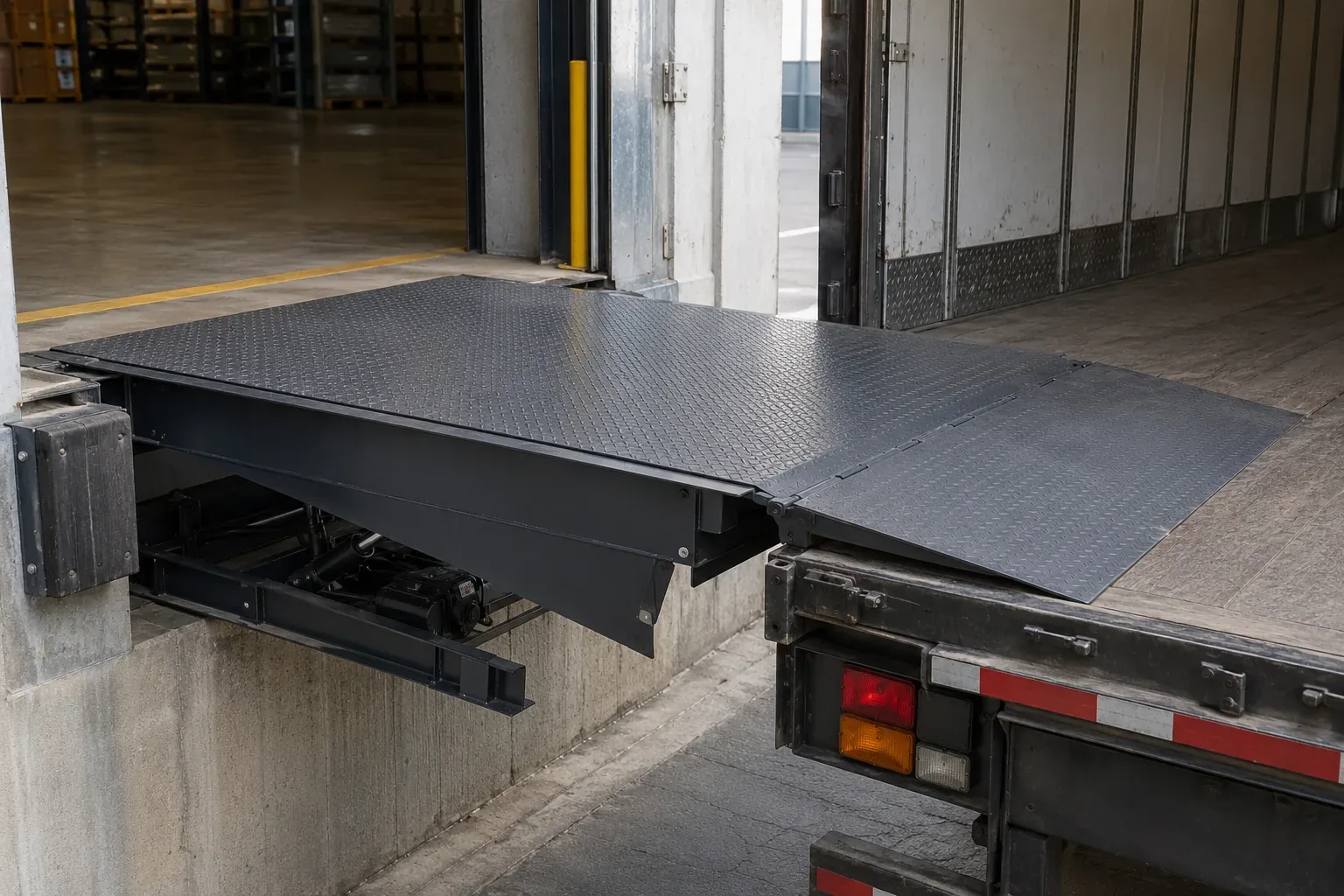
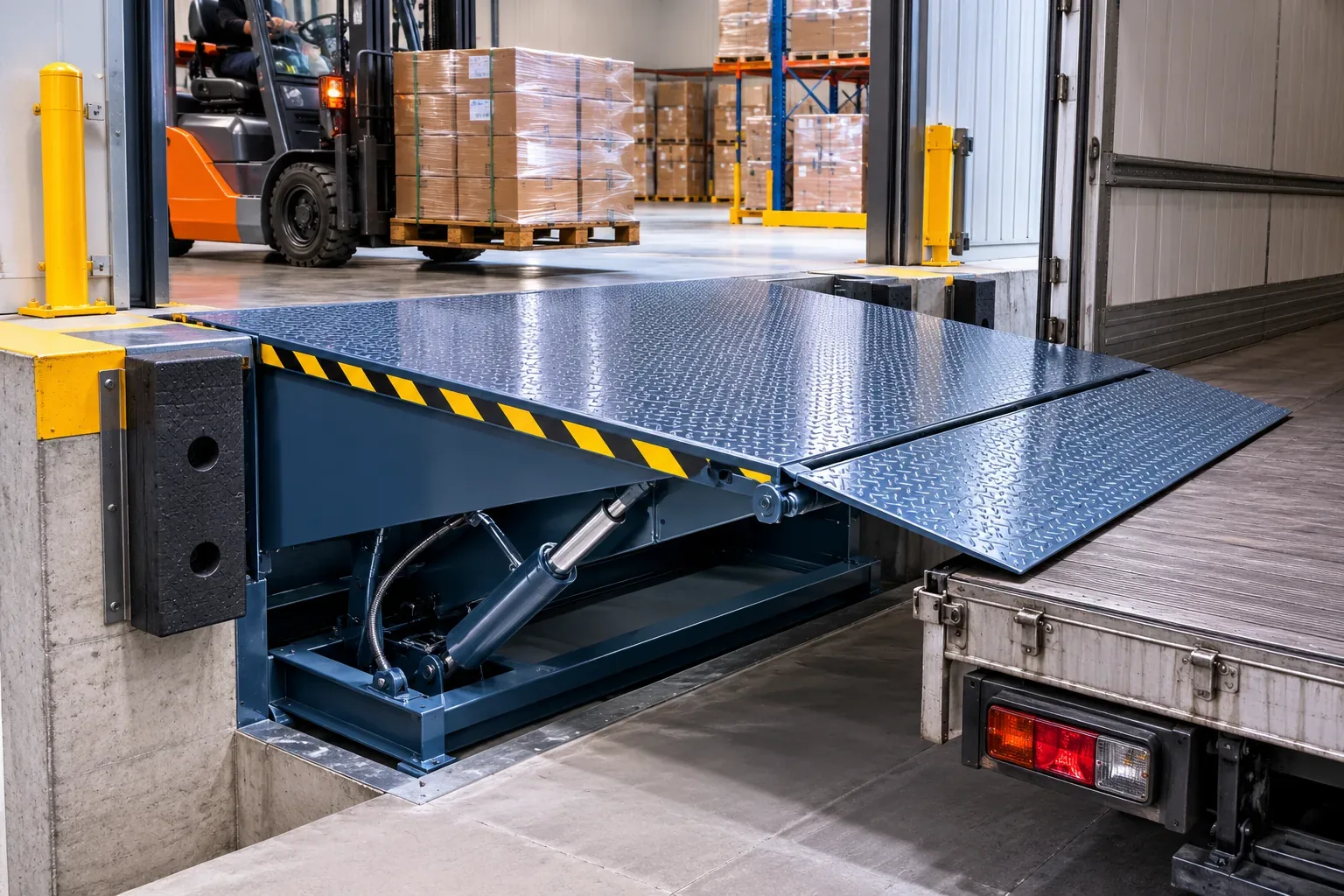
A dock leveller is a steel ramp built into the edge of a loading dock. It bridges the gap and the height difference between the warehouse floor and the bed of a truck, so a forklift or hand pallet truck can drive straight in and out.
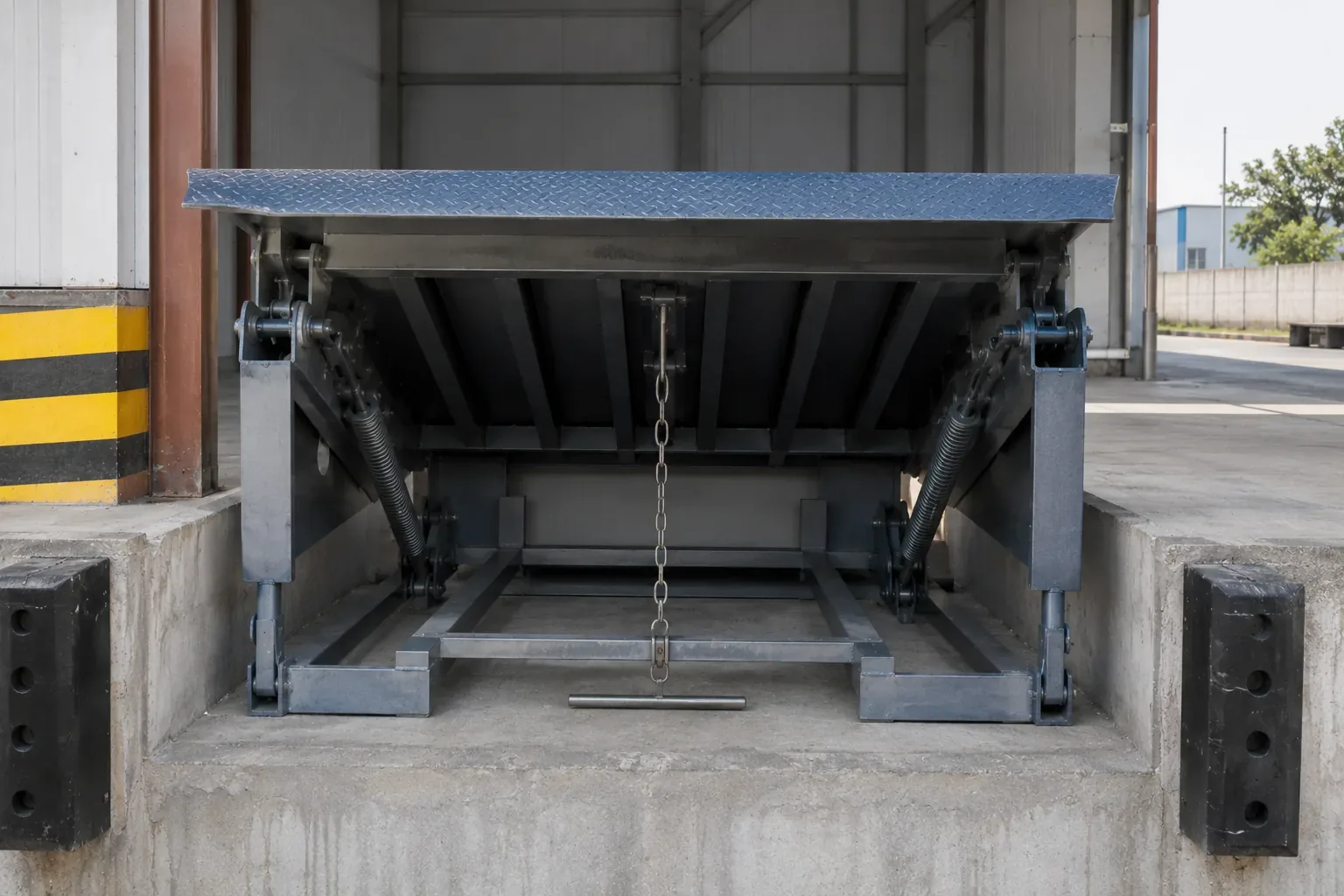
Most levellers have a lip, a hinged or sliding steel plate at the front that rests on the truck bed. Pit levellers sit in a pit, a recess cast into the dock floor, so the platform lies flush with the floor when it is not in use.
Why not use a loose steel plate? Indian loading bays see everything from small tempos to container trailers, each at a different height, and a truck bed rises as it is unloaded because the springs lift once the weight comes off. Most pit levellers float with the truck bed for this reason, so the slope stays safe for the whole job.
The three types at a glance
How the three common types compare:
| Hydraulic | Mechanical | Edge-of-dock | |
|---|---|---|---|
| How it works | An electric pump and hydraulic cylinder raise the platform and place the lip at the push of a button | Springs lift the platform when the operator pulls a release, then the operator walks it down onto the truck bed | A short hinged plate fixed to the dock face flips over onto the truck bed |
| Needs a pit? | Yes | Yes | No |
| Needs power? | Yes | No | Manual and hydraulic versions exist |
| Height range | Wide, set by platform length | Wide, set by platform length | Small |
| Best for | Busy bays, mixed trucks, many operators | Moderate traffic, weak or no power at the dock | Existing docks where a pit is not possible |
| Main downside | Needs power and hydraulic upkeep | More effort per truck; springs need periodic adjustment | Short ramp, steeper slope, narrow truck range |
Four questions that decide the type
1. How busy is the bay?
Count trucks per day and the number of shifts. At a busy dispatch bay, the extra effort of walking a mechanical platform down, repeated all day by different operators, adds up, and push-button operation gives the same result whoever is on shift. At a bay that sees a few trucks a day, a mechanical leveller does the job with less to maintain.
2. Which vehicles will use it?
List every vehicle that backs up to the bay. The spread between the lowest and the highest truck bed decides how long the platform must be: a longer platform gives a gentler slope for the same height difference, which matters for low forklifts and hand pallet trucks. If some vehicles sit far below dock height, a leveller alone may not reach them. A scissor lift used as a dock lift can serve both yard level and truck height; see our scissor lifts.
3. Can you build a pit?
Hydraulic and mechanical levellers both need a pit. On a new building the pit is cast with the dock, to a civil drawing the manufacturer supplies. On an existing dock, cutting a pit means breaking the slab, and pipes, cables or the slab design may rule it out. That is exactly where an edge-of-dock leveller earns its place: it fixes to the dock face and needs no pit.
4. What power is available at the dock?
A hydraulic leveller needs a supply for its power pack, the motor and pump unit that drives the cylinder. In India that is normally 230V single-phase or 415V three-phase at 50 Hz, and the right one is confirmed on the approved drawing. If the dock has no supply, or outages are frequent and the bay must keep working, a mechanical leveller avoids the problem entirely.
Hydraulic dock leveller: strengths and trade-offs
A hydraulic dock leveller is the usual choice for high-traffic bays. The operator presses a button, the platform rises, the lip extends, and the platform settles onto the truck bed.
- Strengths: easy for any operator, quick at every truck, and smooth, controlled movement.
- Safety: ask whether the model has a safety stop, often called a velocity fuse, that stops the platform dropping if a truck pulls away while the leveller is deployed.
- Trade-offs: it needs a power supply at the bay, stops in a power cut, and the hydraulic system needs routine checks of oil level, hoses and seals.
Mechanical dock leveller: strengths and trade-offs
A mechanical dock leveller uses a spring assembly instead of a pump. The operator pulls a release, the platform rises and the lip extends, then the operator walks onto the platform to bring it down onto the truck bed.
- Strengths: it works with no electricity at all, has no hydraulic oil to leak, and the parts are simple.
- Trade-offs: each truck takes more effort, and results depend more on how well operators are trained.
- Upkeep: springs and the hold-down mechanism need periodic inspection and adjustment, because a badly balanced platform is harder and less safe to use.
- Good fit: moderate-traffic bays, remote docks, and sites where power at the bay is weak or missing.
Edge-of-dock leveller: strengths and trade-offs
An edge-of-dock leveller is a compact unit fixed to the front face of the dock. It needs no pit, so it is often the practical way to upgrade an old dock that was built without one. Manual and hydraulic versions exist; ask about them through our dock levellers range.
- Strengths: no civil work on the slab, and quicker to fit to an existing dock.
- Trade-offs: the ramp is short, so it only handles small height differences, and the slope gets steep quickly.
- Good fit: docks where most trucks sit close to dock height and traffic is low to moderate. It is a poor fit for bays that receive everything from small tempos to container trailers.
Getting the size and capacity right
The type is only half the decision. The leveller also has to be sized for your trucks and your forklifts.
- Width: match the platform to the truck beds you receive and to the widest load your forklift carries through.
- Length: longer platforms give a gentler slope. Decide from the lowest and highest truck beds, not the average.
- Capacity: size it for the forklift's own weight plus its heaviest load, not the pallet weight alone. Give us the forklift make and model.
- Lip: a hinged lip swings out onto the truck bed; a telescopic lip slides out further, which helps when trucks cannot park tight against the dock.
- Finish: painted or galvanised. Coastal, washdown and chemical areas need more protection.
Plan the rest of the loading bay at the same time
A leveller works best as part of a complete bay. Plan these with it, not after it:
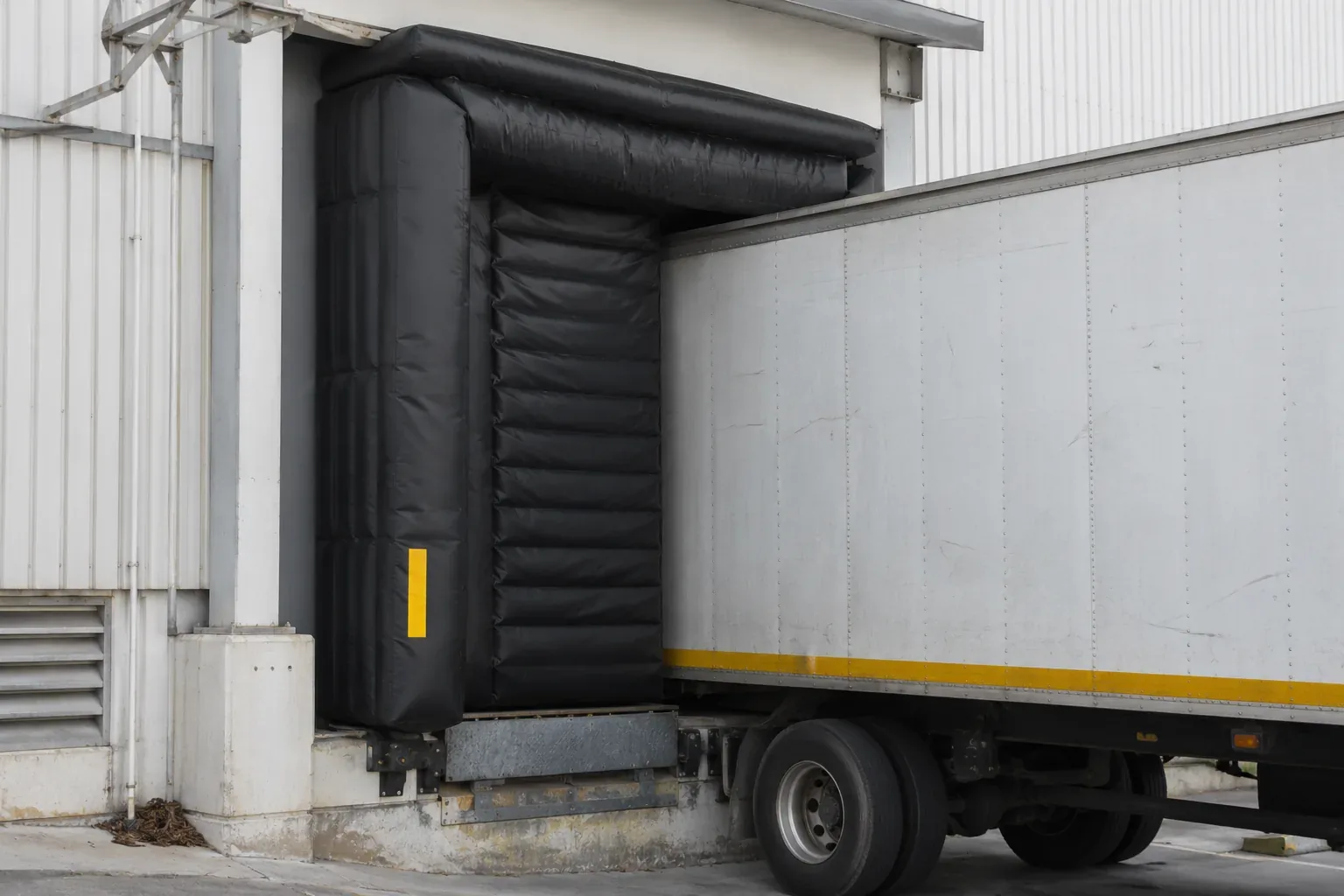
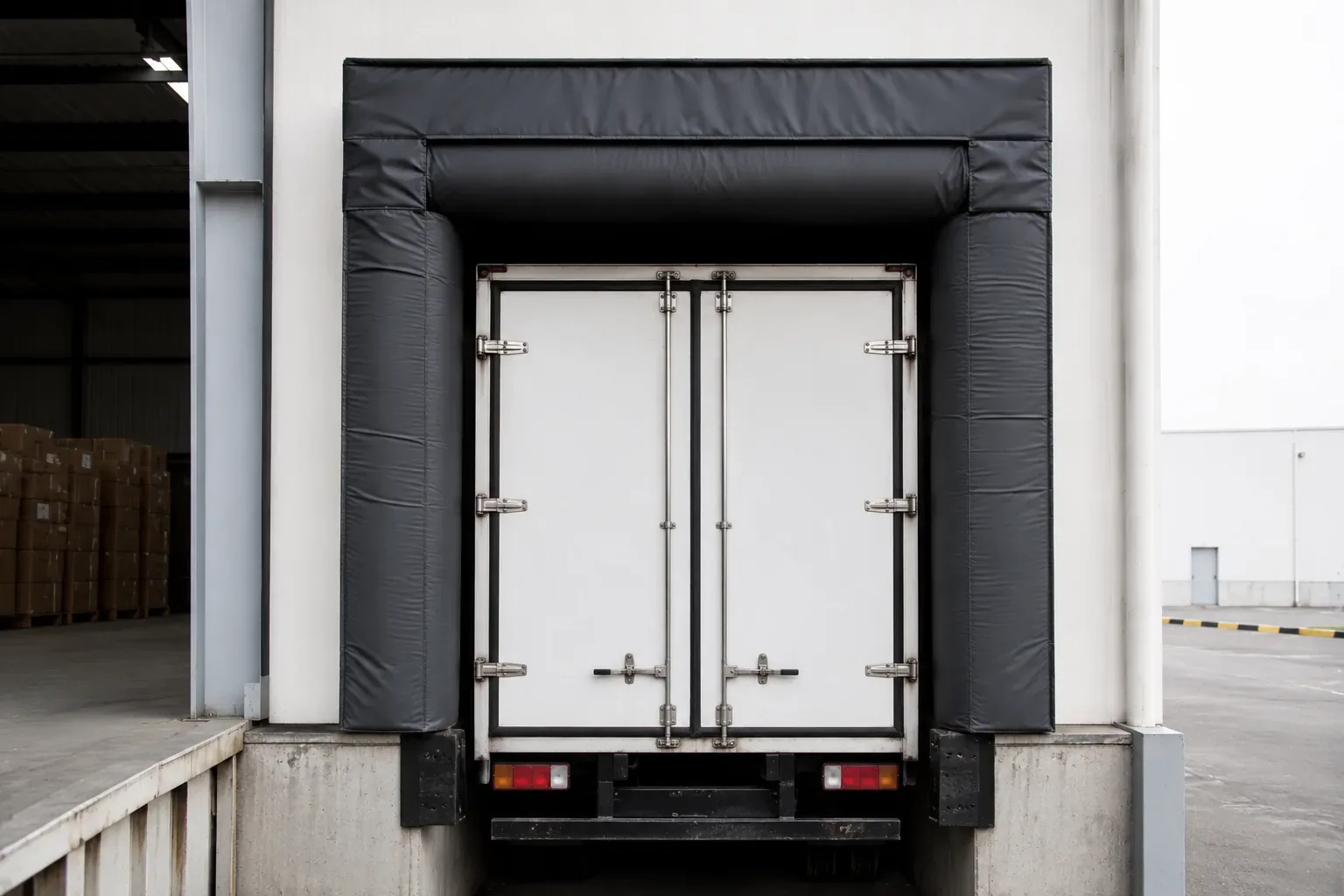
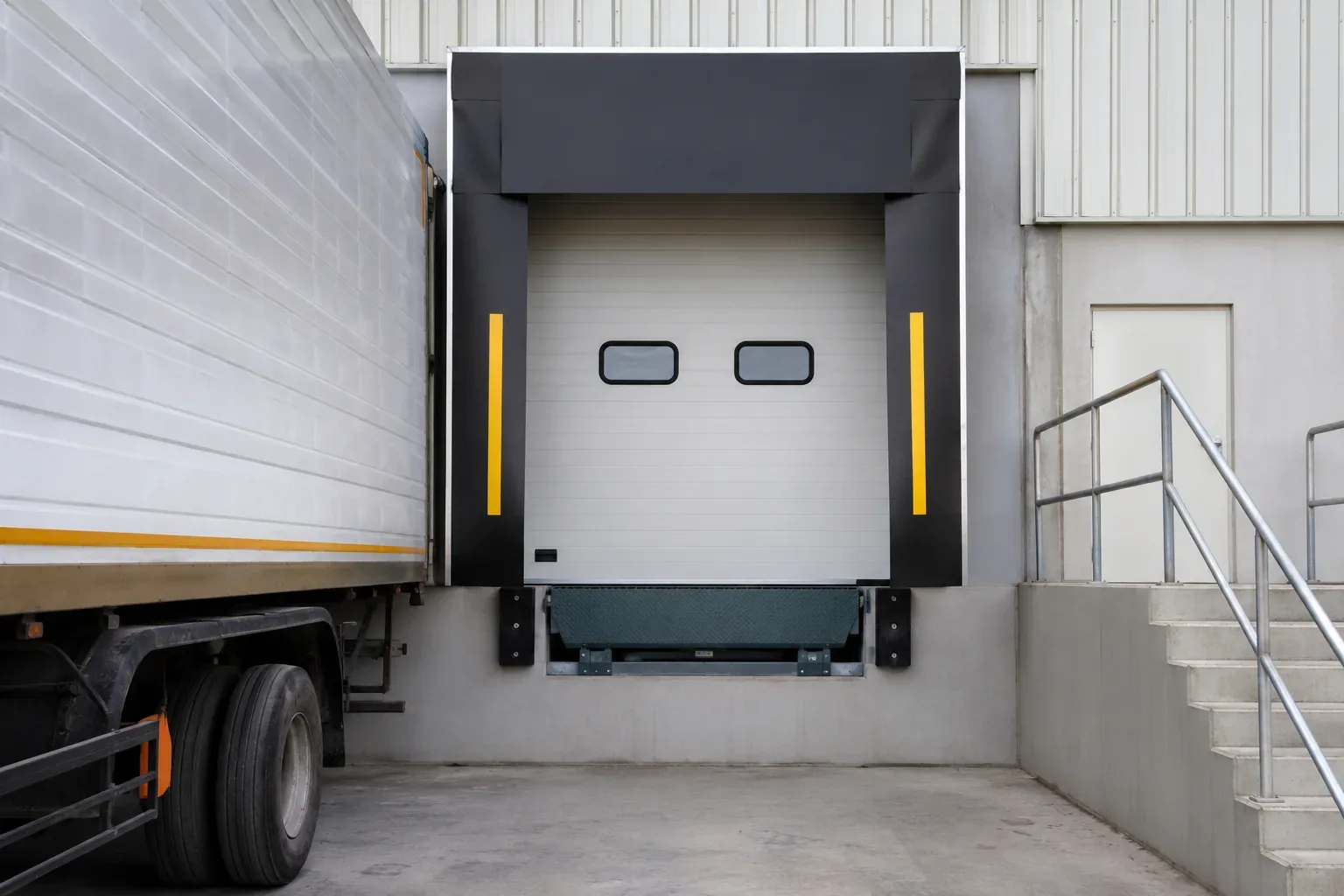
- Dock shelter: a frame with flexible side and top curtains that the truck reverses into. It suits bays that receive trucks of different widths and heights.
- Dock seal: foam pads that the back of the truck presses against. It seals more tightly, which is why it suits cold chain and air-conditioned warehouses, but it works best when trucks are of similar size.
- Dock bumpers, wheel guides and lights: protect the dock wall, help drivers line up and let operators see inside the truck.
- The dock door: a rolling shutter, sectional door or high-speed door, positioned so it does not clash with the leveller lip.
All of these come under our loading bay equipment range, so one team can draw the whole bay.
Safe daily use and upkeep: a short checklist
- Chock the truck wheels or use a vehicle restraint before anyone drives onto the leveller.
- Check the lip is resting fully on the truck bed, not on its edge.
- Never let a truck pull away while the leveller is deployed.
- Return the platform to its stored position after every truck, so the dock edge is not left open.
- Keep the pit and hinges clear of debris, pallet wood and shrink-wrap.
- Report damage at once. A bent lip or cracked weld gets worse with every forklift pass.
- Service by how hard the bay works, not by the calendar: hydraulic oil, hoses and seals, or mechanical springs and hold-down, plus lip hinges on both.
What drives the cost of a dock leveller
We quote each bay after understanding the site, because these factors move the figure more than the leveller type alone:
- Type: hydraulic, mechanical or edge-of-dock
- Platform width and length
- Rated capacity
- Lip type
- Civil work for the pit, if it is not already cast
- Finish: painted or galvanised
- Number of bays in the order
- Add-ons such as shelters, seals, bumpers and lights
- Site location and installation access
A leveller that is too short or under-rated for your forklifts costs more over time, so size it right first, then compare quotes on the same specification.
Before you ask for a quote
Have these ready and the first quote will be close to final:
- Photos of the dock face, the pit (if any) and the approach road
- Dock height from the yard, and the lowest and highest truck beds you receive
- Vehicle types and trucks per day
- Forklift or pallet truck make and model
- Power available at the bay
- Number of bays, and whether shelters, seals or doors are needed
- Whether the site is new construction or an existing dock
Frequently asked questions
Which is better, a hydraulic or a mechanical dock leveller?
Neither is better everywhere. A hydraulic leveller is easier and quicker to use, so it suits busy bays with many operators and a mix of truck heights. A mechanical leveller needs no electricity and has simpler parts, so it suits moderate traffic and docks with weak or unreliable power. Choose on traffic, operators and power, then size the platform for your trucks and forklifts.
Can I fit a dock leveller to an existing dock that has no pit?
Yes. An edge-of-dock leveller fixes to the dock face and needs no pit, so it is the usual retrofit. It only handles small height differences, though. If your trucks vary a lot in height, it may be worth cutting a pit for a full leveller. Our engineers check the slab, services and dock face before advising which is practical.
What happens to a hydraulic dock leveller during a power cut?
Normal operation stops, because the pump needs power to raise the platform. If a bay must keep working through outages, plan for it: put the power pack on a backed-up supply, ask what manual or emergency options the model offers, or fit mechanical levellers at the bays that cannot stop. Tell us about outages at your site when you enquire.
What capacity should I ask for?
Base it on the heaviest loaded forklift that will cross the leveller: the forklift's own weight plus its heaviest load. Many buyers quote only the pallet weight, which under-rates the leveller. A forklift rolling across a platform also stresses it more than a load sitting still. Send us the forklift make and model and your heaviest pallet, and we will size it.
What is the difference between a dock shelter and a dock seal?
A dock seal uses foam pads that the back of the truck presses against, giving a tight seal. It suits cold chain and air-conditioned warehouses where trucks are of similar size. A dock shelter uses a frame with flexible curtains that the truck backs into. It seals less tightly but copes better with trucks of different widths and heights.
Can one leveller handle both small trucks and container trailers?
Sometimes. It depends on the gap between the lowest and highest truck beds and on the platform length. A longer platform covers a wider range at a gentler slope. If some vehicles, such as small tempos, sit far below dock height, a leveller may not reach them safely. A separate bay or a scissor lift used as a dock lift can solve that.
How long does dock leveller installation take?
It depends mainly on whether the pit already exists. Fitting a leveller into a ready pit is quick. A new pit needs civil work, and the concrete needs time to cure before installation. An edge-of-dock unit avoids the pit entirely. We confirm the programme in writing with the quote, once we know the site and the number of bays.
What do you need from me to prepare a quote?
Photos of the dock, the dock height, the lowest and highest truck beds, the vehicle types and trucks per day, your forklift model, the power at the bay, and the number of bays. Tell us whether the dock is new or existing. With these, an engineer can recommend a type and size and send a written quotation.